

In today’s fast-paced digital environment, choosing the right database software can significantly impact how efficiently teams, developers, and entrepreneurs manage information. With a growing number of tools offering a strong free plan, it’s now easier than ever to organise, store, and scale data without upfront investment. Many users also prefer platforms that support open source flexibility, seamless integrations, and intuitive experiences. One such option—Baserow—offers a modern take on data management that combines ease of use with advanced capabilities, making it a helpful companion for both beginners and technical teams.
Below, we explore the best tools available and how they compare so you can choose the most suitable solution for your needs.
What Makes a Great Free Database Tool in 2026?
Before selecting the right platform, it’s important to evaluate tools based on factors that truly matter in modern workflows:
- Scalability: Can the system grow with your data needs over time?
- Ease of Use: Is the interface intuitive for both technical and non-technical users?
- Security: Does it provide safe and secure data storage options?
- Integrations: Can it connect with existing business tools and systems?
- Community Support: Is there an active user community where you can find examples, help, and discussions?
These criteria are also why many users browse platforms like Baserow’s community forum or explore guides such as the personal database tutorial to learn practical ways to structure their data.
Top Free Database Software Tools to Explore
1. Baserow
Baserow is a popular choice for users looking for a modern, no-code, open-source alternative to traditional databases. Its spreadsheet-style interface makes data organisation simple, while its ability to scale into more advanced use cases sets it apart.
Key Highlights:
- Web-based interface: Easy for beginners and teams to manage data collaboratively.
- No-code structure: Create tables, relationships, and workflows without writing code.
- API-first design: Developers can easily extend and integrate it with other tools.
- Self-hosting capabilities: Ideal for teams needing more control over their data.
- Community-driven: The active Baserow community frequently shares tips, templates, and real-world use cases.
A great example from the community includes users creating project trackers or lightweight CRMs using Baserow’s relational database structure—common cases often discussed in forum threads. For those who prefer visual learning, this introductory video offers a practical walkthrough
Baserow 2.0: What’s New
Baserow’s most recent updates introduce several powerful capabilities that make database management even more efficient:
- AI Assistant ‘Kuma’: Helps generate formulas, improve workflows, and streamline data operations directly inside your tables.
- Dashboards: Create visual overviews of key metrics and datasets to monitor progress or performance at a glance.
- Automations: Build automated workflows that trigger actions based on changes in your data, reducing manual tasks and improving accuracy.
These enhancements offer a more intelligent, efficient, and scalable experience for teams relying on Baserow for everyday operations. You can explore the full release details here
Users who want a balance between usability and flexibility often find Baserow helpful, thanks to its open ecosystem and constant updates.
%20(1).png)
2. Grist
Grist combines the familiarity of spreadsheets with structured database functionality. It’s a flexible tool suitable for teams that need detailed views, custom layouts, and dependencies between tables. Its interface makes it easy to explore data while maintaining structure.
3. Airtable
Airtable remains one of the most widely used no-code data tools. Its templates and simple setup make it ideal for marketing teams, small businesses, and organisations that want to get started quickly. However, limits in the free plan may become restrictive for growing data needs, which is why some users transition to more scalable platforms like Baserow’s open environment.
4. AppSheet (Google Cloud)
AppSheet allows users to build applications directly from data sources such as Google Sheets and Excel. The platform is particularly appealing for companies invested in the Google ecosystem, offering strong automation and workflow capabilities. Though powerful, it may require adapting to Google’s infrastructure and permissions.
5. SeaTable
SeaTable is another spreadsheet-like tool designed for collaborative work. Users rely on it for organising, visualising, and structuring information without deep technical knowledge. It’s often chosen by operational teams needing a simple, centralised workspace.
6. Glide
Glide stands out for turning spreadsheets into fully functional mobile and web apps. It’s known for its drag-and-drop editing and clean UI, making it effective for internal tools, dashboards, or lightweight applications. For teams looking to build fast prototypes, Glide is a strong contender.
7. Stackby
Stackby blends spreadsheets, database features, and API connections into a unified platform. Teams use it for project management, content planning, and data automation because of its customisable layouts and accessible features.
How to Choose the Right Tool for Your Needs
Selecting the best solution depends on your workflow, data volume, and long-term plans. Consider:
- Scalability: How quickly might your database evolve?
- Performance: Can it handle complex filters, queries, or large datasets?
- Easy onboarding: Will your team adjust easily to the platform?
- Integration potential: Does it connect to the tools you already use?
For many organisations, Baserow provides a balance of flexibility and structure—whether you’re creating a personal database, building a cross-team dashboard, or extending data models using its API-first framework. You can also explore a full product overview to understand how it fits into ongoing projects.
%20(1).png)
Frequently Asked Questions
- Which is the best free database software?
Many tools perform well, but the best option depends on your workflow. Platforms like Baserow offer strong flexibility and collaboration on a free plan.
- Does Google have free SQL?
Google Cloud offers free-tier options, though usage limits apply and may require configuration depending on the service.
- Can I create a database for free?
Yes, several platforms—including tools like Baserow—allow you to create and manage databases at no cost.
- Can ChatGPT write a SQL query?
Yes, ChatGPT can help generate SQL queries based on your requirements, but always verify results before using them in production.
Final Thoughts
The best database software is one that helps you organise data efficiently while keeping your future needs in mind. Whether you prefer spreadsheet-like interfaces or scalable, customisable systems, you have plenty of strong options. If you’re seeking a simple yet powerful approach that combines collaboration with modern database features, consider exploring Baserow.

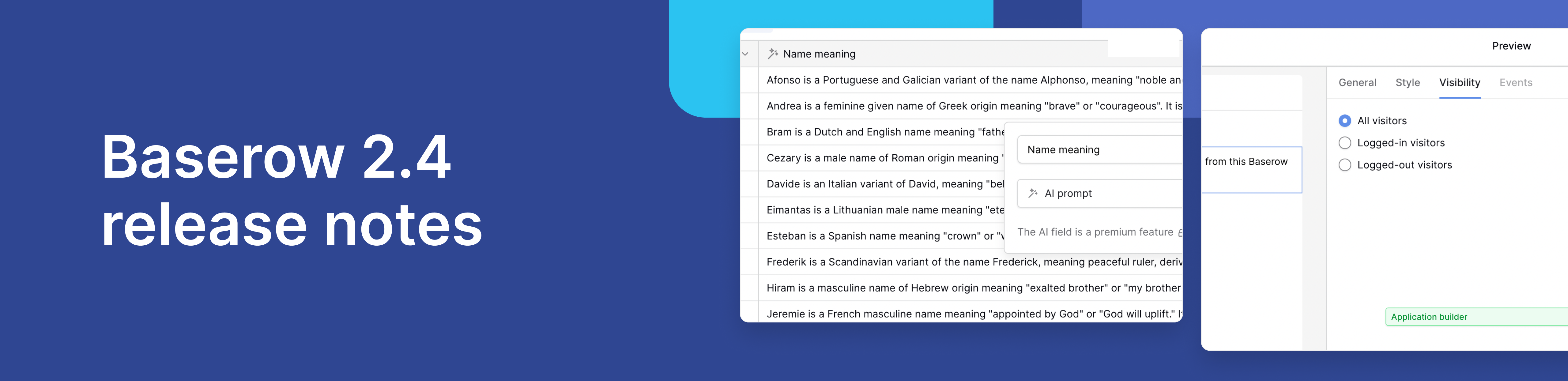
Baserow 2.4 adds Button fields, Graph elements, workflow automation, AI provider management, improved Group By views, and 30+ more updates.

Discover how Airtable and Baserow compare in features, flexibility, speed, and scalability. Compare pricing plans and hidden costs to make an informed decision!

Explore the best open-source software alternatives to proprietary products. Discover OSS tools, licenses, and use cases with our updated directory.