

“It’s a great tool making spreadsheets fun again.”
Researcher, Charité – Universitätsmedizin Berlin
Charité replaced vulnerable spreadsheets and custom tools with a compliant, automated Baserow database. Now, they have real-time collaboration for researchers, automated data synchronization, and a full audit trail to meet strict legal requirements.
Industry
Healthcare & Research
Organization Size
Enterprise (20,000+)
Region
Europe (Germany)
Baserow Capabilities
- Database & Real-Time Collaboration
- Audit Logs (Compliance)
- API & Webhooks
- Custom Data Synchronization
About Charité
Charité – Universitätsmedizin Berlin is one of Europe’s largest university hospitals, boasting a 300-year history of medical excellence. As a world-renowned institution, it acts as a unified powerhouse for both patient care and cutting-edge biomedical research. With thousands of scientists and physicians working across disciplines, the ability to manage sensitive patient and research data securely and efficiently is critical to their mission.
Challenge: The Risk of Spreadsheet Silos
In the high-stakes world of medical research, data integrity is non-negotiable. Charité faced a significant challenge in managing the influx of patient and research data coming from various external databases. The existing workflow relied on scattered spreadsheets and rigid custom-built tools, which created dangerous silos.
This fragmentation made it nearly impossible for teams to collaborate in real-time without version control conflicts. More critically, the lack of robust governance in standard spreadsheets posed a compliance risk. Researchers spent valuable hours manually inputting data, increasing the likelihood of human error, while IT teams struggled to maintain the strict audit trails required by healthcare data protection laws.
Solution: A Compliant, Automated Data Hub
Charité turned to Baserow to build a secure, centralized data management platform that could handle the complexities of medical research while remaining user-friendly for non-technical staff.
- Automated Data Ingestion: The team utilized Baserow’s API to deploy customized data synchronization scripts. These scripts automatically feed data from external research platforms directly into Baserow tables, eliminating manual entry.
- Smart Automation: By implementing webhooks, Charité automized cell inputs, ensuring that data updates trigger instant workflows without human intervention.
- Governance & Compliance: Crucially for a healthcare setting, Baserow provided the data governance and audit trail features necessary to meet legal requirements. Every change is tracked, ensuring total accountability for patient data.
Results: Secured Data and Happy Researchers
1. Meeting Legal Requirements with Ease
The shift to Baserow provided the rigorous audit trails and governance controls needed to satisfy strict data compliance regulations. The legal and IT teams now have full visibility into who accessed or modified data and when, securing the institution against compliance risks.
2. Real-Time Collaboration
Research is no longer a solitary task stuck in a local file. Baserow enabled real-time collaboration, allowing multiple team members to work on the same datasets simultaneously. This has broken down silos between departments, accelerating the pace of analysis and discovery.
3. Hours Saved through Automation
By automating the synchronization of external databases and cell inputs, Charité has reclaimed countless hours previously lost to manual data management. This efficiency allows researchers to focus on what matters most: medical breakthroughs. As one researcher noted, the intuitive interface has transformed their daily work, making spreadsheets fun again.
Future Outlook: Scaling Research Capabilities
With a solid, compliant foundation in place, Charité is well-positioned to expand its use of Baserow across more departments. The flexibility of the platform allows them to adapt quickly to new research protocols, ensuring that their data infrastructure evolves as fast as their medical discoveries.

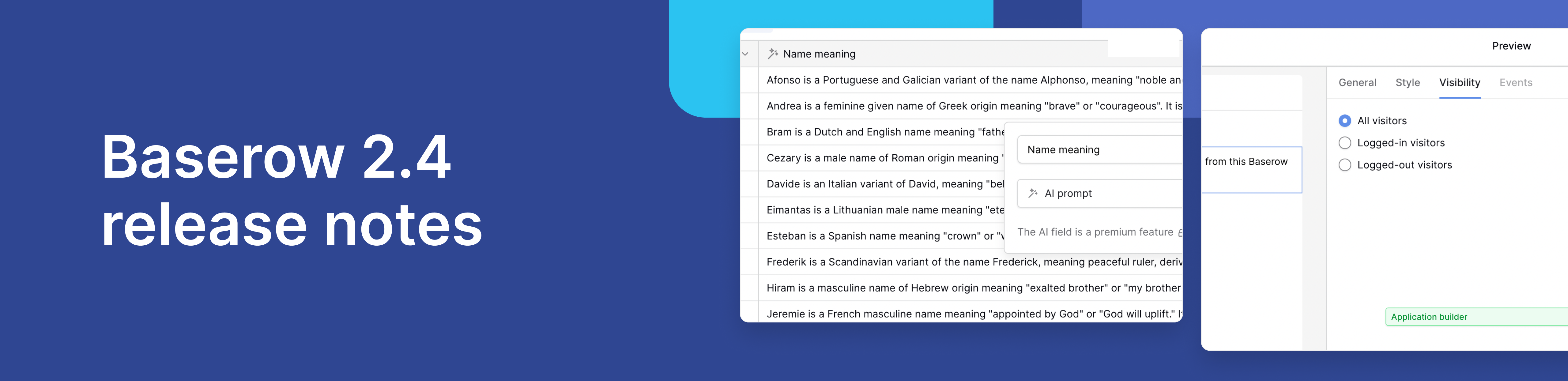
Baserow 2.4 adds Button fields, Graph elements, workflow automation, AI provider management, improved Group By views, and 30+ more updates.

Discover how Airtable and Baserow compare in features, flexibility, speed, and scalability. Compare pricing plans and hidden costs to make an informed decision!

Explore the best open-source software alternatives to proprietary products. Discover OSS tools, licenses, and use cases with our updated directory.