
TL;DR
- Digital sovereignty is about more than where your data is stored.
- A software vendor’s headquarters doesn’t always reflect where its products are developed and maintained.
- We analyzed 120 popular SaaS tools and found that engineering teams are often located in different countries than company headquarters.
- Organizations evaluating software should consider headquarters, engineering team location, data residency, cloud infrastructure, and vendor lock-in risks.
- Open-source and self-hosted software can help increase control and support digital sovereignty goals.
Digital sovereignty has become a growing priority for organizations evaluating software vendors. Across the European Union and beyond, governments, businesses, and public institutions are looking for ways to maintain greater control over their technology, data, and digital operations.
Much of the discussion focuses on where data is stored, which cloud providers are used, and whether software complies with local regulations. However, digital sovereignty is about more than data residency. It also involves control over digital infrastructure, software supply chains, engineering resources, and operational dependencies.
To better understand these factors, we analyzed 120 popular SaaS tools and examined not only their headquarters but also where their engineering teams are located. The results show that headquarters alone rarely tell the full story.
What Is Digital Sovereignty?
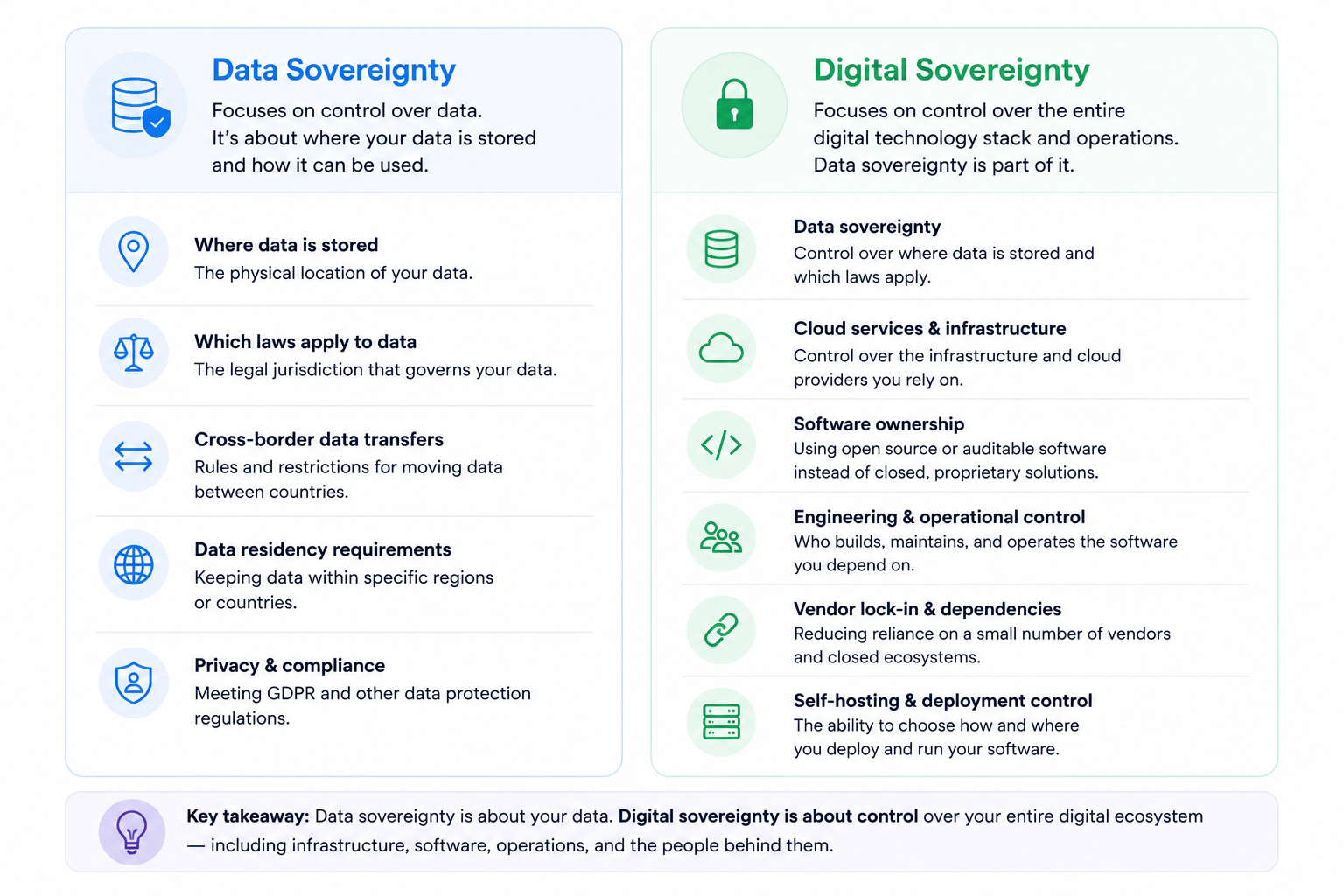
Digital sovereignty refers to the ability of organizations, governments, and the private sector to maintain control over their digital assets, technologies, and operations. While closely related to data sovereignty, digital sovereignty encompasses a broader set of concerns, including cloud services, software ownership, infrastructure control, and the ability to avoid excessive dependence on external providers.
The topic has gained significant attention within the European Union. Initiatives led by the European Commission, along with frameworks such as the Data Governance Act and the Digital Markets Act (DMA), aim to strengthen strategic autonomy and reduce reliance on foreign technology providers.
For businesses, digital sovereignty is increasingly becoming a practical procurement consideration rather than simply a policy discussion.
Why Digital Sovereignty Matters
Many organizations evaluate software vendors based on compliance certifications, data residency options, and hosting locations. These factors remain important, especially when handling personal data and complying with regulations such as the General Data Protection Regulation (GDPR).
However, digital sovereignty extends beyond where data is stored.
Organizations must also consider how software is developed, maintained, and operated. Questions about cross border data transfers, operational control, and long-term dependencies are becoming increasingly important.
In regulated industries, these concerns may even intersect with national security requirements and the protection of critical infrastructures. Businesses that depend heavily on cloud services need to understand who controls the systems they rely on and whether they are becoming overly dependent on a small number of technology providers.
This is where the software supply chain becomes relevant.
We Analyzed 120 Popular SaaS Tools
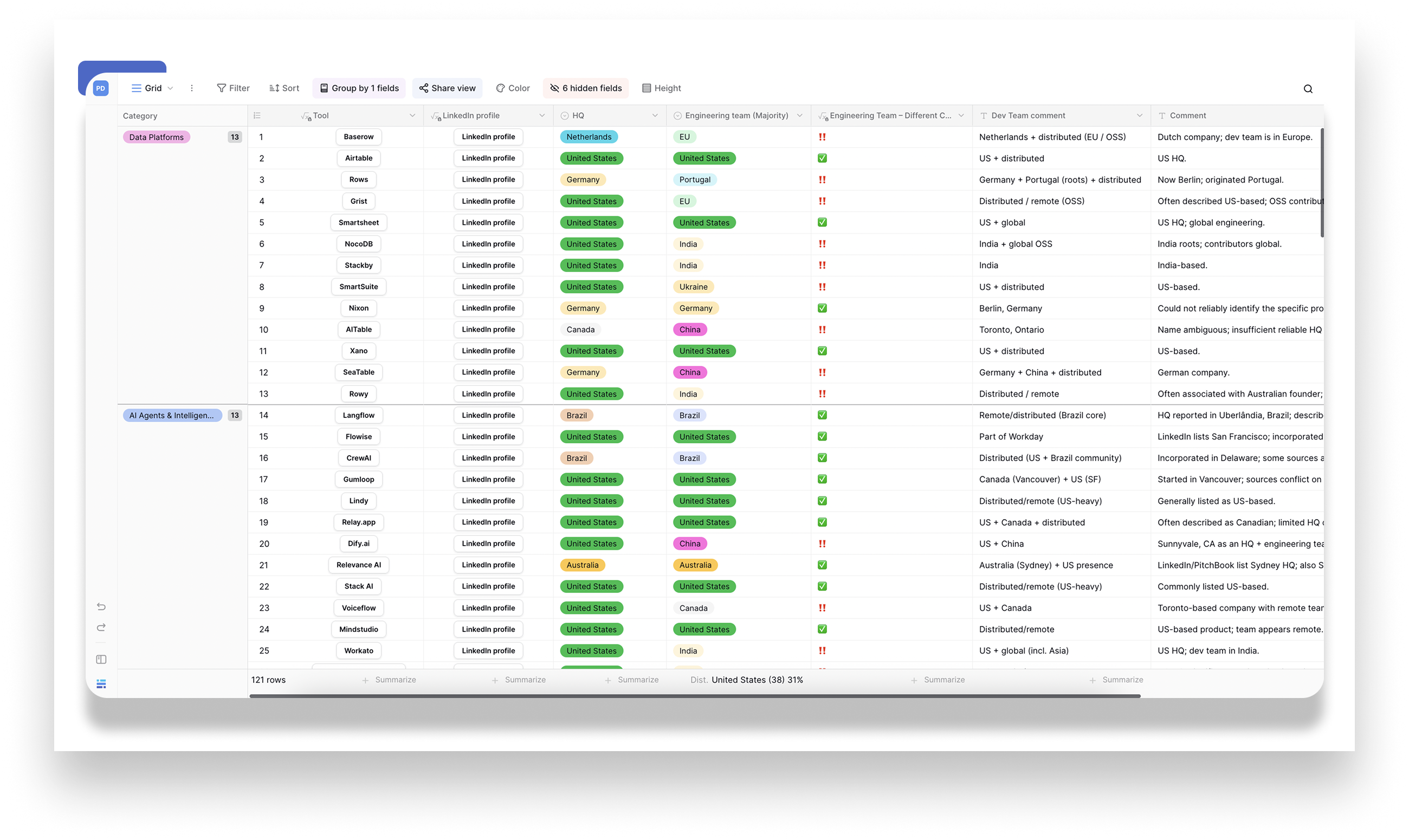
To explore digital sovereignty from a different perspective, we reviewed 120 widely used SaaS tools across multiple categories, including:
- AI platforms
- Database platforms
- Automation software
- Form builders
- Website builders
- Productivity tools
- Mobile app builders
For each tool, we researched publicly available information about:
- Company headquarters
- Engineering team location
- Workforce distribution
- Geographic concentration of developers
- Public statements about remote and distributed teams
Note: Headquarters and engineering team locations are based on publicly available company information, including company LinkedIn pages, at the time of our research. These details may change over time as companies grow, hire, and expand into new regions.
The objective was simple: determine whether a company’s headquarters accurately reflects where the software is actually built and maintained.
In many cases, it does not.
Headquarters vs Engineering Team Location
When organizations evaluate vendors, they often look at the country where the company is incorporated. While this information is useful, it only represents one aspect of digital sovereignty.
Many software companies maintain headquarters in the United States while relying heavily on engineering teams located elsewhere. Others have globally distributed teams spread across Europe, Asia, and North America.
This is not necessarily a problem. Modern software development is inherently global.
However, from a digital sovereignty perspective, organizations should understand where development work takes place, who maintains source code, and which jurisdictions influence critical operational decisions.
A vendor may store customer data in Europe while its engineering team is primarily located elsewhere. Another company may operate from a European headquarters while depending on infrastructure providers outside the region.
Both scenarios can affect sovereignty considerations.
The Hidden Risks of Vendor Lock-In
One of the biggest challenges to digital sovereignty is vendor lock-in.
When organizations become dependent on a single provider, migrating away can become difficult, expensive, or operationally risky. This can limit flexibility and reduce control over critical systems.
Vendor lock-in can occur through proprietary formats, closed ecosystems, or dependence on specific cloud services. It can also emerge when organizations lack visibility into how their software supply chain operates.
Understanding where software is developed and maintained helps organizations make more informed decisions about long-term risk.
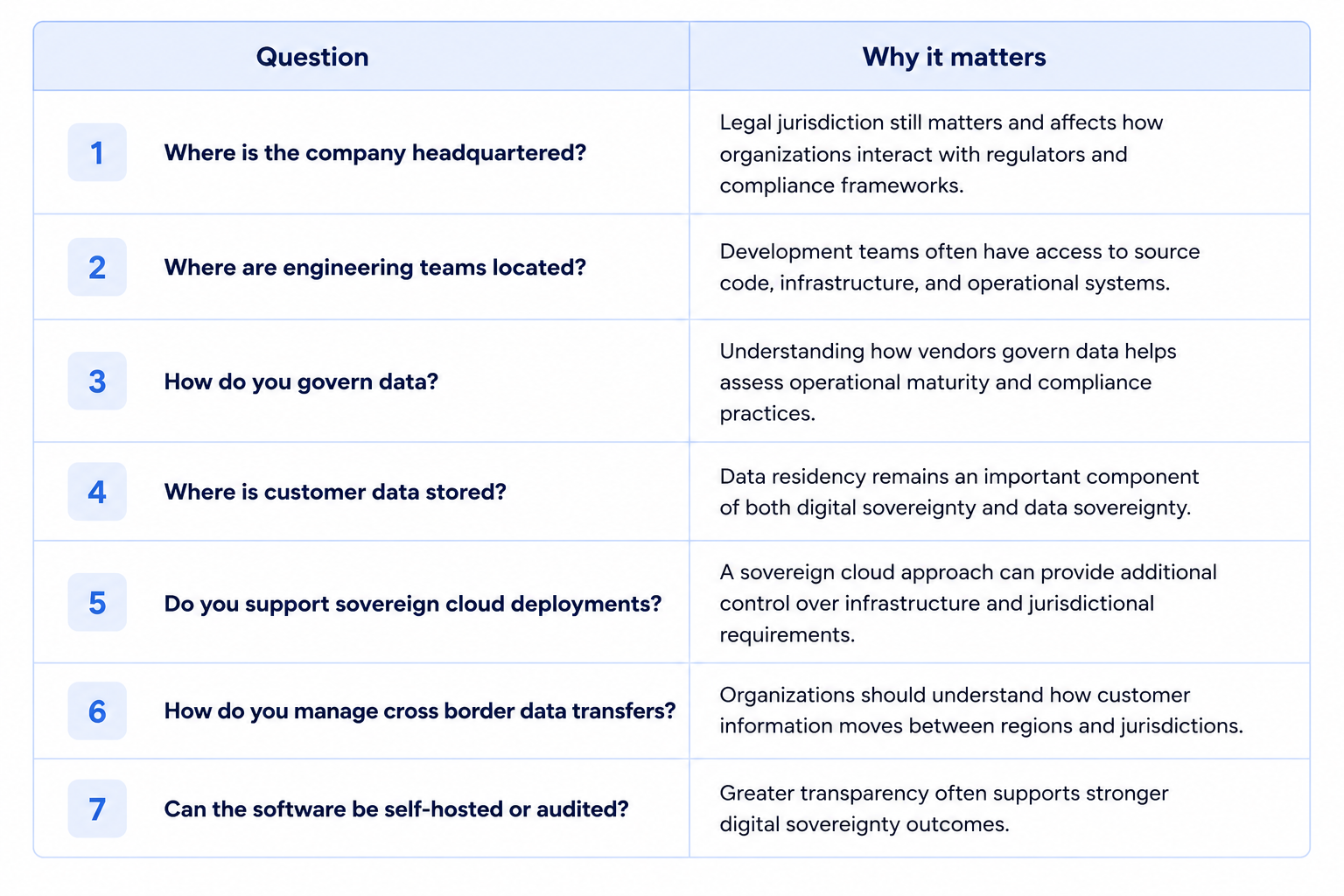
Questions to Ask Software Vendors
Organizations evaluating digital sovereignty should look beyond marketing claims and ask practical questions.
Open Source and Strategic Autonomy
Open source software is increasingly viewed as an enabler of digital sovereignty because it reduces dependence on a single vendor.
Organizations gain greater visibility into how software works and can maintain more control over deployment, security, and long-term operations. Combined with self-hosting options, open source software can support strategic autonomy by giving organizations more flexibility and reducing reliance on foreign providers.
This approach has become particularly relevant within the European Union, where policymakers and businesses are actively exploring ways to strengthen digital infrastructure while maintaining global competitiveness.
How Baserow Supports Digital Sovereignty
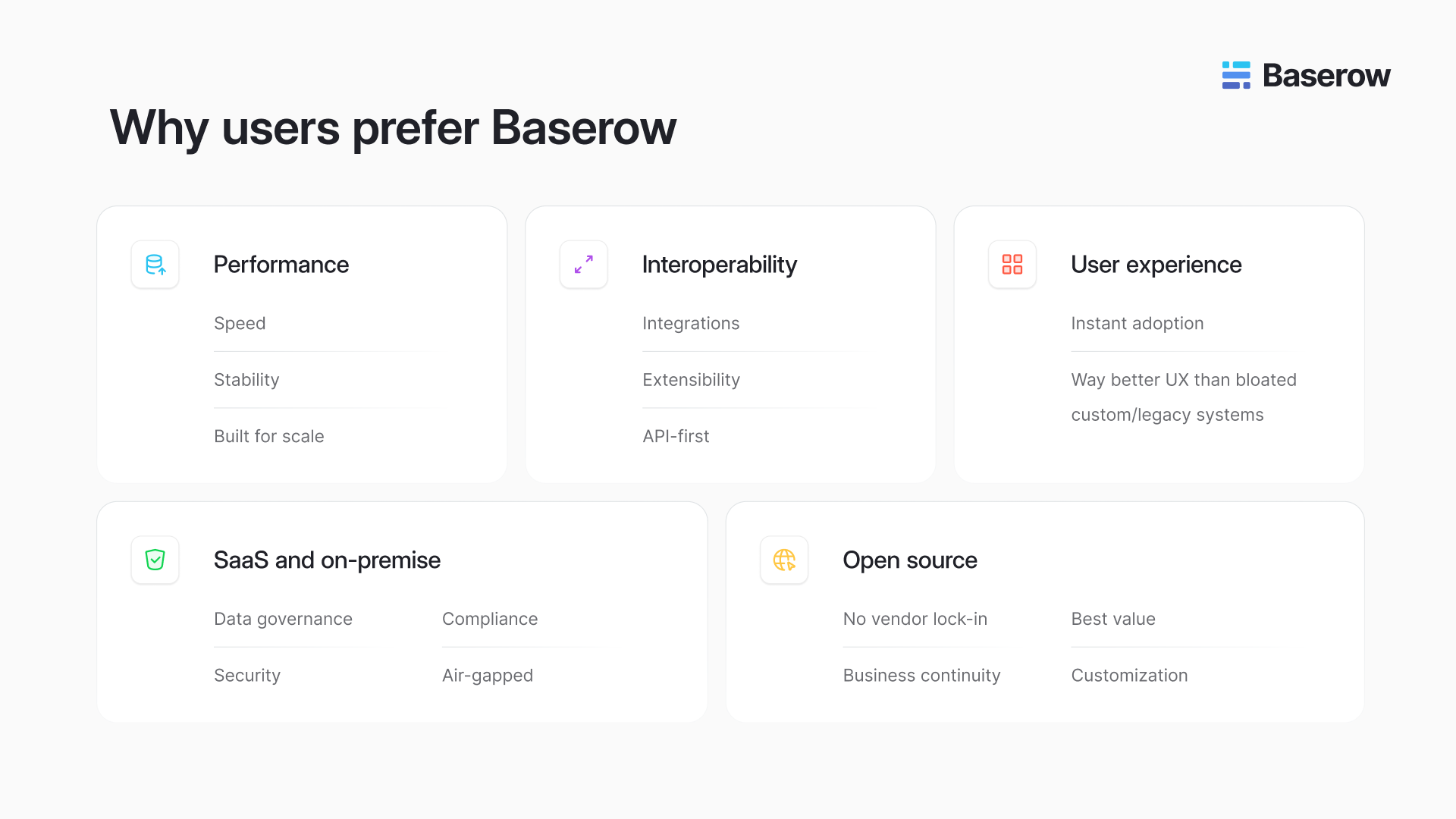
Organizations evaluating software through a digital sovereignty lens often look for ways to maintain control over their data, infrastructure, and long-term technology choices.
Baserow was built with these principles in mind.
European Roots
Baserow is headquartered in the Netherlands and has strong European roots, making it an attractive option for organizations seeking alternatives to US-based SaaS platforms.
Open Source Software
Unlike many proprietary SaaS tools, Baserow is open source. Organizations can inspect the source code, audit how the platform works, and avoid dependence on a closed vendor ecosystem.
Self-Hosting Options
For organizations with strict sovereignty requirements, Baserow can be self-hosted on infrastructure they control. This allows businesses and public sector organizations to determine where data is stored and processed.
Reduced Vendor Lock-In
Digital sovereignty is often limited by vendor lock-in. Baserow helps reduce this risk by giving organizations control over their deployment model and access to their data.
Flexible Data Governance
Whether deployed in the cloud or self-hosted, Baserow enables organizations to implement data governance practices that align with their internal policies, regulatory requirements, and operational needs.
Digital Sovereignty Requires Looking Beyond Headquarters
Our analysis of 120 SaaS tools highlights an important reality: a company’s headquarters rarely tells the complete story.
Digital sovereignty depends on a combination of factors, including workforce location, software supply chains, cloud services, infrastructure ownership, operational access, and governance practices.
Organizations evaluating software should consider not only where vendors are registered but also where products are built, who maintains them, and how dependent they may become on external providers.
As regulations evolve and digital infrastructure becomes increasingly critical to business operations, digital sovereignty is no longer just a government concern. It is becoming a key factor in how organizations select, evaluate, and trust the software they use every day.

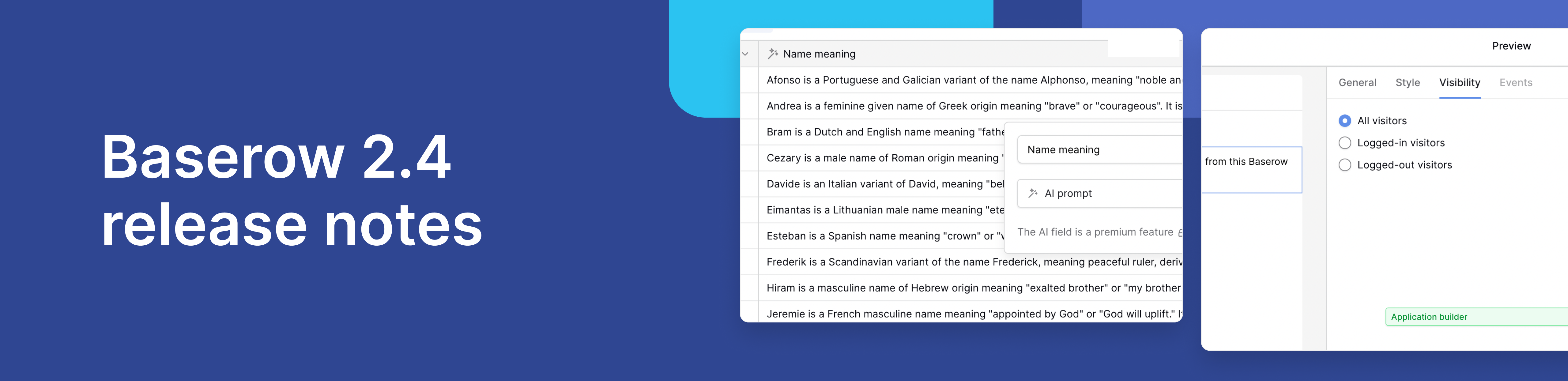
Baserow 2.4 adds Button fields, Graph elements, workflow automation, AI provider management, improved Group By views, and 30+ more updates.

Discover how Airtable and Baserow compare in features, flexibility, speed, and scalability. Compare pricing plans and hidden costs to make an informed decision!

Explore the best open-source software alternatives to proprietary products. Discover OSS tools, licenses, and use cases with our updated directory.