
The European Union’s Digital Operational Resilience Act (DORA) and NIS2 directive are reshaping how European companies manage cybersecurity, ICT risk management, operational resilience, and third-party technology providers.
These regulations encourage financial institutions and other regulated organizations to strengthen digital operational resilience by reducing dependency on non-transparent or high-risk ICT services and improving control over infrastructure, cybersecurity, and operational processes.
As a result, many European companies are increasingly evaluating sovereign solutions, open source software, self-hosted infrastructure, and European technology providers that align with EU regulatory requirements.
Platforms like Baserow support these goals by offering:
- Open source infrastructure
- Self-hosting capabilities
- Full data ownership
- API-first architecture
- Workflow automation
- Flexible deployment options
- Reduced vendor lock-in
For organizations preparing for DORA compliance, ICT third-party risk management, and operational resilience testing, sovereign digital infrastructure is becoming a strategic priority.
What Is EU DORA?
The Digital Operational Resilience Act (DORA) is a European Union regulation designed to improve the operational resilience of financial entities and ICT systems across the financial services sector.
DORA officially applies from 17 January 2025 and introduces standardized requirements for:
- ICT risk management framework
- Digital operational resilience testing
- ICT related incident reporting
- ICT third party risk management
- Cyber resilience
- Operational continuity
- Security governance
- Threat led penetration testing (TLPT)
The regulation applies to many financial entities, including:
- Banks
- Insurance companies
- Investment firms
- Financial institutions
- Payment providers
- ICT third party service providers
The goal is to ensure the resilience of financial entities against cyber threats, operational failures, and disruptions caused by critical ICT services.
Why DORA and NIS2 Encourage Sovereign Solutions
European regulations increasingly focus on transparency, accountability, resilience, and operational control.
This creates strong incentives for organizations to adopt sovereign European technology solutions instead of relying entirely on external cloud vendors or opaque proprietary systems.
Reduced Third-Party Risk
DORA places significant emphasis on ICT third party risk.
Organizations must understand:
- Where their data is stored
- Who controls infrastructure
- How incidents are managed
- Which subcontractors are involved
- Whether systems can be audited
- How operational continuity is maintained
For many companies, open source and self-hosted software reduce dependency on external providers and improve visibility into business-critical infrastructure.
Greater Operational Resilience
The operational resilience act DORA requires organizations to strengthen resilience across ICT systems and business operations.
This includes:
- Incident response procedures
- Disaster recovery planning
- Operational continuity
- Resilience testing
- Cybersecurity governance
- Monitoring ICT services
Sovereign infrastructure gives organizations more control over operational environments and reduces reliance on centralized third-party platforms.
Data Sovereignty and European Compliance
Many European companies are prioritizing:
- EU-hosted infrastructure
- Open source software
- Self-hosting
- European technology providers
- Transparent security practices
This trend is accelerating because organizations must demonstrate stronger control over ICT systems under both DORA and NIS2 requirements.
The Connection Between DORA, NIS2, and Open Source Software
Open source software is increasingly viewed as compatible with European digital sovereignty initiatives because it provides:
- Transparency
- Auditability
- Infrastructure flexibility
- Vendor independence
- Security visibility
- Long-term sustainability
Organizations can inspect source code, manage deployments internally, and customize systems according to compliance and operational requirements.
This is especially important for:
- Financial services
- Critical infrastructure
- Government organizations
- Regulated industries
- ICT service providers
Why European Organizations Use Baserow for DORA and NIS2 Readiness
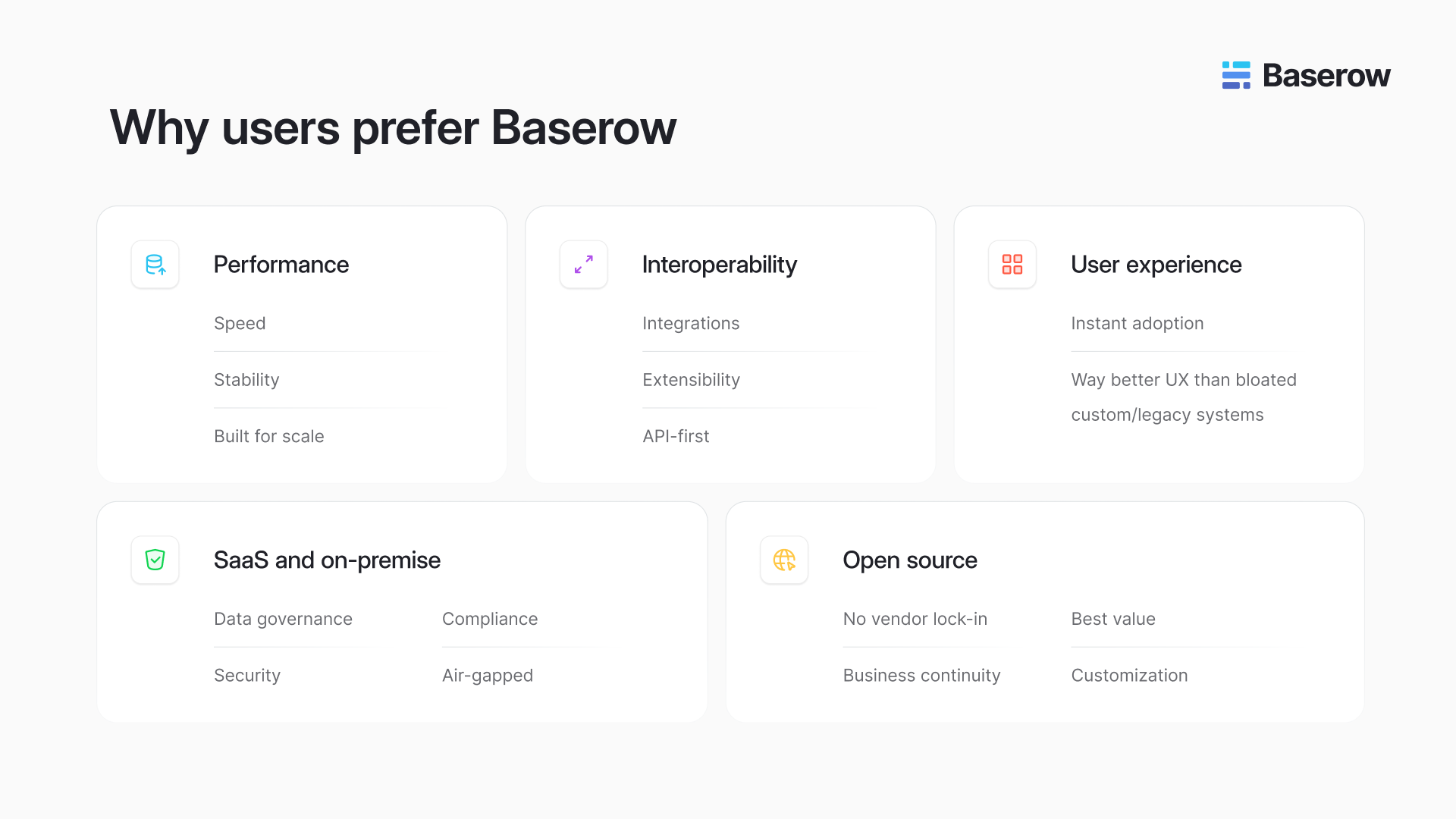
Baserow is an open source platform that helps European companies support EU DORA and NIS2 operational resilience requirements.
Organizations use Baserow to:
- Build sovereign internal systems
- Reduce ICT third party risk
- Self-host on EU infrastructure
- Improve operational resilience
- Manage ICT risk management workflows
- Reduce vendor lock-in
- Maintain full data ownership
Because Baserow is open source and self-hosted, it aligns with the growing demand for sovereign European software solutions under EU DORA and NIS2 regulations.
Why European Companies Are Re-Evaluating SaaS Dependency
Many organizations are reassessing their dependence on closed SaaS platforms because DORA introduces stricter requirements for ICT related incident management and third-party oversight.
Concerns include:
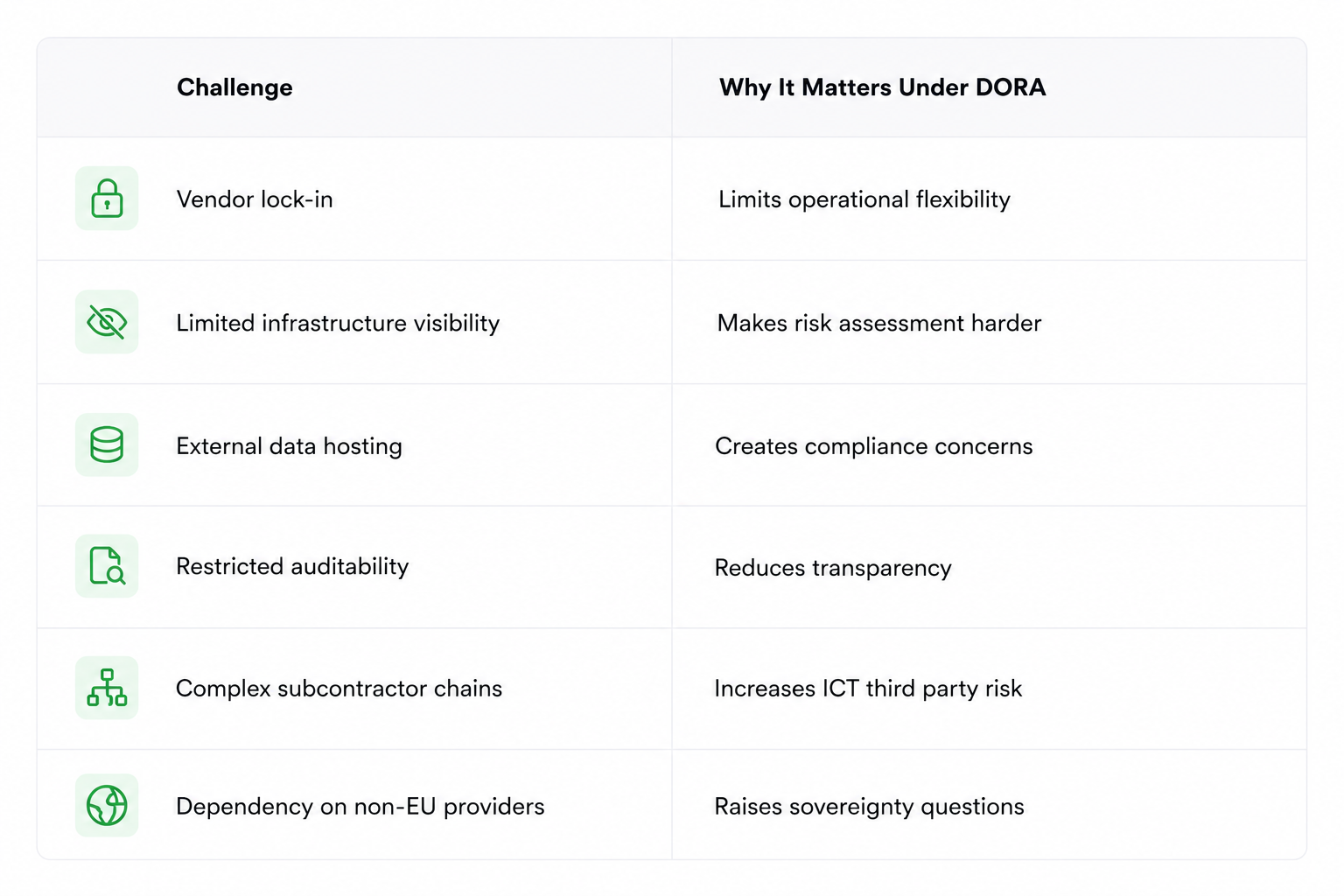
As a result, sovereign and open source alternatives are gaining more attention across Europe.
How Baserow Supports Sovereign Digital Infrastructure
Baserow aligns with many principles organizations are prioritizing under DORA and NIS2.
Open Source Transparency
Baserow is open source, allowing organizations to inspect, audit, and customize the platform according to internal governance requirements.
Self-Hosting Flexibility
Companies can deploy Baserow on their own infrastructure or within European cloud environments to support sovereignty and compliance strategies.
API-First Architecture
Baserow enables integration with internal ICT systems, workflow automation tools, and compliance processes through APIs and webhooks.
Reduced Vendor Lock-In
Organizations maintain control over their data, infrastructure, workflows, and operational processes.
Workflow Automation and Operational Resilience
Baserow helps teams manage:
- Incident workflows
- Compliance tracking
- Risk management
- Operational reporting
- ICT governance processes
- Internal approval systems
This supports stronger operational resilience and centralized information management.
Digital Operational Resilience Requires Flexible Infrastructure
The Digital Operational Resilience Act DORA is not only about cybersecurity.
It also changes how organizations think about:
- Infrastructure control
- Operational continuity
- ICT governance
- Vendor dependencies
- Incident management
- Long-term resilience
Organizations that rely entirely on closed external platforms may face increasing complexity around compliance, operational transparency, and risk management.
Flexible open infrastructure helps organizations adapt faster to evolving EU regulatory expectations.
Why Sovereign European Technology Is Becoming Strategic
European policymakers increasingly support the development of sovereign digital infrastructure across the European Union.
This includes interest in:
- European cloud providers
- Open source technologies
- Self-hosted infrastructure
- Digital sovereignty
- Independent ICT services
- Transparent cybersecurity practices
For many organizations, sovereign technology is no longer only a technical decision — it is becoming part of long-term operational resilience strategy.
Frequently Asked Questions
What is EU DORA?
The Digital Operational Resilience Act (DORA) is an EU regulation that establishes cybersecurity, ICT risk management, and operational resilience requirements for financial entities and ICT service providers.
When does DORA apply?
DORA officially applies from 17 January 2025 across the European Union.
What is ICT third party risk under DORA?
ICT third party risk refers to risks created by external technology providers, cloud services, software vendors, and outsourced ICT services used by regulated organizations.
Why does DORA encourage sovereign solutions?
DORA increases focus on operational control, auditability, resilience, and third-party oversight, which encourages organizations to evaluate sovereign and self-hosted infrastructure options.
What is digital operational resilience?
Digital operational resilience refers to an organization’s ability to withstand, respond to, recover from, and adapt to ICT disruptions and cyber threats.
How does NIS2 relate to DORA?
NIS2 strengthens cybersecurity requirements across critical sectors in the EU, while DORA focuses specifically on financial services and operational resilience.
Why is open source software important for digital sovereignty?
Open source software provides transparency, auditability, flexibility, and reduced vendor lock-in, helping organizations maintain greater control over infrastructure and operations.
Can Baserow support operational resilience initiatives?
Yes. Baserow can support workflow automation, compliance tracking, operational reporting, and internal governance processes through self-hosted and open source infrastructure.
The Digital Operational Resilience Act (DORA) and NIS2 are accelerating conversations around digital sovereignty, operational resilience, and infrastructure control across Europe.
Organizations are increasingly evaluating how their ICT services, third-party providers, and operational systems align with evolving EU regulations.
As companies strengthen cybersecurity governance and ICT risk management frameworks, sovereign open source solutions are becoming an important part of long-term resilience strategy.
Platforms like Baserow help organizations maintain greater flexibility, transparency, and operational control while supporting modern workflow automation and internal business operations.

Baserow 2.4 adds Button fields, Graph elements, workflow automation, AI provider management, improved Group By views, and 30+ more updates.

Discover how Airtable and Baserow compare in features, flexibility, speed, and scalability. Compare pricing plans and hidden costs to make an informed decision!

Explore the best open-source software alternatives to proprietary products. Discover OSS tools, licenses, and use cases with our updated directory.