
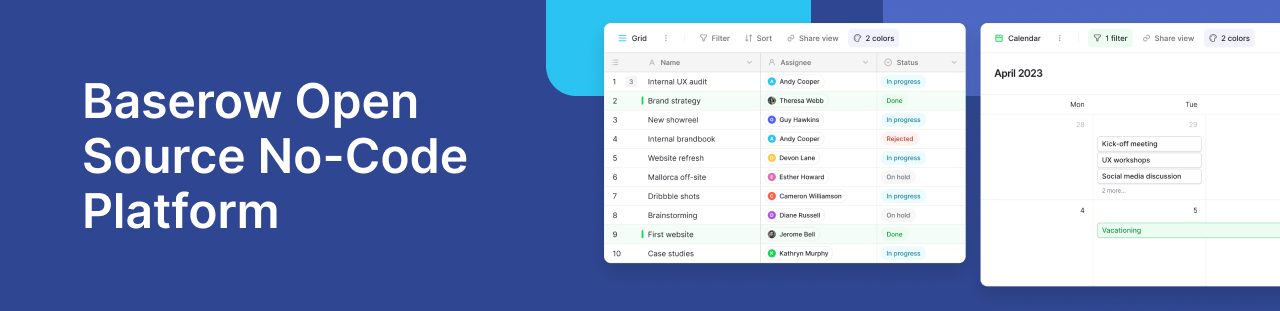
Baserow is an open source no-code platform that helps teams build internal tools, databases, business applications, and workflow automation systems without writing code. Unlike closed SaaS tools, Baserow offers self-hosting, API-first architecture, real-time collaboration, database management, and extensibility for developers and non-technical users alike.
Companies use Baserow to:
- Build internal tools
- Create business applications
- Manage operational workflows
- Replace spreadsheets like Google Sheets
- Automate business processes
- Develop client portals and management systems
- Create web applications with no-code workflows
- Build custom software development platforms
Baserow combines the simplicity of no-code software with the flexibility of open source development, making it a strong Airtable alternative for teams that need customization, scalability, and data ownership.
What Is Baserow?
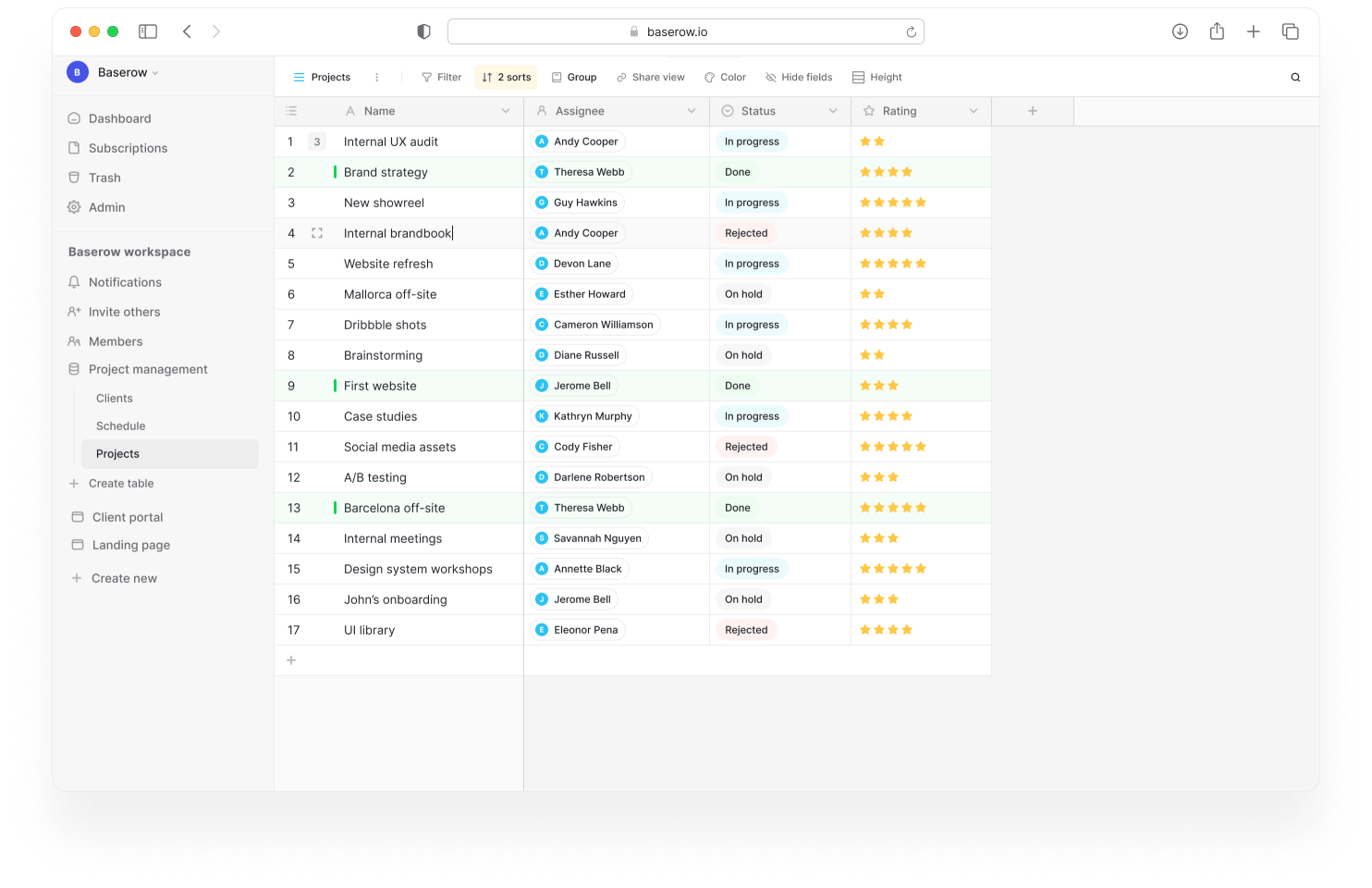
Baserow is an open source no-code application builder designed for teams that want to create custom workflows, databases, and internal business software faster.
Instead of relying on spreadsheets or expensive custom software development, teams can use Baserow to organize data, automate processes, and collaborate in real time.
With Baserow, you can create:
- CRM systems
- Project management tools
- Inventory management systems
- Client portals
- Approval workflows
- Operations dashboards
- Business process management apps
- Custom web applications
Because Baserow is open source, organizations can self-host the platform, customize workflows, extend functionality with APIs, and maintain full control over their data.
Why Teams Choose Baserow Over Other Open Source No-Code Platforms
Many open source no-code platforms focus either on developers or non-technical users. Baserow combines both.
No-Code Simplicity
Baserow provides a clean interface that allows teams to build workflows and applications without coding knowledge.
Users can:
- Create databases visually
- Build relationships between tables
- Use forms and views
- Filter and organize data
- Automate repetitive tasks
- Collaborate in real time
This makes Baserow accessible for operations teams, startups, agencies, and enterprise departments.
Open Source Flexibility
Unlike closed no-code software, Baserow gives organizations complete flexibility.
Teams can:
- Self-host on their own infrastructure
- Access the source code
- Customize business logic
- Integrate with existing systems
- Extend functionality with APIs
- Maintain security and compliance requirements
This combination of no-code usability and open source extensibility is why many businesses use Baserow as an open source Airtable alternative.
API-First Architecture
Baserow automatically generates APIs from your database structure.
Developers can connect Baserow to:
- Web applications
- Mobile apps
- Workflow automation tools
- External databases
- Internal software systems
This makes Baserow useful not only for no-code teams but also for software development teams building scalable business applications.
Build Internal Tools Without Traditional Software Development
Traditional software development projects are expensive and slow.
Baserow helps teams create internal tools much faster using no-code workflows and database-driven applications.
Examples include:
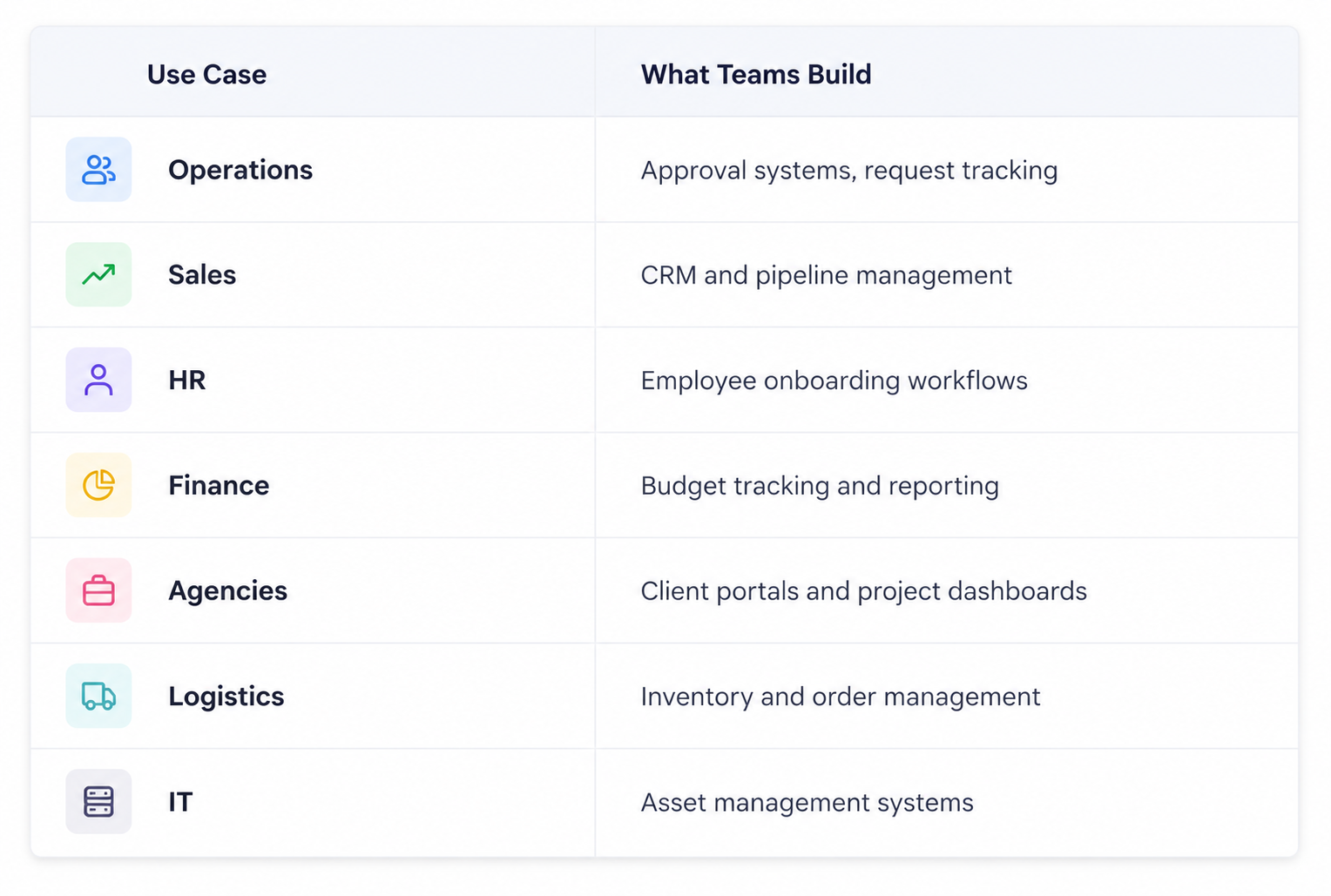
Instead of managing complex spreadsheets in Google Sheets, teams can centralize data in Baserow and automate workflows across departments.
Baserow for Workflow Automation
Modern businesses rely on workflow automation to reduce repetitive work and improve operational efficiency.
Baserow supports workflow automation through:
- Database triggers
- Automations
- Integrations
- APIs
- Webhooks
- Real-time updates
Teams can automate:
- Notifications
- Status updates
- Task assignments
- Data synchronization
- Approval flows
- Reporting processes
This helps businesses scale operations without increasing manual administrative work.
Baserow vs Closed No-Code Platforms
Many no-code platforms lock users into proprietary ecosystems.
Baserow provides a more flexible alternative.
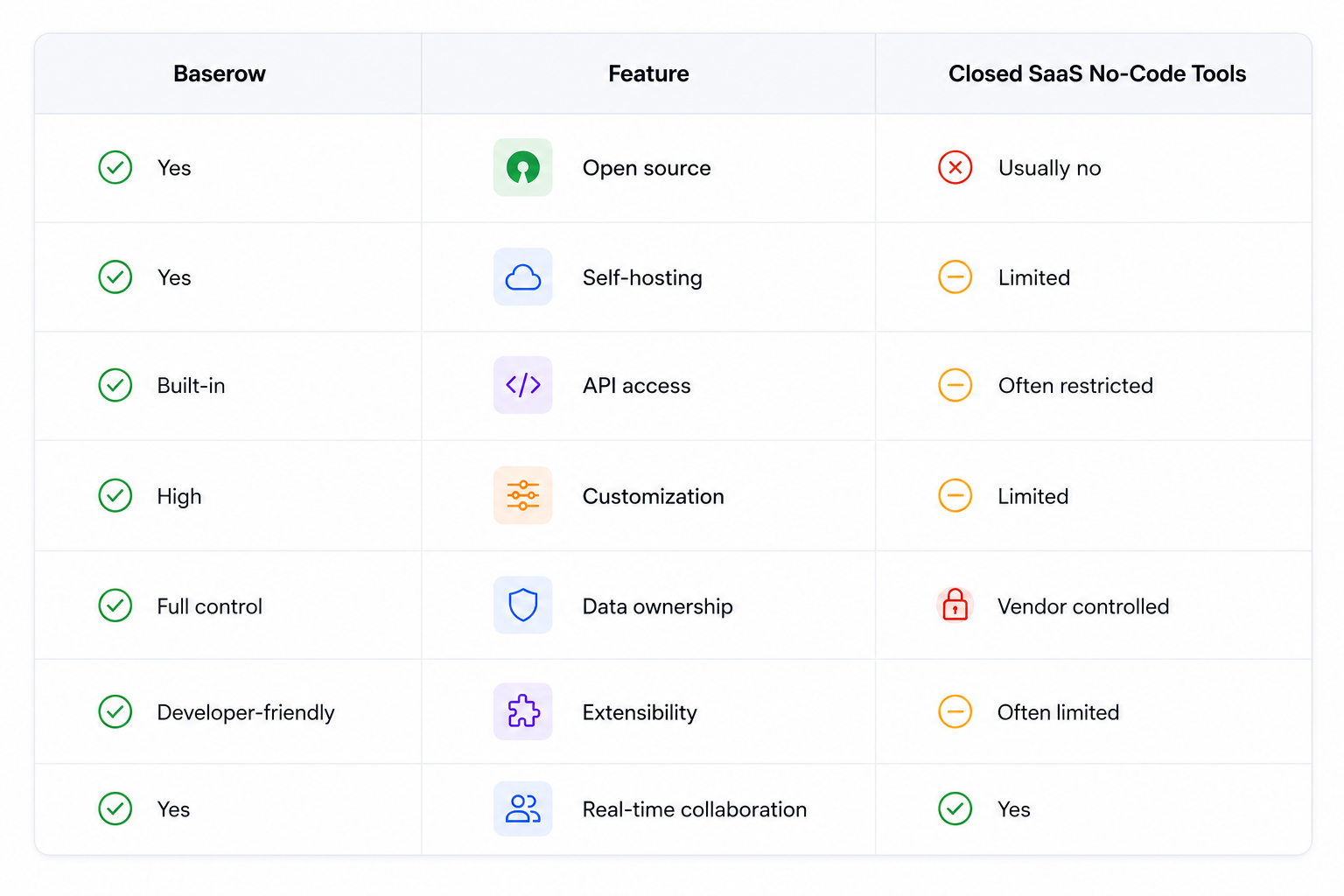
For organizations prioritizing flexibility, compliance, and long-term scalability, Baserow offers a practical open source no-code solution.
Use Baserow as an Open Source Airtable Alternative
Many teams searching for an open source no-code database platform are specifically looking for an Airtable alternative.
Baserow is frequently chosen because it combines:
- Spreadsheet-style simplicity
- Relational database functionality
- Open source infrastructure
- API integrations
- Workflow automation
- Self-hosting capabilities
- Scalable business logic
Teams migrating from Airtable or Google Sheets can quickly organize data and build workflows inside Baserow without extensive onboarding.
Real-Time Collaboration for Modern Teams
Baserow supports real-time collaboration so teams can work together efficiently across departments.
Features include:
- Shared workspaces
- Live updates
- Team permissions
- Role-based access
- Collaborative editing
- Centralized database management
This helps organizations reduce data silos and improve operational visibility.
Baserow for Developers and Technical Teams
Although Baserow is designed as a no-code platform, developers also benefit from its flexibility.
Technical teams can:
- Use REST APIs
- Build custom integrations
- Extend the platform
- Add custom business logic
- Connect external systems
- Create scalable web applications
Because Baserow is open source, developers can inspect and customize the platform according to company requirements.
How Businesses Use Baserow
Organizations use Baserow across many industries.
Operations Management
Build centralized management systems to track tasks, approvals, and operational workflows.
Customer Relationship Management
Create custom CRM systems with automated workflows and reporting dashboards.
Project Management
Manage projects, timelines, resources, and collaboration from a single platform.
Inventory & Logistics
Track inventory, shipments, suppliers, and fulfillment processes in real time.
Agency Operations
Build client portals, campaign trackers, and reporting systems for marketing and creative agencies.
Why Open Source No-Code Matters
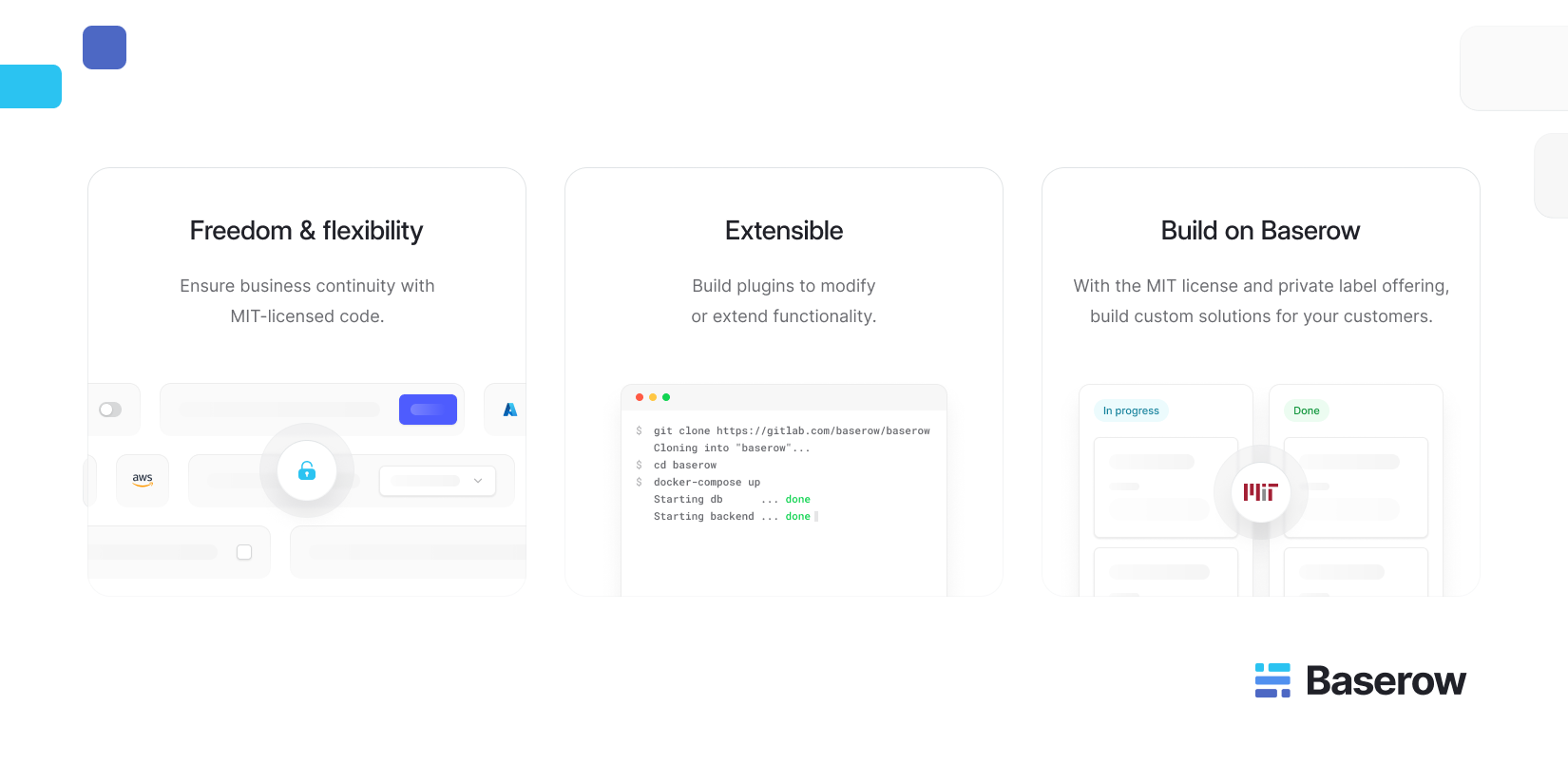
The demand for open source no-code software continues to grow because businesses want:
- Faster software development
- Lower operational costs
- Better flexibility
- Reduced vendor lock-in
- Full data ownership
- Easier workflow automation
- Scalable business applications
Baserow addresses these needs by combining usability with technical extensibility.
Instead of choosing between developer tools and no-code simplicity, organizations can use Baserow to support both technical and non-technical teams.
Frequently Asked Questions
What is an open source no-code platform?
An open source no-code platform allows users to build applications, workflows, and databases without programming while still providing access to the source code for customization and self-hosting.
Is Baserow open source?
Yes. Baserow is an open source no-code platform that supports self-hosting, APIs, workflow automation, and custom integrations.
Can Baserow replace Google Sheets?
Yes. Many teams use Baserow instead of Google Sheets when they need relational databases, workflow automation, real-time collaboration, and scalable business processes.
Is Baserow a good Airtable alternative?
Baserow is commonly used as an open source Airtable alternative because it provides database management, APIs, automation, and self-hosting capabilities.
Can developers use Baserow?
Yes. Although Baserow is designed for no-code users, developers can use APIs, integrations, and custom extensions to build advanced workflows and web applications.
What can you build with Baserow?
Teams use Baserow to build internal tools, CRM systems, inventory management systems, workflow automation tools, project management platforms, and other business applications.
Does Baserow support workflow automation?
Yes. Baserow supports automations, APIs, triggers, integrations, and webhooks for workflow automation and business process management.
Why do businesses choose open source no-code tools?
Businesses choose open source no-code platforms because they offer flexibility, lower costs, customization, self-hosting, and full control over data and infrastructure.
Baserow combines the accessibility of no-code software with the flexibility of open source infrastructure.
For teams looking to build internal tools, automate workflows, manage business processes, and create scalable applications without traditional software development complexity, Baserow provides a modern open source no-code solution.
Whether you are replacing spreadsheets, building workflow automation systems, or creating business applications, Baserow helps teams move faster while maintaining full control over their data and infrastructure.

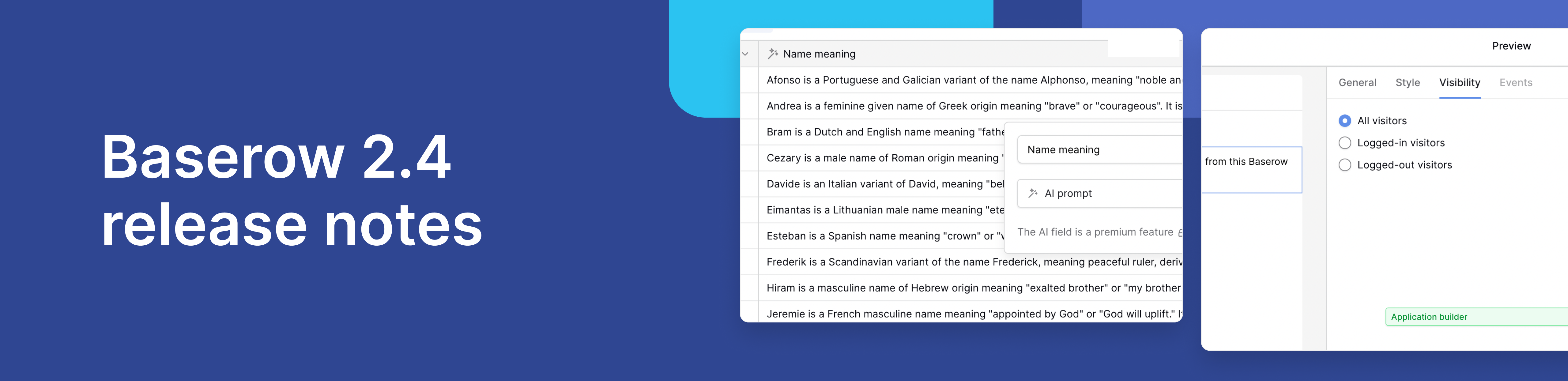
Baserow 2.4 adds Button fields, Graph elements, workflow automation, AI provider management, improved Group By views, and 30+ more updates.

Discover how Airtable and Baserow compare in features, flexibility, speed, and scalability. Compare pricing plans and hidden costs to make an informed decision!

Explore the best open-source software alternatives to proprietary products. Discover OSS tools, licenses, and use cases with our updated directory.