
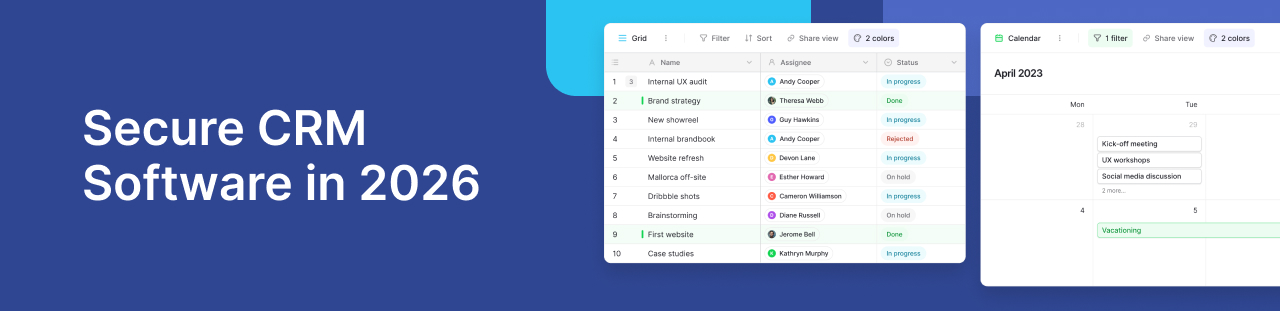
Secure CRM software helps businesses protect CRM data, prevent unauthorized access, and maintain customer trust while managing customer relationships and sales operations.
As CRM systems store sensitive customer data, companies increasingly prioritize:
- Strong security controls
- Access controls encryption
- Real-time monitoring
- GDPR and CCPA compliance
- Data breach prevention
- Role-based permissions
- Secure cloud infrastructure
Modern secure CRM software must balance usability, sales management, and data security while helping teams collaborate efficiently.
Platforms like Baserow support secure CRM workflows through:
- Self-hosting options
- Granular permissions
- API access controls
- Secure collaboration
- Workflow automation
- Open source transparency
- Real-time database management
For businesses managing customer relationship management at scale, CRM security is becoming a core operational requirement rather than an optional feature.
Why Secure CRM Software Matters in 2026
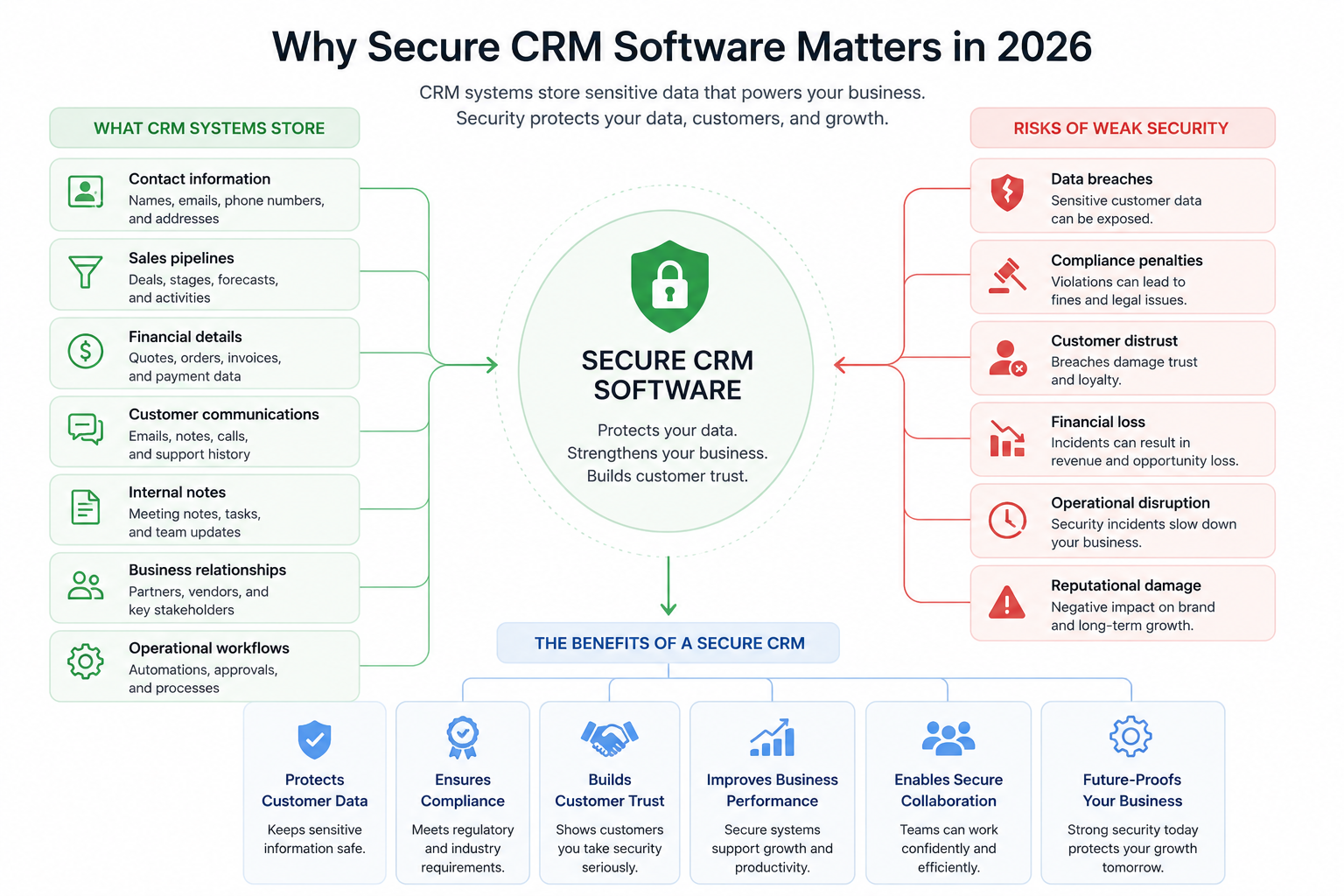
CRM systems contain highly sensitive customer data including:
- Contact information
- Sales pipelines
- Financial details
- Internal notes
- Customer communications
- Business relationships
- Operational workflows
As businesses rely more heavily on CRM systems for sales management and customer relationship management, the risks associated with weak security continue increasing.
A single data breach can lead to:
- Financial loss
- Compliance penalties
- Customer distrust
- Operational disruption
- Reputational damage
This is why businesses increasingly invest in secure CRM software with strong security standards and modern access controls.
What Makes a CRM Secure?
Secure CRM software combines multiple layers of protection to help organizations protect CRM data and reduce security risks.
Strong Access Controls
Strong access controls help prevent unauthorized access to CRM data.
Modern CRM systems should support:
- Role-based permissions
- Granular access management
- Multi-factor authentication
- Session controls
- Secure user authentication
These controls ensure employees only access the CRM data relevant to their role.
Access Controls Encryption
Encryption helps secure CRM data both in transit and at rest.
Businesses should look for CRM systems that support:
- Encrypted databases
- HTTPS connections
- API security
- Backup encryption
- Secure infrastructure
Access controls encryption is especially important for businesses handling regulated or sensitive customer information.
Real-Time Security Monitoring
Real-time monitoring helps businesses detect unusual activity before it becomes a major security incident.
Secure CRM software should support:
- Activity logs
- Audit trails
- User monitoring
- Incident alerts
- Permission tracking
Real-time visibility improves operational security and compliance readiness.
Secure CRM Software and Compliance
Many businesses must comply with regulations such as:
- GDPR
- CCPA
- Industry security standards
- Internal governance policies
Secure CRM systems help organizations improve compliance by supporting:
- Data access controls
- Auditability
- Permission management
- Data retention policies
- Security documentation
Compliance is no longer only an enterprise concern — businesses of all sizes increasingly need stronger CRM security practices.
Common CRM Security Risks
Organizations often underestimate how vulnerable CRM systems can become without proper security practices.
Weak Passwords
Weak passwords remain one of the most common causes of unauthorized access.
Businesses should enforce:
- Strong password policies
- Multi-factor authentication
- Password rotation
- User access reviews
Overly Broad Permissions
Many CRM systems fail because employees receive excessive access to sensitive customer data.
Granular permissions help businesses:
- Limit exposure
- Reduce insider risks
- Improve accountability
- Protect customer trust
Outdated Software
Software updated regularly is critical for maintaining CRM security.
Businesses should prioritize CRM software providers that actively maintain:
- Security patches
- Infrastructure updates
- API security
- Vulnerability management
How Secure CRM Software Improves Customer Trust
Customers expect businesses to protect CRM data and handle personal information responsibly.
A secure CRM system helps companies:
- Prevent unauthorized access
- Reduce data breaches
- Improve transparency
- Protect customer relationships
- Enhance customer trust
When businesses secure CRM data regularly and follow security standards, customers feel more confident sharing information.
Why Businesses Should Review CRM Data Regularly
Businesses should review CRM data regularly to improve security and reduce risks.
Regular reviews help teams:
- Remove outdated records
- Detect suspicious activity
- Improve access controls
- Protect customer data
- Maintain compliance
Secure CRM software makes it easier to monitor CRM systems in real time and manage customer relationship management securely.
Why Businesses Are Looking for Secure CRM Alternatives
Many companies are moving away from traditional CRM systems that create security or infrastructure limitations.
Businesses increasingly want:
- Better CRM data visibility
- Flexible hosting options
- Stronger access controls
- Open APIs
- Data ownership
- Reduced vendor lock-in
- Transparent security practices
This shift is driving interest in flexible and secure CRM software platforms.
How Baserow Supports Secure CRM Workflows
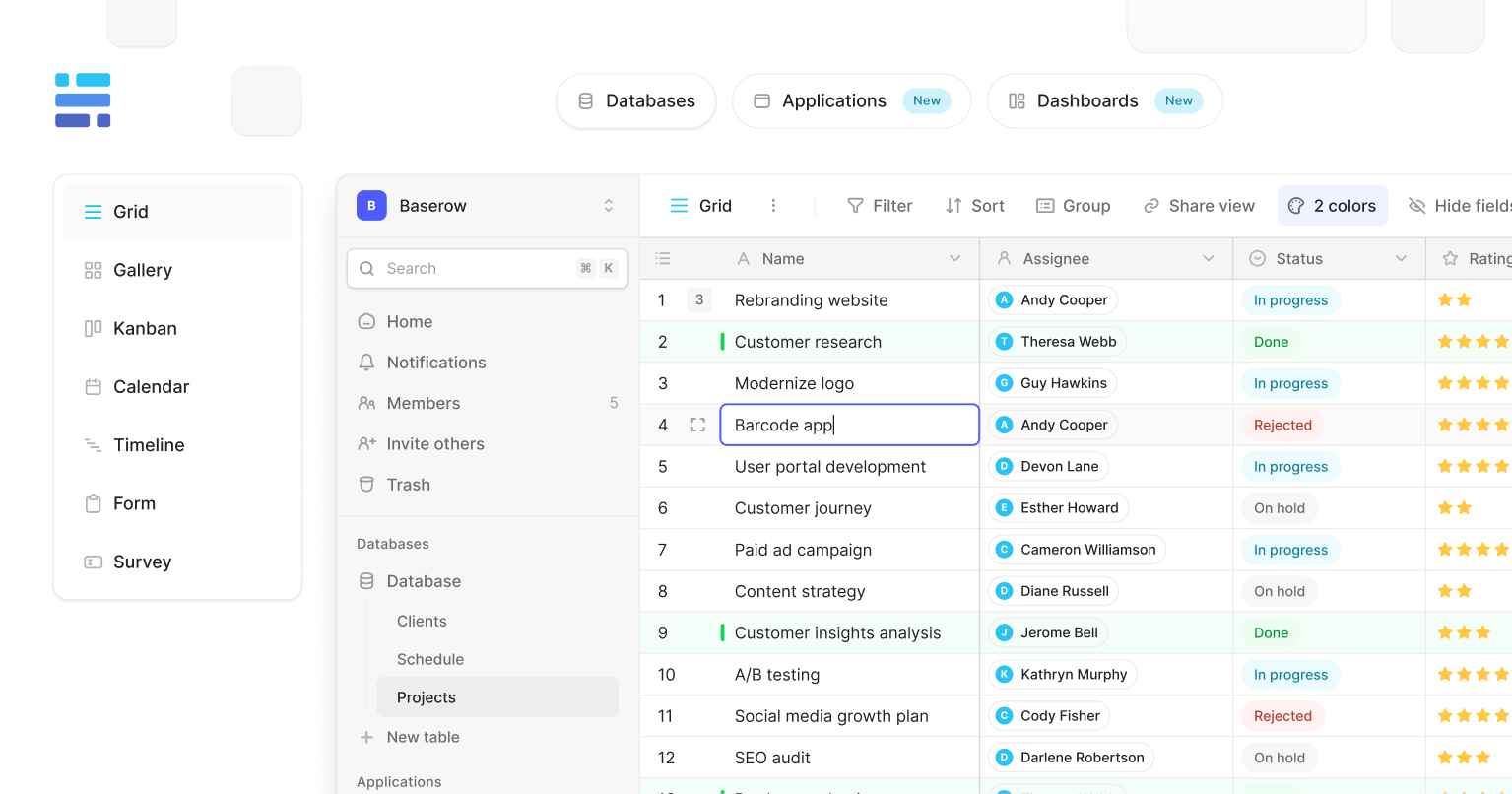
Baserow helps teams build secure CRM systems while maintaining flexibility and control over customer data.
Secure CRM Data Management
Baserow supports secure CRM data workflows through:
- Role-based permissions
- Granular access controls
- Secure APIs
- Real-time collaboration
- Database management
- Workflow automation
Organizations can control who accesses customer relationship management data across teams.
Self-Hosting and Data Ownership
Baserow gives businesses the option to self-host their CRM infrastructure.
This helps organizations:
- Protect CRM data internally
- Maintain infrastructure control
- Improve security visibility
- Reduce dependency on third-party systems
- Support internal compliance requirements
Open Source Transparency
Because Baserow is open source, organizations can inspect and customize their CRM infrastructure according to security requirements.
This provides greater transparency compared to closed CRM platforms.
Best Practices for Protecting CRM Data
Businesses can improve CRM security by following several core practices.
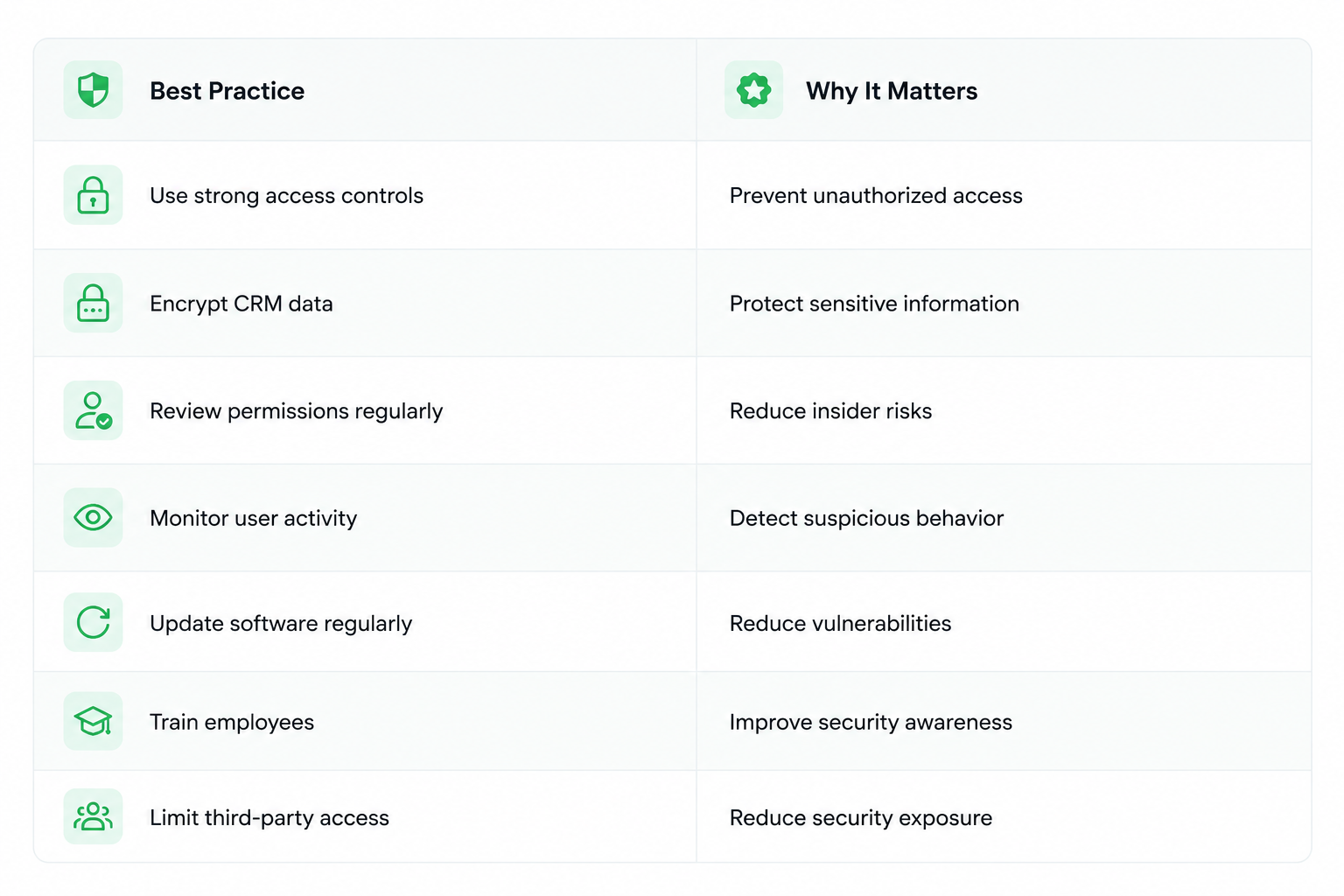
Strong CRM security requires both secure software and strong operational processes.
The Future of Secure CRM Software
In 2026 and beyond, CRM security will continue evolving alongside increasing cybersecurity risks and compliance expectations.
Businesses will prioritize:
- Real-time monitoring
- AI-assisted security analysis
- Stronger encryption
- Secure workflow automation
- Flexible infrastructure
- Privacy-first CRM systems
- Open and transparent platforms
Secure CRM software will become essential for maintaining customer trust and protecting operational data.
Frequently Asked Questions
What is secure CRM software?
Secure CRM software helps businesses manage customer relationships while protecting CRM data through encryption, permissions, access controls, and security monitoring.
Why is CRM security important?
CRM systems store sensitive customer data, sales information, and operational workflows that can become targets for unauthorized access or data breaches.
How can businesses protect CRM data?
Businesses can protect CRM data using strong passwords, encryption, role-based permissions, software updates, and real-time monitoring.
What are access controls in CRM software?
Access controls determine which users can view, edit, or manage CRM data inside a customer relationship management system.
What compliance standards affect CRM security?
Many organizations must follow GDPR, CCPA, and industry security standards when managing customer data inside CRM systems.
Why do businesses self-host CRM systems?
Self-hosting gives organizations greater control over infrastructure, security, customer data, and operational governance.
Can Baserow be used as a secure CRM?
Yes. Baserow can be used to build secure CRM workflows with permissions, APIs, workflow automation, and self-hosted infrastructure.
What are the biggest CRM security risks?
Common risks include weak passwords, outdated software, excessive permissions, unauthorized access, and poor data governance practices.
Secure CRM software is becoming a critical requirement for businesses managing customer relationships and operational data in 2026.
As cybersecurity threats and compliance requirements continue evolving, organizations need CRM systems that support:
- Strong security
- Data protection
- Real-time monitoring
- Flexible infrastructure
- Secure collaboration
- Customer trust
Platforms like Baserow help businesses build secure CRM workflows while maintaining greater control over customer data, infrastructure, and operational processes.

Baserow 2.4 adds Button fields, Graph elements, workflow automation, AI provider management, improved Group By views, and 30+ more updates.

Discover how Airtable and Baserow compare in features, flexibility, speed, and scalability. Compare pricing plans and hidden costs to make an informed decision!

Explore the best open-source software alternatives to proprietary products. Discover OSS tools, licenses, and use cases with our updated directory.