
TL;DR
Vibe coding is an AI-assisted approach to software development where you describe what you want to build in natural language and AI generates the code for you. Popular vibe coding tools can create applications, databases, and workflows from simple prompts, making software development faster and more accessible. However, users may still need to review, maintain, and troubleshoot AI-generated code. An emerging alternative, vibe no-coding, combines AI with no-code platforms, allowing users to build and manage applications through visual interfaces without needing to edit code.
The way people build software is changing fast. Instead of writing every line of code manually, developers can now describe what they want in natural language and let AI generate the code for them.
This approach is called vibe coding.
Since the term gained popularity in early 2025, AI-powered coding tools have made it possible to create websites, applications, and prototypes much faster than traditional software development. In many cases, users can generate code simply by describing their ideas in plain English.
But what exactly is vibe coding, how does it work, and which vibe coding tools are leading the market?
In this guide, we’ll explain everything you need to know, including the benefits, limitations, and alternatives to vibe coding.
What Is Vibe Coding?
Vibe coding is a software development approach where developers use natural language prompts to instruct AI tools to generate code, build applications, and solve programming tasks.
Instead of manually writing every function, users describe what they want:
“Create a customer portal with login functionality and a dashboard.”
The AI then generates the required code, user interface, database connections, and application logic.
Today, vibe coding is used for:
- Building web applications
- Creating MVPs and prototypes
- Generating boilerplate code
- Designing user interfaces
- Connecting databases
- Automating repetitive development tasks
Who Coined the Term Vibe Coding?
The term vibe coding was popularized by Andrej Karpathy in February 2025. He described it as a style of software development where developers work with large language models and generative AI to build applications through conversation rather than manually writing code.
Karpathy famously described vibe coding as a form of “coding where you fully give in to the vibes, embrace exponentials, and forget that the code even exists.” While the phrase was originally lighthearted, it quickly resonated with developers using AI-assisted and AI-powered tools to generate code from natural language prompts.
Today, the term is commonly used to describe a wide range of vibe coding tools and vibe coding apps that use artificial intelligence to accelerate software development, helping users build applications faster without needing to master multiple programming languages.
How Does Vibe Coding Work?
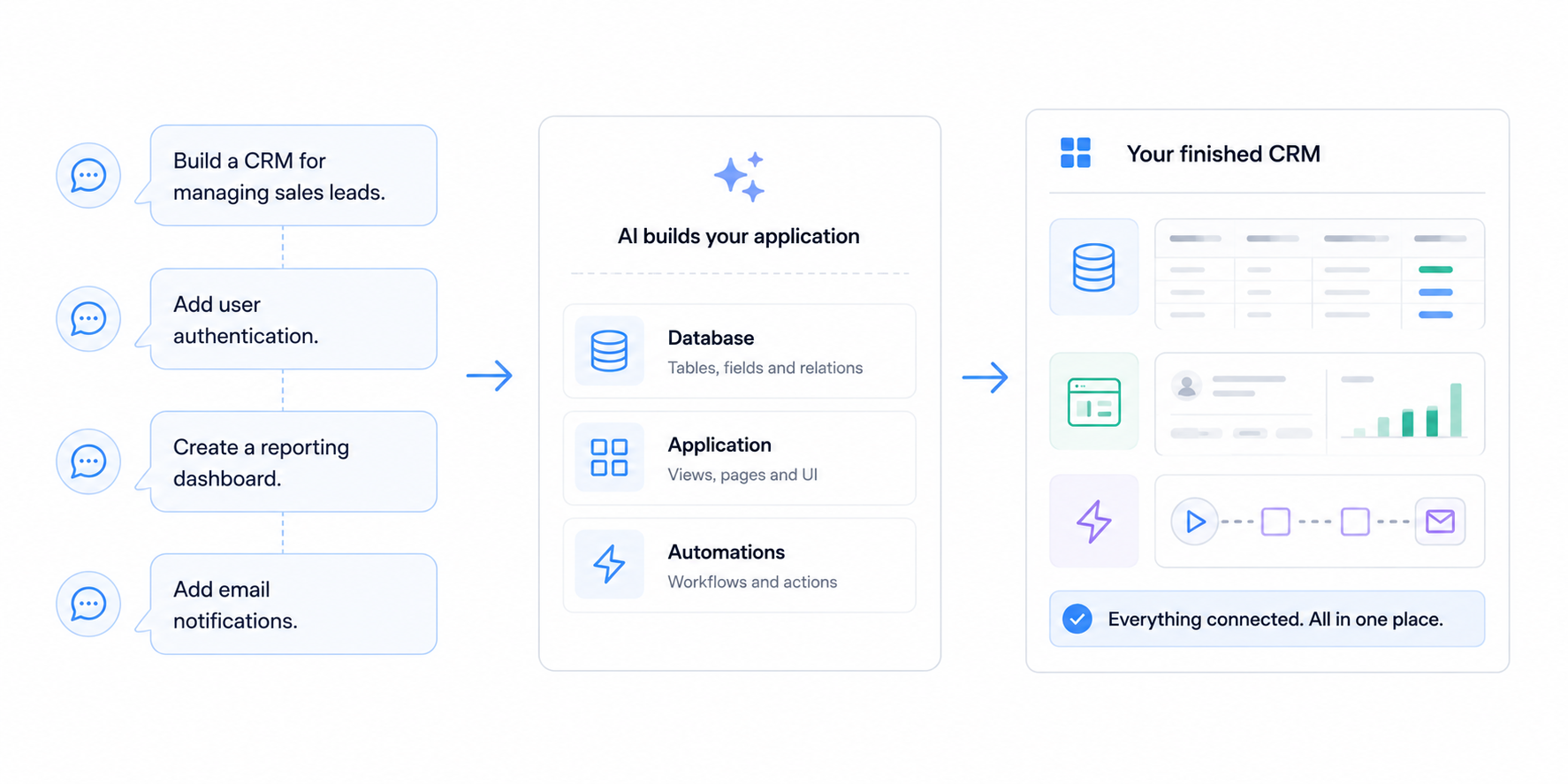
Most vibe coding tools follow a similar workflow:
1. Describe Your Idea
Users provide instructions using natural language.
Example:
Build a CRM for managing sales leads.
2. AI Generates Code
The AI interprets the request and creates application components, often including:
- Front-end interfaces
- Backend logic
- Database schemas
- API integrations
3. Refine Through Conversation
Users continue improving the application through follow-up prompts.
For example:
Add user authentication.
Create a reporting dashboard.
Add email notifications.
The AI updates the project without requiring users to manually write code.
Why Is Vibe Coding Becoming Popular?
Several factors have driven the rise of vibe coding and helped it gain attention among developers, startups, and non-technical builders.
Faster Development
The biggest appeal of vibe coding is speed. Users can go from an idea to a working application in minutes by describing what they want in natural language instead of writing every line of code themselves.
Lower Barrier to Entry
People who aren’t professional developers can build websites, internal tools, and prototypes without learning multiple programming languages or frameworks. This makes software creation accessible to a much wider audience.
Rapid Prototyping
Vibe coding makes it easy to experiment. Founders, product teams, and developers can quickly test ideas, build MVPs, and iterate based on feedback without spending weeks on implementation.
Improved AI Models
Modern AI coding tools understand context much better than earlier code-generation tools. They can generate code, explain problems, suggest fixes, and help users work through complex development tasks through conversation.
More Creativity, Less Boilerplate
Many developers say vibe coding lets them focus on ideas rather than implementation details. Instead of spending hours setting up project structures or writing repetitive code, they can concentrate on solving problems and building new features.
Best Vibe Coding Tools in 2026
Lovable
One of the most popular vibe coding apps for creating web applications through conversational prompts.
Replit
Offers AI-powered development features that help users generate code, build applications, and deploy projects directly from the browser.
Cursor
An AI-powered code editor designed to assist developers while writing and maintaining software.
Bolt.new
Allows users to generate and modify full-stack applications using natural language.
Windsurf
Combines AI assistance with a modern coding environment for software development.
Common Programming Languages Used in Vibe Coding
Although users interact through natural language, AI typically generates code in popular programming languages such as:
- JavaScript
- TypeScript
- Python
- PHP
- Java
- C#
The specific language depends on the coding platform and project requirements.
Advantages and Limitations of Vibe Coding
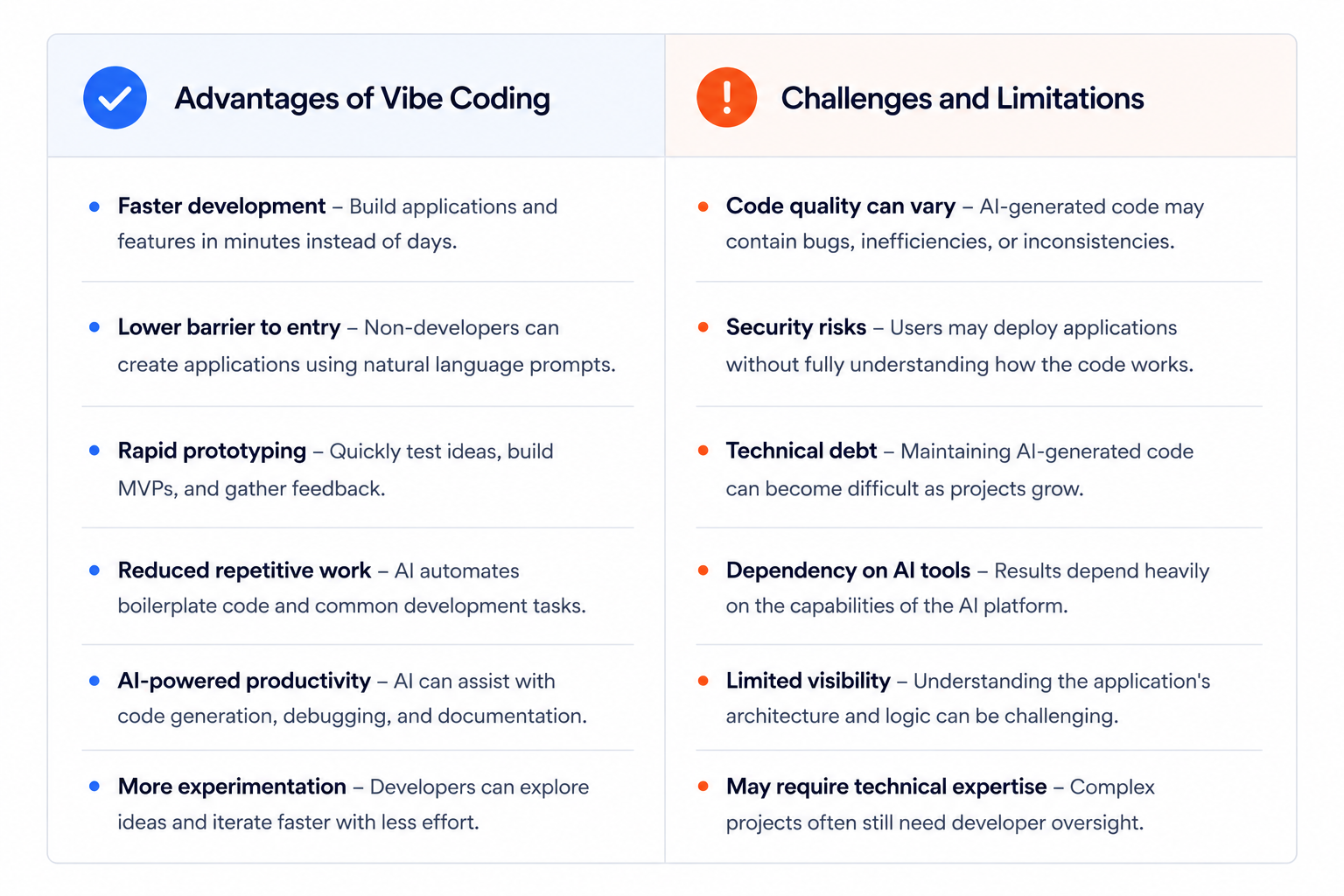
Like any software development approach, vibe coding comes with both benefits and drawbacks. By using natural language prompts, developers can generate code, build applications faster, and automate repetitive tasks. This lowers the barrier to entry and allows people with limited programming experience to participate in the development process.
At the same time, AI-generated code isn’t always production-ready. Users may encounter issues related to code quality, security, technical debt, or limited visibility into how an application works behind the scenes. The final result also depends heavily on the capabilities of the AI tool being used.
The table below summarizes the most common advantages and limitations of vibe coding.
Vibe Coding vs Traditional Software Development
Many people compare vibe coding with no-code tools, but they’re not the same.
Vibe coding still generates software code behind the scenes. Users often need to understand at least some technical concepts when the AI produces unexpected results.
No-code platforms use visual interfaces instead of code and provide greater visibility into databases, workflows, and application logic.
This has led to a newer concept called vibe no-coding, which combines AI assistants with no-code platforms.
Why Vibe No-Coding Is Different
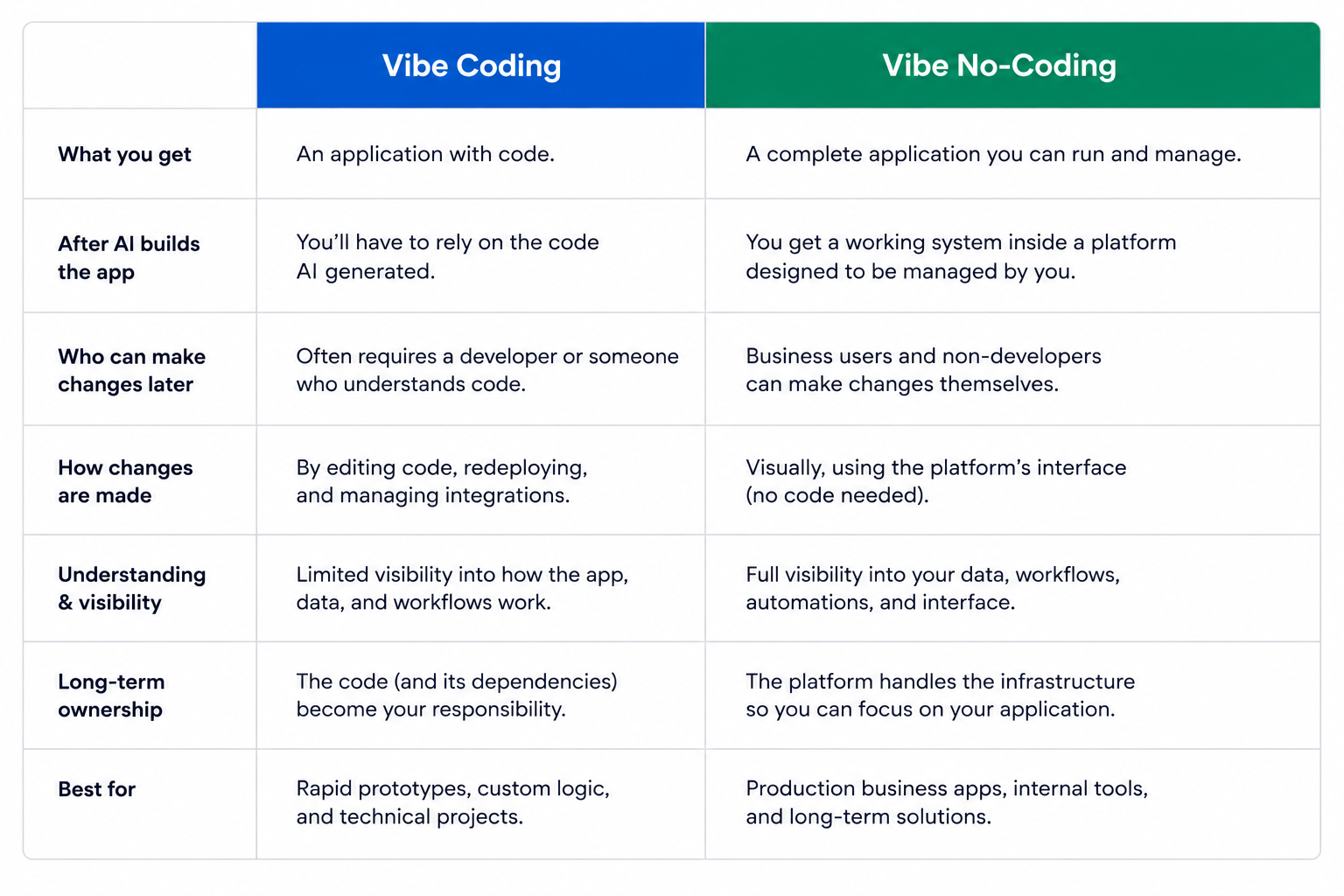
Vibe coding is great for quickly generating applications, but it often creates a new problem: the AI writes code that many users can’t read or maintain. If something breaks, requirements change, or the application needs to be expanded, you may need a developer to step in.
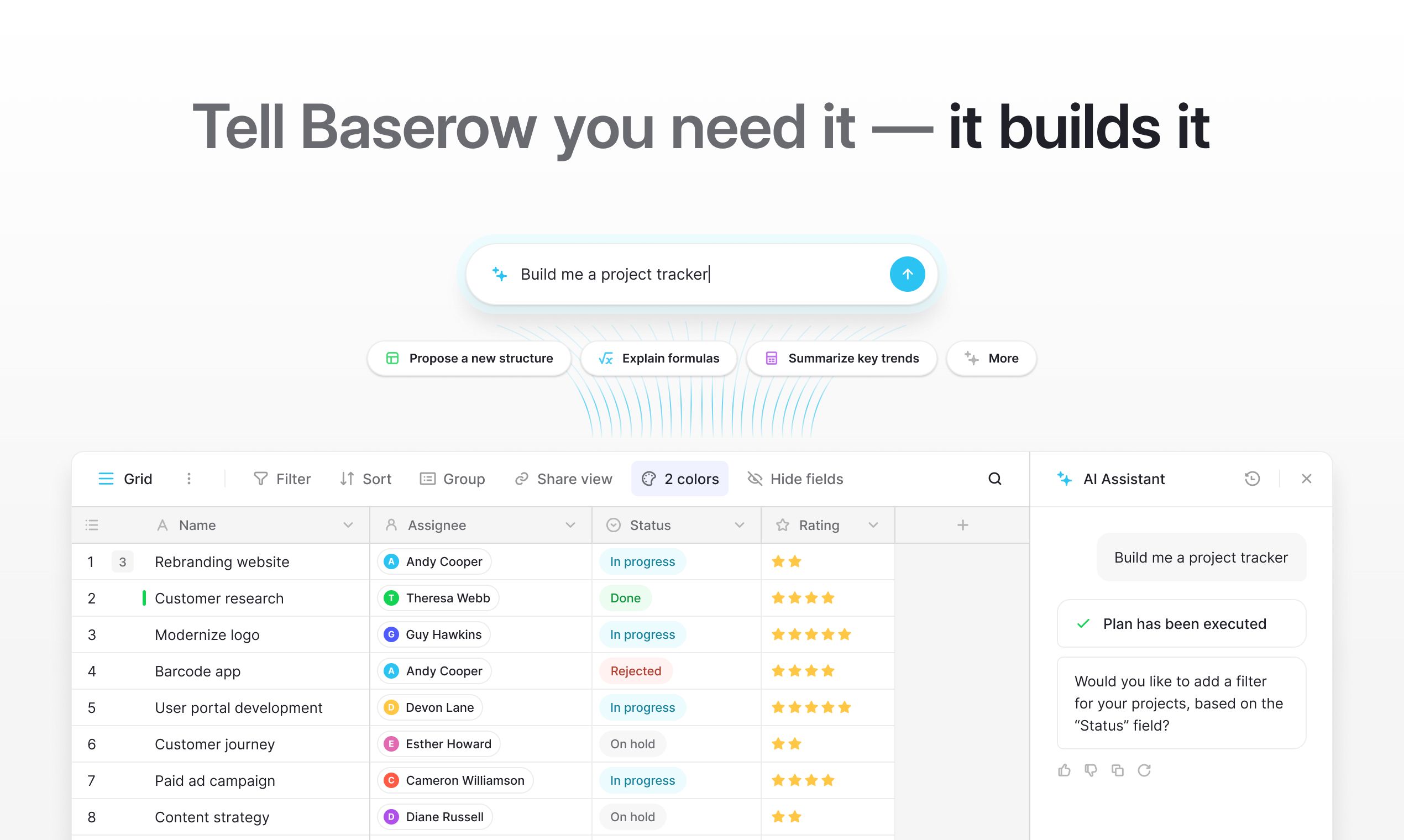
Vibe no-coding takes a different approach. Instead of generating code, AI builds directly within a no-code platform. The result isn’t a codebase hidden behind the scenes — it’s a visual application that you can inspect, modify, and maintain yourself.
This means you’re not dependent on understanding generated code to make changes later. You can view the database structure, update workflows, adjust automations, and manage the application through visual tools.
For many businesses, that’s the real value: not building an MVP faster, but being able to operate and improve the solution long after the AI has finished creating it.
Building With Vibe No-Coding in Baserow
Baserow combines databases, application building, dashboards, and automations in a single platform. Rather than generating code that relies on multiple external services, Baserow allows teams to build complete solutions in one place.
The combination of AI assistance and no-code tools means users can describe what they want in natural language while still maintaining full visibility into their data, workflows, and application structure. If the AI doesn’t complete 100% of the solution, users can continue building using Baserow’s visual interface instead of editing code.
👉 Learn more in our guide: Vibe No-Coding: Combining The Best of AI and No-Code.
When Should You Use Vibe Coding?
Vibe coding works best when:
- Building MVPs
- Testing startup ideas
- Creating internal tools
- Accelerating development workflows
- Generating boilerplate code
It may be less suitable for:
- Highly regulated industries
- Complex enterprise software
- Security-critical applications
- Large-scale production systems without technical oversight
The Future of Vibe Coding
As AI models continue improving, vibe coding tools will likely become more capable of generating complete applications, handling database design, and managing complex workflows.
At the same time, many organizations are looking beyond simple code generation and exploring approaches that provide greater transparency, security, and long-term maintainability. This is driving interest in solutions that combine AI assistance with visual development environments and no-code platforms.
Whether through coding platforms, AI agents, or vibe no-coding solutions, the goal remains the same: helping people build software faster using natural language while reducing technical barriers.
Platforms like Baserow are part of this evolution, combining AI-powered development with databases, automations, dashboards, and application building in a single platform. This allows users to accelerate development with AI while maintaining full visibility into the systems they create.

Baserow 2.4 adds Button fields, Graph elements, workflow automation, AI provider management, improved Group By views, and 30+ more updates.

Discover how Airtable and Baserow compare in features, flexibility, speed, and scalability. Compare pricing plans and hidden costs to make an informed decision!

Explore the best open-source software alternatives to proprietary products. Discover OSS tools, licenses, and use cases with our updated directory.