
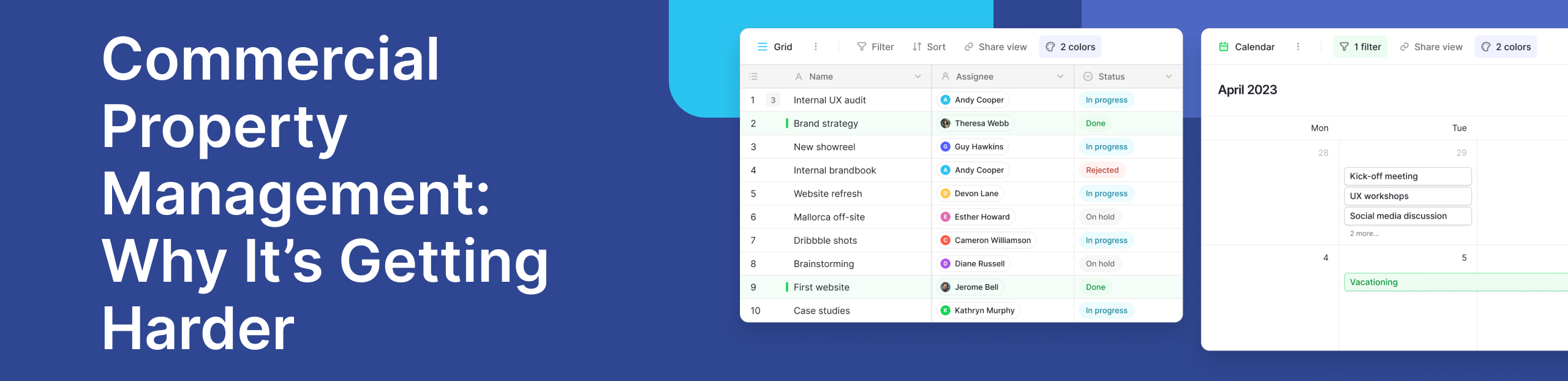
Managing commercial real estate is no longer a simple task. As portfolios grow, operations become more complex. Today, property owners must handle multiple tenants, properties, and financial records at the same time.
At the same time, expectations are rising. Tenants now expect faster responses, clear communication, and a smooth tenant experience. This puts pressure on teams to deliver better client service while staying organized.
Another challenge comes from managing lease agreements. Each property has different lease terms, renewal dates, and conditions. Missing even one update can lead to lost revenue or legal issues.
On top of this, many teams still rely on spreadsheets or scattered tools. This makes it harder to track data and slows down decision-making. As a result, improving operational efficiency becomes difficult.
This growing complexity is why many businesses are now turning to structured systems designed for commercial property operations.
What Commercial Property Management Includes Today
Modern property management include many responsibilities that go beyond basic maintenance. It involves handling both daily operations and long-term planning.
Some of the key areas include:
- Managing tenant management across multiple properties
- Tracking lease agreements and renewal timelines
- Acting as a central point of contact for tenants
- Delivering consistent client service across locations
- Monitoring finances through property accounting
Each of these tasks requires accurate data and clear workflows. Without a proper system, teams often struggle to stay organized.
The Real Problem: Spreadsheets and Disconnected Tools
Many businesses start with spreadsheets because they are easy to use. Tools like Excel can help track basic data in the early stages. However, as operations grow, these tools quickly reach their limits.
Spreadsheets often create problems such as:
- Data errors due to manual updates
- No clear tracking of lease terms
- Lack of real-time collaboration
- Difficulty managing multiple commercial property records
- Scattered documents and communication
These issues make it harder to manage tenants and keep records accurate. Over time, they also affect decision-making and reduce efficiency.
To solve these problems, teams need a system that brings everything together in one place.
What Modern Commercial Property Management Software Should Do
A good system should simplify complex processes. Instead of managing multiple tools, teams should be able to handle everything in one platform.
Modern solutions should help teams:
- Centralize tenant management and property data
- Track lease agreements with clear timelines
- Set reminders for important lease terms
- Improve operational efficiency through workflows
- Maintain accurate property accounting records
This is where flexible platforms like Baserow come into play. Instead of forcing teams into rigid systems, they allow businesses to build workflows that match their needs.
Key Features to Look For in Lease Management Software
When choosing a solution, it is important to focus on features that support long-term growth.
Look for tools that offer:
- Custom databases to manage tenants and properties
- Flexible workflows that adapt to your processes
- Role-based access for different team members
- Central storage for lease agreements and documents
- Easy collaboration across teams
These features ensure that your system can grow along with your portfolio.
Why Flexible Database Tools Are Replacing Traditional Software
Traditional property management tools often come with fixed structures. While they may work for some businesses, they can be limiting for teams with unique needs.
Today, companies prefer tools that allow flexibility. No-code platforms let teams design their own workflows without needing technical expertise.
This shift is important for commercial real estate teams. Every portfolio is different, and systems should adapt to those differences.
Flexible tools also improve collaboration. Teams can update data in real time, reducing delays and errors.
Why Baserow Fits Commercial Property Management Needs
Baserow offers a simple way to manage complex operations. It acts as a central hub where teams can organize all their data.
With Baserow, businesses can:
- Manage tenants and properties in one place
- Track lease agreements and renewal timelines
- Improve tenant management workflows
- Maintain clear financial tracking through property accounting
- Enhance client service with better visibility
It also supports operations teams looking to streamline processes. You can explore how it supports workflows here: Operations Management Solutions.
.jpg)
Why Templates Matter in Property Management
Setting up a system from scratch can take time. This is where templates become valuable.
Templates provide a ready-made structure that helps teams get started quickly. They also ensure consistency across all properties.
Using a structured template helps teams:
- Avoid missing important lease terms
- Keep all data in one organized system
- Improve operational efficiency from day one
- Standardize processes across properties
- Scale operations without confusion
For example, this commercial property management template provides a clear structure for managing tenants, leases, and property data.
You can also explore other ready-made systems here: Database Templates
Real-World Example from the Baserow Community
Many teams are already using Baserow to manage their properties more effectively.
In one example shared on the Baserow community, a user explained how they improved their workflow by centralizing all property data in one system.
By organizing tenants, lease agreements, and property details in one place, they reduced manual work and improved coordination across their team.
How Software Improves Efficiency for Retail Property Managers
Retail property managers often deal with fast-moving environments. Multiple tenants, frequent updates, and ongoing communication make daily operations complex.
Using a structured system helps simplify these tasks.
With the right software, teams can:
- Update tenant information in real time
- Track lease agreements across multiple locations
- Centralize communication instead of using scattered tools
- Reduce manual work through automation
- Access accurate reports for better decision-making
This improves operational efficiency and allows managers to focus on growth instead of routine tasks.
Best Commercial Management Solutions for Large Portfolios
Managing large portfolios requires more than basic tools. Businesses need systems that can handle scale without adding complexity.
The best solutions share a few common traits:
- Ability to manage large volumes of commercial property data
- Flexible workflows that adapt to different property types
- Strong reporting features for property accounting
- Easy collaboration between teams
Many traditional tools struggle to meet these needs because they are too rigid. In contrast, flexible database platforms allow teams to build systems tailored to their operations.
This is where Baserow stands out. It gives businesses the freedom to design workflows that match their portfolio size and structure, making it suitable for both small teams and large-scale operations.
Can Excel Handle Commercial Property Management?
Excel is often the starting point for many businesses. It can help track basic information such as tenants or lease dates.
However, it has several limitations:
- No automation for lease terms or reminders
- High risk of manual errors
- Limited collaboration features
- Difficult to scale as data grows
As portfolios expand, these challenges become more noticeable. This is why many businesses move to structured systems that offer better control and visibility.
Frequently Asked Questions
- What is the meaning of commercial property management?
It refers to managing non-residential properties such as offices, retail spaces, and industrial buildings. It includes handling tenants, leases, finances, and daily operations.
- What is the role of a commercial property manager?
A property manager oversees tenants, manages lease agreements, ensures smooth operations, and acts as the main point of contact for both tenants and property owners.
- Does Excel have a property management template?
Yes, Excel offers basic templates. However, they are limited and often not suitable for managing complex or large commercial real estate portfolios.
- What are the key features to look for in commercial lease management software?
Key features include lease tracking, automated reminders, centralized document storage, customizable workflows, and reporting tools.
- How does property management software improve efficiency for retail property managers?
It centralizes data, reduces manual work, improves communication, and provides real-time insights, helping managers operate more efficiently.
Conclusion
Managing commercial real estate is becoming more complex. From handling tenants to tracking lease agreements and finances, the workload continues to grow.
Relying on spreadsheets or disconnected tools can slow teams down and create errors. Structured systems offer a better way to manage operations and improve visibility.
Platforms like Baserow provide the flexibility needed to organize data, streamline workflows, and improve overall efficiency. With ready-to-use templates and customizable systems, teams can manage their properties with more clarity and control.
If you are looking to simplify your workflows and scale your operations, you can get started here: Create your free account

Baserow 2.4 adds Button fields, Graph elements, workflow automation, AI provider management, improved Group By views, and 30+ more updates.

Discover how Airtable and Baserow compare in features, flexibility, speed, and scalability. Compare pricing plans and hidden costs to make an informed decision!

Explore the best open-source software alternatives to proprietary products. Discover OSS tools, licenses, and use cases with our updated directory.