
Healthcare organisations handle large volumes of sensitive patient data every day. From patient intake to supplier coordination, every system involved must meet HIPAA requirements to protect individuals and reduce regulatory risk. As teams look for more flexible ways to manage workflows, many are turning to no-code solutions. The challenge is ensuring that these tools remain compliant.
A HIPAA compliant database built on a no-code code platform allows healthcare teams to organise information, apply access controls, and protect patients without relying on custom development. When implemented correctly, these systems support compliance while improving operational efficiency.
Why HIPAA Compliance Matters in No-Code Environments
HIPAA compliance exists to protect patients and ensure that protected health information is handled responsibly. Any system that stores, processes, or references PHI (Protected Health Information) must be designed to prevent unauthorized access, data loss, and misuse.
Many healthcare teams still rely on spreadsheets or disconnected code tools to manage operational data. These tools are often used for intake forms, supplier records, or internal tracking. While they may seem harmless, they frequently lack encryption, role based access, and proper audit controls. This creates compliance gaps that are difficult to detect until an incident occurs.
A HIPAA compliant no-code database changes this dynamic. Instead of unstructured files, teams work with secure data stored in a controlled environment. Permissions are defined upfront, and access is limited based on role and responsibility. This approach reduces risk while making compliance part of everyday workflows.
Platforms like Baserow support this model by combining flexibility with governance-friendly design. Rather than replacing clinical systems, they complement them by managing operational and compliance-related data safely.
Understanding HIPAA Requirements for Digital Data Systems
- Protecting PHI Through Structured Controls
HIPAA requires organisations to safeguard protected health information using administrative, technical, and physical measures. In digital systems, this means ensuring that PHI is stored securely, accessed only by authorised users, and protected from accidental exposure.
A HIPAA compliant database enforces these principles through encryption, access controls, and clear data ownership. Instead of relying on manual processes, teams use structured databases where permissions determine who can view or edit specific fields. This helps ensure PHI protected across the entire lifecycle of the data.
For example, patient intake data collected through intake forms can be stored in a secure table with limited visibility. Only approved users from the support team or compliance function can access sensitive fields, reducing the risk of unauthorized access.
- Business Associate Agreements and Shared Responsibility
HIPAA compliance also depends on how organisations work with third parties. Any vendor that handles patient data may be considered a business associate and must operate under a business associate agreement.
While legal agreements define responsibility, technical systems must enforce it. No-code platforms that meet HIPAA requirements allow organisations to separate internal users from external collaborators. Supplier access can be restricted to non-sensitive data, ensuring that patient data remains protected.
Baserow’s approach to security and permissions illustrates how no-code systems can support shared responsibility without exposing PHI.
Common Risks When Using No-Code Tools in Healthcare
- Uncontrolled Access and Shadow Systems
One of the most common compliance failures comes from uncontrolled access. Teams often create new tools quickly to solve immediate problems. Intake forms, patient intake trackers, or internal dashboards are built without considering long-term security.
When access controls are missing, sensitive information can be viewed or edited by users who do not need it. Over time, this increases the risk of data loss and compliance violations.
A code HIPAA compliant system addresses this by enforcing role based access at every level. Users only see what they are authorised to see, and changes are tracked centrally.
- Mixing Patient Portals with Operational Data
Patient portal systems are designed for direct communication with patients. They are not intended to manage supplier data, risk tracking, or internal compliance workflows. When teams mix these use cases, exposure increases.
A HIPAA no-code database allows organisations to separate patient-facing systems from internal compliance tools. Patient portal data can remain isolated, while operational workflows reference identifiers without duplicating PHI. This separation is critical to protect patients while maintaining efficiency.
Using a HIPAA No-Code Database to Secure Healthcare Workflows
When implemented correctly, a no-code code platform becomes a compliance enabler rather than a risk. Teams can manage patient intake processes, document supplier relationships, and track compliance activities in one secure environment.
Access controls ensure that sensitive fields are only visible to authorised users. Encryption protects data at rest and in transit. Centralised permissions make it easier to demonstrate compliance during audits.
Baserow supports these use cases by allowing teams to build structured, secure databases without custom code. This helps healthcare organisations manage secure data, reduce operational risk, and support HIPAA compliance across teams.
Guidance on governance and compliance workflows further illustrates how no-code systems can be used safely in regulated environments.
Managing Patient Data Without Compromising Compliance
Healthcare organisations must manage patient data across multiple workflows while ensuring that sensitive information is never exposed. This includes data collected during patient intake, information shared internally, and records referenced by external partners.
A HIPAA compliant database helps teams centralise these workflows while maintaining strict controls. Instead of copying data between systems, teams can store patient intake information once and reference it securely across approved processes. This reduces duplication and lowers the risk of data loss.
Encryption and role based access play a critical role here. Data is protected both at rest and in transit, while permissions ensure that only authorised users can view or modify sensitive fields. This structure helps prevent unauthorized access and supports long-term compliance.
Separating Patient Portals from Internal Compliance Systems
Patient-facing tools such as a patient portal serve a very specific purpose. They allow individuals to view or submit information securely. However, they should not be used to manage internal compliance workflows or supplier relationships.
A HIPAA no-code database allows teams to clearly separate these concerns. Patient portal systems remain focused on patient communication, while internal databases manage operational data such as supplier records, compliance checks, and access reviews. This separation ensures that PHI protected within patient-facing systems is never unnecessarily exposed internally.
By referencing patient identifiers instead of duplicating records, teams reduce risk while maintaining visibility. This design helps organisations protect patients while still enabling collaboration across departments.
Supporting HIPAA Compliance Through Access Controls and Monitoring
HIPAA compliance is not achieved once and forgotten. It requires ongoing oversight, monitoring, and adjustment as teams and systems evolve.
Access controls make it possible to assign responsibility clearly. Users are granted access based on role, not convenience. When roles change, permissions can be updated centrally, reducing lingering exposure.
Performance and activity monitoring further support compliance. Teams can review who accessed which records and when. This visibility is essential for identifying gaps and responding quickly to issues.
Baserow’s security model supports this approach by making permissions and access transparent across the platform
.jpg%20(1).png)
Supplier Access, Shared Responsibility, and Compliance
Suppliers play an important role in healthcare operations, but they also introduce risk. When suppliers need access to systems, organisations must ensure that boundaries are clear.
A HIPAA no-code database supports supplier workflows by limiting access to only what is required. Supplier records can be stored separately from patient data, and permissions can be scoped to specific tables or fields. This helps ensure that suppliers never access PHI unless explicitly authorised.
These controls complement business associate agreement obligations by enforcing technical safeguards alongside legal ones. Structured supplier management also makes audits easier by providing a clear record of access and responsibilities.
Guidance on supplier compliance highlights why structured systems are essential in regulated environments:
Using No-Code Tools to Meet HIPAA Requirements at Scale
As organisations grow, compliance becomes more complex. Manual processes break down, and oversight becomes harder to maintain. No-code tools provide a way to scale without losing control.
A code HIPAA compliant platform allows teams to adapt workflows without compromising security. Instead of building new systems from scratch, teams extend existing databases while maintaining consistent safeguards. This flexibility is especially valuable when responding to audits, policy changes, or new regulatory guidance.
Baserow supports this approach by offering a code platform that balances flexibility with governance. Teams can evolve workflows while ensuring that systems continue to meet HIPAA requirements.
Insights from the Baserow Community
Community discussions often highlight how teams navigate compliance challenges in practice. Users share how they manage secure data, configure access controls, and avoid common pitfalls when scaling workflows.
Healthcare-adjacent teams frequently discuss separating operational data from patient-facing systems and maintaining visibility across users. These conversations reflect real-world needs rather than theoretical compliance models.
Frequently Asked Questions
- Is Baserow a HIPAA compliant database?
Baserow provides encryption, role based access, and access controls that support HIPAA-aligned workflows. Compliance depends on how organisations configure processes, manage permissions, and implement policies.
- Can no-code tools handle protected health information?
Yes, when designed properly. A HIPAA no-code database ensures PHI protected through secure architecture, controlled access, and ongoing monitoring.
- How do no-code platforms help protect patients?
They reduce reliance on unmanaged files, limit access by role, and centralise secure data, helping organisations protect patients across workflows.
- Do no-code platforms replace clinical systems?
No. They support operational and compliance workflows alongside clinical systems such as EHRs and patient portals.
- Choosing the Right HIPAA No-Code Database
A HIPAA no-code database is not about bypassing regulation. It is about embedding compliance into everyday work. When systems are structured, secure, and transparent, teams spend less time reacting to risk and more time improving care.
By combining secure data handling, controlled access, and flexible workflows, platforms like Baserow help healthcare organisations manage compliance without adding unnecessary complexity.
To explore how Baserow can support secure, compliant healthcare workflows, you can get started here.

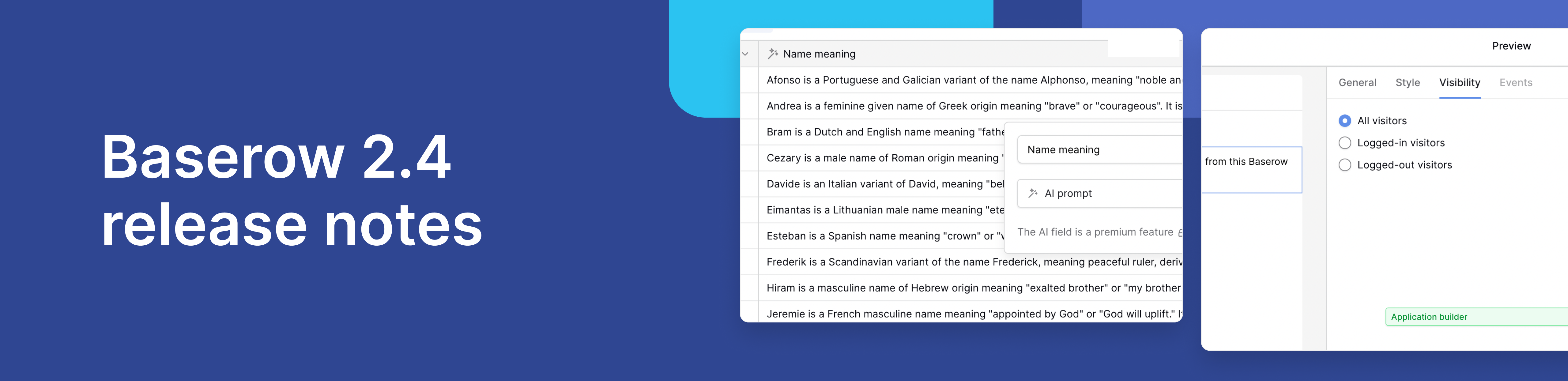
Baserow 2.4 adds Button fields, Graph elements, workflow automation, AI provider management, improved Group By views, and 30+ more updates.

Discover how Airtable and Baserow compare in features, flexibility, speed, and scalability. Compare pricing plans and hidden costs to make an informed decision!

Explore the best open-source software alternatives to proprietary products. Discover OSS tools, licenses, and use cases with our updated directory.