
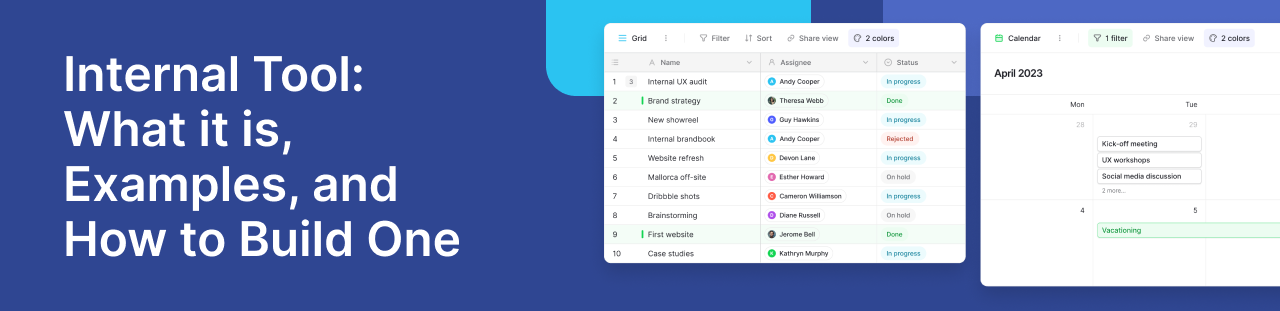
An internal tool is software built for employees inside a company. Instead of serving customers directly, it helps teams manage data, automate work, track processes, and complete tasks more efficiently.
These systems can be simple or advanced. A small team might use one to manage approvals or inventory. A larger company might build dashboards, admin panels, support workflows, or operations systems.
The goal is simple: give teams software that matches how the business actually works.
What is an Internal Tool?
An internal tool is an application, database, dashboard, or workflow system used by employees to manage company processes.
Unlike customer-facing software, these tools are built for internal users such as operations, sales, HR, finance, support, product, or management teams.
For example, a company might build one to:
- Track customer requests
- Manage employee onboarding
- Approve purchase orders
- Monitor inventory
- Organize content production
- Review support tickets
- Manage project status
- Centralize business data
Many employee-facing systems start as spreadsheets. Spreadsheets are flexible, but they become difficult to manage as processes grow. Teams often need better permissions, cleaner data, automations, integrations, and easier interfaces.
That is where dedicated business applications become valuable. They turn scattered workflows into structured systems. Check out Best Internal Tool Builders to streamline operations, boost efficiency.
Internal Tool Examples
Common examples include admin panels, CRM systems, approval workflows, inventory trackers, reporting dashboards, HR onboarding systems, content calendars, procurement tools, and customer support portals.
A sales team might use a custom system to track leads and deal stages. An operations team might use one to manage assets, suppliers, or approvals. A marketing team might use one to plan campaigns and monitor performance.
These tools are useful because they are built around the company’s real processes, not generic software assumptions.
Why Companies Build Internal Software
Companies build internal software when off-the-shelf tools are too rigid, spreadsheets are too messy, or custom development is too slow and expensive.
A good business application can help teams:
- Reduce manual work
- Improve data accuracy
- Speed up approvals
- Standardize workflows
- Give teams better visibility
- Replace scattered spreadsheets
- Connect processes across departments
It also improves the employee experience. Instead of switching between disconnected files, forms, and systems, teams can work from one structured place.
Internal Tools vs External Tools
The main difference is the audience.
An external tool is built for customers, partners, or public users. Examples include ecommerce platforms, customer portals, SaaS products, and mobile apps.
An internal system is built for employees. It supports the work behind the scenes, such as operations, approvals, reporting, support, sales, HR, finance, and data management.
Employee-facing software may not require the same level of visual polish as customer-facing apps. But it still needs to be reliable, secure, easy to use, and aligned with how teams work.
How to Build an Internal Tool
Start by defining the process that needs improvement. Identify the tasks that take the most time, where data gets lost, which steps require manual work, and who needs access.
After that, define the data structure. Decide what records, fields, views, and permissions the system needs. For example, an approval workflow may need request types, owners, statuses, due dates, comments, and manager access.
The next step is choosing the build approach. Some companies use developers and custom code, especially for complex systems. But many employee-facing apps can now be built with no-code platforms when the goal is to manage data, workflows, forms, and interfaces quickly.
Baserow is a strong option for this use case. It is a no-code platform for building internal tools, databases, workflows, and collaborative applications. Teams can create structured databases, forms, views, automations, and app interfaces without starting from scratch.
Baserow also offers integrations, permissions, and self-hosting for teams that need more control over their data and infrastructure.
Frequently Asked Questions
- What is an internal tool in simple terms?
Internal tools are software systems employees use to manage company work, data, workflows, or processes. They serve internal teams rather than external customers.
- What are examples?
Examples include admin panels, CRM systems, approval workflows, inventory trackers, HR onboarding tools, reporting dashboards, and customer support systems.
- Can you build one without code?
Yes. No-code platforms like Baserow let teams build employee-facing apps, databases, forms, views, automations, and interfaces without heavy custom development.
Final Thoughts
Whether you need a tracker, approval system, dashboard, or business application, the right system can save time and reduce operational friction. For teams that want to build without heavy custom development, Baserow is a strong option to consider.

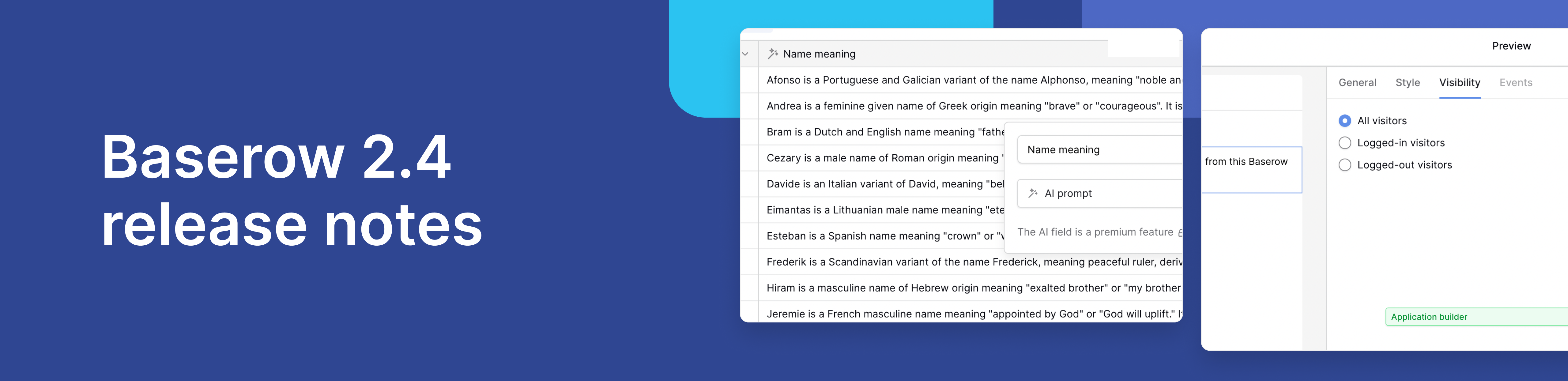
Baserow 2.4 adds Button fields, Graph elements, workflow automation, AI provider management, improved Group By views, and 30+ more updates.

Discover how Airtable and Baserow compare in features, flexibility, speed, and scalability. Compare pricing plans and hidden costs to make an informed decision!

Explore the best open-source software alternatives to proprietary products. Discover OSS tools, licenses, and use cases with our updated directory.