
Operational teams today manage far more complexity than they did even a few years ago. From coordinating supply chain activities to tracking internal workflows and customer-facing processes, the pressure to operate efficiently is constant. This is where operational software plays a central role, helping teams move away from manual processes and toward systems built for scale, accuracy, and speed.
This guide explains what operational software is, why it matters, and how modern teams can use it to improve efficiency without adding unnecessary complexity.
What Is Operational Software?
Operational software refers to digital tools designed to support day to day business activities. These systems help teams plan, track, and optimise how work gets done across departments. Unlike basic spreadsheets or disconnected apps, operational software brings structure, consistency, and visibility to business operations.
At its core, operational software focuses on:
- Managing business processes
- Reducing human errors
- Providing real time visibility into work
- Supporting teams as operations grow in size and complexity
Many teams still rely on spreadsheets for operational tracking. While spreadsheets are flexible, they struggle with large volumes of data, collaboration, and accountability. As workflows become more complex, manual updates and version conflicts increase risk rather than control.
This is why many operations teams are now shifting toward database-driven platforms like Baserow, which offer structure without sacrificing flexibility.
Why Operational Software Matters for Growing Teams
- The Limits of Manual Processes
Manual processes are often the biggest bottleneck in operations. When teams depend on spreadsheets, emails, and disconnected tools, they face recurring issues:
- Repetitive tasks that consume time
- Inconsistent data entry leading to errors
- No clear ownership of processes
- Limited visibility across teams
These issues directly impact operational performance. Teams spend more time fixing problems than improving processes.
- Enabling Better Business Operations
Operational software enables businesses to standardise workflows while still adapting to change. Instead of relying on individual knowledge or informal processes, teams gain shared systems that support:
- Clear accountability
- Faster decision-making
- Reliable reporting on key metrics
This foundation is essential for companies that want to scale operations without increasing overhead.
Key Features to Look for in Operational Software
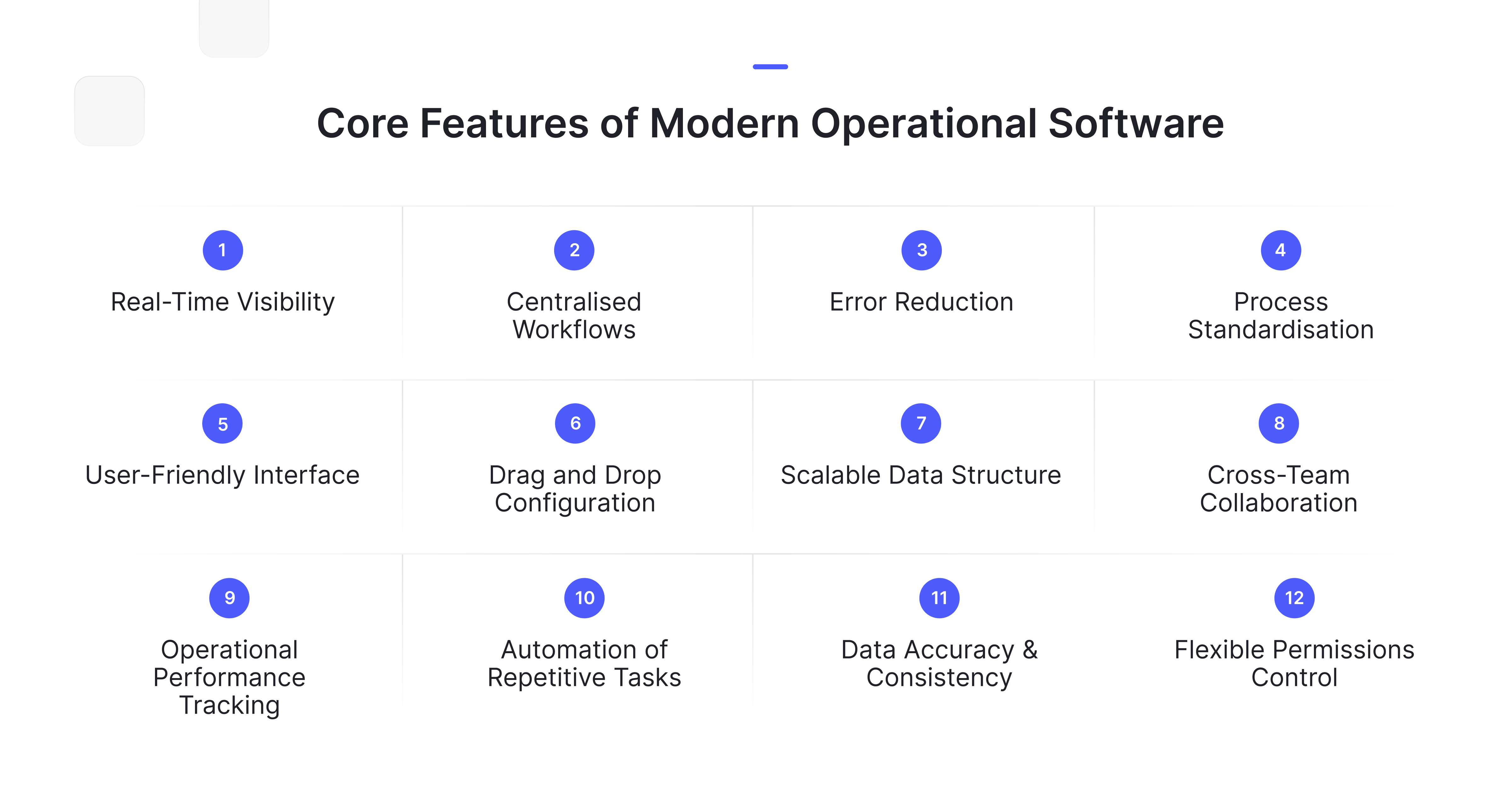
- Real Time Visibility Across Teams
One of the most important features of modern operations management tools is real time visibility. Teams need up-to-date information to respond quickly to issues and opportunities.
Effective operational software provides:
- Live dashboards
- Shared views across departments
- Easy access to operational data
With real time visibility, managers can monitor progress, identify bottlenecks, and adjust workflows before small issues become major problems.
- User Friendly and Drag and Drop Design
Adoption is often overlooked when selecting operational tools. If software is difficult to use, teams will revert to old habits.
A user friendly interface with drag and drop functionality allows teams to:
- Build workflows without technical expertise
- Adjust processes as requirements change
- Onboard new team members faster
Platforms like Baserow focus on visual, intuitive design so operations teams can manage data and processes without relying on developers.
- Process Management Without Rigidity
Operational software should support process management without locking teams into rigid systems. The goal is to improve efficiency, not restrict flexibility.
Modern tools allow teams to:
- Define workflows clearly
- Automate repetitive tasks
- Maintain control as operations evolve
This balance is especially important for fast-growing organisations where processes change frequently.
Key Benefits of Using Operational Software
When implemented correctly, operational software delivers measurable improvements across business operations.
Some of the most important benefits include:
- Improved efficiency through structured workflows
- Fewer errors caused by manual data handling
- Better coordination between teams
- Clear tracking of operational performance
- More consistent customer service outcomes
These benefits compound over time, making operations more resilient and predictable.
Replacing Excel With a Scalable Operations Solution
A common question from operations teams is how to move beyond spreadsheets without overhauling everything at once.
Excel works well for simple tracking, but it struggles when teams need:
- Multiple users editing data simultaneously
- Reliable permissions and access control
- Scalable process management
- Clear audit trails
Operational software built on structured databases solves these problems by design. Instead of static files, teams work with live data that updates across workflows automatically.
Many teams use Baserow as a transitional step. They start by recreating existing spreadsheets as structured tables, then gradually introduce automation, permissions, and shared views. This approach reduces disruption while delivering immediate gains in accuracy and visibility.
Industry Perspective: Why Operations Software Is a Priority
Research from organisations like Gartner consistently highlights operations efficiency as a key driver of competitive advantage. Similarly, McKinsey & Company reports that companies investing in digital operations see faster response times and stronger operational resilience.
These findings reinforce a simple truth: operational excellence is no longer optional. It is foundational to sustainable growth.
How Baserow Fits Into Modern Operations
Baserow supports operational teams by combining database structure with flexibility. Teams can design workflows that reflect real-world processes, not predefined templates.
With features introduced in Baserow 2.0, such as improved permissions, performance upgrades, and better collaboration controls, operations teams can manage complex workflows while maintaining clarity and control. These capabilities are especially valuable for teams coordinating across functions or locations.
Baserow’s role is not to replace operations strategy, but to provide a practical foundation for executing it effectively. In practice, many teams evaluate Baserow alongside other operations management software because it combines structured data with flexibility, allowing operations teams to adapt workflows as processes evolve rather than forcing rigid systems.
Operational Software Use Cases Across Industries
Operational software adapts to different industries because it focuses on how work flows, not just on static data.
Manufacturing Operations and Supply Chain Coordination
In manufacturing environments, operations teams manage suppliers, production schedules, quality checks, and logistics. When this information lives in separate tools, delays and miscommunication become common.
Operational software helps manufacturing teams:
- Track supply chain activities in one place
- Share updates between procurement, production, and logistics
- Monitor key metrics such as lead times and throughput
This is especially relevant for teams collaborating across departments, as outlined in Baserow’s guide on data collaboration for manufacturing teams.
For manufacturers exploring flexible tools rather than rigid ERP systems, modern operational platforms offer a more adaptable alternative.
Technology and Product Operations
Technology teams often use operational software to manage internal workflows, release coordination, and cross-team dependencies. Unlike traditional project management tools, operations-focused systems allow teams to model processes that change frequently.
For technology-driven organisations, operational software supports:
- Internal tooling and workflow tracking
- Incident and escalation processes
- Visibility across distributed teams
This approach aligns well with how technology companies manage operations today.
How Operations Teams Improve Customer Service
Customer service quality is closely tied to operational clarity. When internal processes are unclear or fragmented, customers experience delays, errors, and inconsistent communication.
Operational software improves customer service by:
- Ensuring teams work from accurate, shared data
- Reducing handoff delays between departments
- Making it easier to resolve issues quickly
Instead of reacting to problems, teams gain the ability to anticipate them.
Community Insights: Real-World Operations Examples
The Baserow community includes teams using the platform for internal operations, logistics tracking, and service workflows. Many conversations highlight a similar pattern: teams start small, then expand as confidence grows.
Common community use cases include:
- Replacing shared spreadsheets with structured workflows
- Tracking operational requests across teams
- Coordinating recurring processes without email overload
These examples reflect a broader shift toward flexible, operations-first systems.
Choosing the Right Operational Software
Selecting the right tool depends on how your team works today and how it plans to grow.
A practical evaluation checklist includes:
- Does the software support real time visibility?
- Is it user friendly for non-technical users?
- Can workflows evolve without rebuilding everything?
- Does it reduce human errors rather than introduce new ones?
Teams that prioritise flexibility and clarity tend to adopt tools more successfully than those focused solely on feature lists.
Frequently Asked Questions
- What is operational software?
Operational software supports daily business activities by helping teams manage workflows, data, and processes in a structured way.
- What are the 5 operating software categories?
Common categories include operations management, customer operations, supply chain systems, production tools, and service operations platforms.
- What is an example of an OT system?
An OT system often refers to software used in manufacturing or industrial environments to monitor and control operational processes.
- How does Baserow compare to Airtable?
Baserow focuses on open-source flexibility and data ownership, while Airtable is a proprietary platform with predefined structures.
- What type of database does Baserow use?
Baserow is built on a relational database model, allowing structured data relationships and scalable operations.
- What are the limitations of Baserow?
Like any flexible platform, Baserow requires thoughtful setup to match specific workflows, especially for highly complex enterprise use cases.
Final Thoughts: Building Stronger Operations
Operational excellence is built through clarity, consistency, and adaptability. As teams grow, relying on spreadsheets and manual processes becomes increasingly risky. Operational software provides a structured foundation that supports efficiency without adding unnecessary complexity.
For teams looking to modernise workflows gradually, tools like Baserow offer a practical path forward. By combining structured data, real time visibility, and flexible process management, operations teams can focus on improving performance rather than maintaining systems.
To explore how Baserow can support your operations workflows, you can get started here.

Baserow 2.4 adds Button fields, Graph elements, workflow automation, AI provider management, improved Group By views, and 30+ more updates.

Discover how Airtable and Baserow compare in features, flexibility, speed, and scalability. Compare pricing plans and hidden costs to make an informed decision!

Explore the best open-source software alternatives to proprietary products. Discover OSS tools, licenses, and use cases with our updated directory.