
Organisations today collect customer information from many places: websites, forms, sales tools, support systems, and spreadsheets. Over time, this information becomes fragmented, duplicated, and hard to trust. A customer data platform exists to solve this problem by bringing everything together into a single, usable system.
Unlike point tools that focus on one department, a modern data foundation focuses on how customers interact across the entire business. When data is unified, teams can make better decisions, deliver consistent experiences, and respond faster to change. Without structure, even large volumes of data collected lose value.
This guide explains customer data platform best practices, with a focus on practical implementation. It avoids vendor hype and instead looks at how teams can build flexible, governed systems that scale.
What Is a Customer Data Platform and Why It Matters
A customer data platform is designed to unifies customer data from multiple sources into a unified view that teams can actually use. It sits between raw storage and activation tools, helping organisations organise, govern, and access customer information consistently. A customer data platform cdp focuses on organising customer records into a consistent structure so teams can access, govern, and use data across tools without relying on manual exports or duplicated files.
Many teams confuse a CDP with a data warehouse. A data warehouse is optimised for storage and analytics, while a CDP focuses on creating a unified customer profile that can support real-world workflows. The two often work together, but they serve different purposes.
Another common comparison is customer relationship management crm software. CRMs focus mainly on sales and pipeline activity. A CDP, by contrast, includes broader behavioral data such as product usage, form submissions, and support interactions. This makes it possible to understand how customers interact across touchpoints, not just during sales conversations.
As organisations grow, data often becomes scattered across tools and files. Spreadsheets are copied, renamed, and shared, creating conflicting versions of truth. Over time, this makes identity resolution difficult and weakens trust in reporting. A CDP addresses this by establishing one consistent structure for customer records and related activity.
Why Fragmented Customer Data Becomes a Growth Barrier
Customer information is rarely collected in one place. Marketing teams track campaign performance, sales teams log conversations, and support teams record issues. Each system captures valuable party data, but without coordination, these datasets remain isolated.
When teams rely on disconnected systems, audience segmentation becomes manual and error-prone. Lists are exported, cleaned, and re-uploaded, often with missing context. This slows down customer engagement and limits the effectiveness of marketing campaigns.
Fragmentation also affects data governance. Without a clear structure, it becomes difficult to control access, audit changes, or ensure consistency. As regulations and privacy expectations increase, this lack of governance creates risk.
Many organisations attempt to fix these problems by adding more tools or complex automation. However, complexity often increases without addressing the root issue: the absence of a unified data model.
Best Practices for Building a Customer Data Platform
Start With a Clear Data Model
A strong CDP begins with structure. Customer records should live in a central table, with related tables for events, interactions, and attributes. This relational approach makes it easier to maintain consistency and adapt as requirements change.
Teams moving from spreadsheets often underestimate the importance of structure. Community discussions show that transforming flat files into linked tables is one of the most effective first steps toward reliable data. One example shared by users explains how teams can convert spreadsheets into structured databases while keeping workflows familiar.
This approach reduces duplication and makes relationships explicit, which improves reporting and collaboration.
Centralize Data Before You Automate
Before introducing advanced machine learning or complex pipelines, focus on centralisation. Bringing data into one place improves visibility and reduces manual effort. It also creates a foundation for future automation.
When data lives in a single system, teams can focus on improving customer experience rather than reconciling inconsistencies. Centralisation also supports better data activating, because teams can trust the underlying information.
Modern no-code databases make this transition easier by allowing teams to model data visually, add forms for data input, and control access without engineering effort. Platforms like Baserow are often used as flexible foundations during this phase, especially by teams migrating from spreadsheets.
Design for Access and Collaboration
A CDP is only useful if teams can work with it. Permissions, views, and forms play a critical role in adoption. Marketing teams may need read-only access, while operations teams require editing rights.
Clear access controls help prevent errors and support compliance. They also make it easier to scale collaboration as more teams rely on the same data.
Common Mistakes to Avoid Early On
One common mistake is trying to build everything at once. Teams often attempt to solve analytics, activation, and personalisation simultaneously. This leads to brittle systems that are hard to maintain.
Another issue is over-optimising for tools rather than workflows. Technology should support how teams work, not force them into rigid processes. Flexible schemas and incremental improvement usually deliver better long-term results.
Finally, ignoring data quality undermines even the best architecture. Consistent validation and clear ownership are essential for maintaining trust in the system.
Using Customer Data to Drive Meaningful Engagement
Once customer information is unified, teams can move from storage to action. A well-structured system allows data to support real decisions rather than sitting idle. This is where customer engagement improves most.
When teams have access to a unified customer profile, they no longer rely on guesswork. They can see patterns in behavioral data, understand preferences, and respond faster. This clarity supports more relevant communication and reduces noise.
For example, when data is clean and structured, teams can tailor personalized marketing without complex tools. Simple filters and views can identify customer segments based on actions, timing, or status. This approach often works better than complex automation that relies on incomplete inputs.
Activating Customer Data Without Adding Complexity
Many organisations believe data activating requires advanced systems. In practice, activation starts with visibility and access. When teams can explore data easily, they can use it more effectively.
Activation supports better decision-making across teams. Marketing teams can plan campaigns with confidence. Support teams can understand context before responding. Product teams can see how customers interact with features over time.
Modern platforms increasingly combine structured data with optional machine learning features. While automation can help, it should not replace human understanding. Clean data and clear relationships remain more important than predictive models alone.
Governance and Trust in Customer Data
As customer systems grow, trust becomes critical. Teams must know who can access data, who can change it, and how updates are tracked. Strong data governance ensures reliability without slowing work.
Governance includes access control, auditability, and consistency. These principles apply regardless of company size. Even small teams benefit from clear ownership and validation rules.
No-code databases often support these needs through role-based permissions and controlled editing. This allows teams to scale safely while maintaining flexibility. It also reduces reliance on manual checks, which often fail over time.
A Practical Use Case: Building a Lightweight CDP
Consider a growing SaaS team managing customer records across spreadsheets, forms, and email tools. Each team owns part of the data, but no one has a complete view.
By moving customer records into a relational database, the team creates a single source of truth. A main customer table links to interactions, feedback, and activity logs. Forms feed data directly into tables, removing manual imports.
With this setup, teams can segment users, track engagement, and improve customer experience without heavy infrastructure. Several community members describe similar workflows using flexible database tools discussed in the Baserow community.
Platforms like Baserow are often used in this role because they combine structure with ease of use. Recent updates improved performance, views, and collaboration, making it easier to manage growing datasets without losing clarity.
Comparing Approaches: What Works Best
Traditional enterprise CDPs work well for large organisations with dedicated teams. However, they can be costly and rigid. Smaller teams often need more control and transparency.
Community discussions comparing spreadsheets, Airtable, and database tools highlight the importance of ownership and flexibility.
The key takeaway is that structure matters more than scale at the early stage. Teams should focus on clarity before complexity.
Frequently Asked Questions
- What type of database does Baserow use?
Baserow uses a relational database model designed for structured data and linked records.
- Can Baserow handle large datasets?
Yes. It is designed to scale and supports performance improvements introduced in recent updates.
- What is the difference between Baserow and Airtable?
Baserow focuses on open-source architecture, data ownership, and self-hosting options, while Airtable is proprietary.
- What database is best for big data?
Large-scale analytics often rely on data warehouses, but structured relational databases remain essential for operational workflows.
- What is the alternative to Smartsheet?
Many teams move to no-code databases that combine structure, views, and collaboration without licensing friction.
Teams often ask about practical tools rather than theory. Common queries include how to turn spreadsheets into relational databases, how to centralize customer data, and which platforms support forms tied to tables. Others look for open-source replacements for Microsoft Access or ways to create dashboards without coding.
In most cases, the best results come from tools that combine relational structure, forms, and views in one place. This reduces integration overhead and improves adoption.
Final Thoughts
Building a reliable customer data foundation does not require heavy tooling. It requires structure, clarity, and governance. When teams focus on these principles, they can improve outcomes without added complexity.
If you want to explore how a flexible, no-code database can support these workflows, you can review the Baserow product overview or start experimenting directly by signing up.

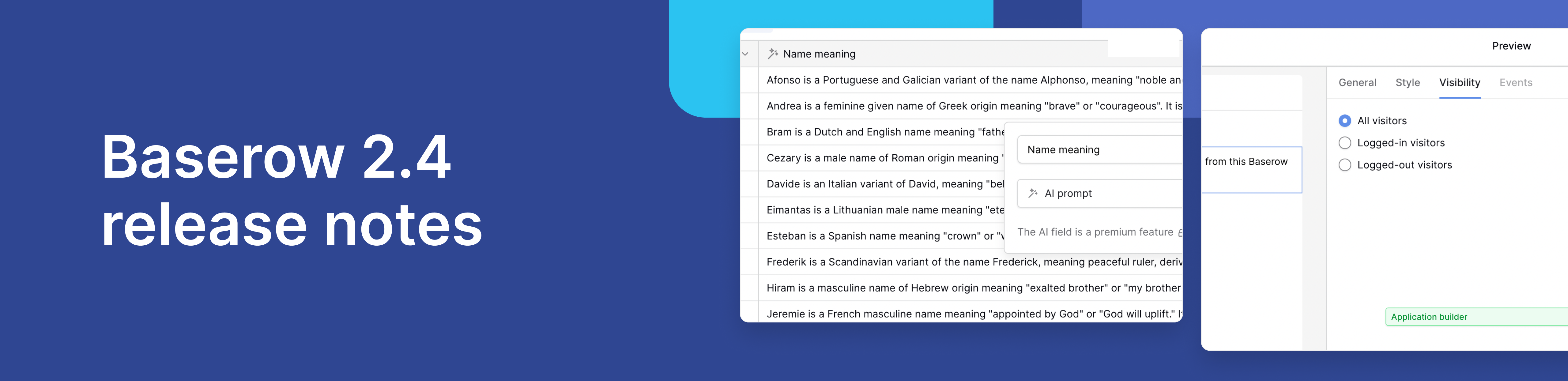
Baserow 2.4 adds Button fields, Graph elements, workflow automation, AI provider management, improved Group By views, and 30+ more updates.

Discover how Airtable and Baserow compare in features, flexibility, speed, and scalability. Compare pricing plans and hidden costs to make an informed decision!

Explore the best open-source software alternatives to proprietary products. Discover OSS tools, licenses, and use cases with our updated directory.