
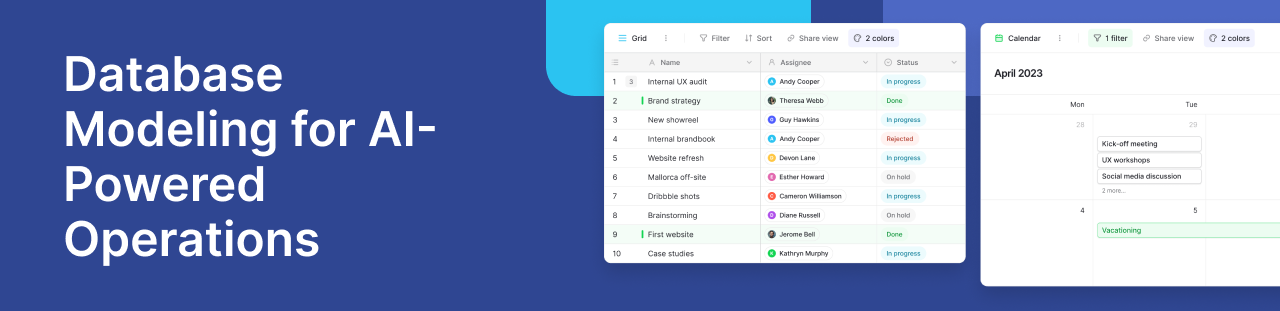
Every business runs on data. Customer records, project updates, support tickets, inventory lists, and team requests all create data every day.
The challenge is not collecting information. The challenge is keeping it organized. When data is spread across spreadsheets and disconnected tools, work becomes harder. Teams spend more time searching for information and less time getting work done.
This is where database modeling helps.
Database modeling is the process of planning how information should be stored and connected. It creates a structure that helps teams manage data, automate work, and support growth.
Today, this is even more important. AI-powered systems depend on clean and organized information. If data is inconsistent, AI tools cannot deliver reliable results. Tools such as Baserow help teams build structured databases without complex setup. This makes it easier to create operational systems that support both people and AI-driven workflows.
What Is Database Modeling?
Database modeling is the process of designing how information is stored inside a database.
Think of it as a blueprint.
Before building a house, architects create plans that show where everything belongs. A database model does the same thing for data. It defines:
- What information will be stored
- How records connect
- What rules should be followed
- How users will work with the data
The goal is to create a system that reflects a real world process while keeping information easy to manage. For example, a project management system may contain:
- Projects
- Tasks
- Team members
- Clients
Each group contains different information. The model defines how these records work together. Good database design reduces confusion. It also helps teams find information faster and improve reporting.
Why AI Operations Need Structured Data
Many businesses are investing in AI tools. These tools can summarize information, automate tasks, identify trends, and support decision-making. However, AI depends on data quality.
If information is missing, duplicated, or stored in different places, the results become less useful. This is why strong database structures matter. Well-organized databases help teams:
- Improve data accuracy
- Reduce manual work
- Support automation
- Generate better reports
- Create reliable AI workflows
Many AI-native operational systems rely on connected databases behind the scenes. These systems use structured information to trigger actions, create alerts, and deliver insights.
According to Microsoft’s data architecture guidance, organized data environments improve analytics, governance, and operational efficiency across business systems. Many organizations are moving away from disconnected spreadsheets and building centralized systems instead. This creates a stronger foundation for future automation.
The Main Components of a Database Model
Every database model contains a few important building blocks. Understanding them makes the design process much easier.
- Entities and Relationships
An entity is a person, object, event, or process that stores information. Common examples include:
- Customers
- Orders
- Projects
- Employees
- Products
An entity relationship describes how these records connect. For example:
- One customer can place many orders.
- One project can contain many tasks.
- One employee can manage several projects.
These relationships help businesses understand how information moves through their operations. Without clear relationships, data often becomes difficult to manage.
- Primary Keys and Foreign Keys
Every record should have a unique identifier. This is called a primary key.
The Customer ID identifies each record. A foreign key creates a connection between tables. For example, an Orders table may store the Customer ID from the Customers table. This link allows the database to connect both records.
Primary keys and foreign keys are important because they reduce duplicate information and improve consistency. They are a core part of every modern database management system.
- Data Types and Validation
Every field should store the correct kind of information. Common data types include:
- Text
- Numbers
- Dates
- Checkboxes
- Files
- URLs
Using the correct field type improves accuracy. For example, a project deadline should be stored as a date rather than plain text.
Modern platforms such as Baserow include field validation features that help teams maintain clean records and avoid common mistakes.
Common Database Models Used Today
Businesses use different models depending on their needs. Some are designed for operations. Others focus on analytics or software development.
- Hierarchical Database Structures
A hierarchical database organizes information in a parent-child structure. It works much like a family tree. This model works well when information follows a clear hierarchy. However, it can become limiting when records need many different relationships.
- Relational Database Models
Relational databases are the most common type used today. They store information in connected tables. These tables connect through shared identifiers.
Relational systems are popular because they are flexible and easy to expand. Many operational platforms use this structure to support reporting, automation, and collaboration.
- Object-Oriented Approaches
An object oriented database model stores information as objects. This approach is often used in software applications. Objects can contain both data and related actions.
Some organizations use object oriented databases when working with complex applications. However, relational systems remain more common for operational workflows.
- Dimensional Models for Analytics
Companies that analyze large amounts of information often use dimensional models. These models are common inside a data warehouse. They are designed for reporting and business intelligence. A dimensional structure makes it easier to answer questions such as:
- Which products perform best?
- Which teams complete projects fastest?
- Which customers generate the most revenue?
According to IBM’s guide to data modeling, dimensional approaches are widely used for analytics because they improve reporting performance.
The Database Design Process for Operational Teams
A good database does not happen by accident. It starts with a clear plan. The design process helps teams build systems that stay useful as the business grows.
Step 1: Define the Business Goal
Start with a high level view of the problem. Ask simple questions:
- What information needs to be tracked?
- Who will use the data?
- What reports are needed?
- Which workflows will be automated?
For example, an operations team may need to manage customers, projects, support requests, and internal tasks. Knowing the goal helps shape the database from the beginning.
Step 2: Identify Key Entities
Next, list the main entities. For a project operations system, these could include:
- Clients
- Projects
- Tasks
- Team members
Each entity should represent one type of information. Keeping entities separate makes organizing data easier and improves accuracy.
Step 3: Map Relationships
Now connect the entities. For example:
- One client can have many projects.
- One project can contain many tasks.
- One team member can work on several projects.
These links create an entity relationship structure. Good relationships help teams track information without creating duplicate records.
Step 4: Define Fields and Data Types
Each entity needs fields. A Projects table may include:
- Project name
- Status
- Start date
- End date
- Owner
Choosing the correct data types improves data quality and makes reporting easier.
Step 5: Create a Logical Model
A logical model shows how information connects before the database is built. It focuses on structure rather than technology. This step helps teams find problems early and improve the design before data is added.
Step 6: Test Real Workflows
Before launching the system, test real business scenarios. Create sample projects > Add tasks > Generate reports > Run automations.
This helps confirm that the database supports daily work. Many discussions inside the Baserow Community show how teams refine database structures by testing workflows before scaling them across departments.
How Database Modeling Supports AI-Native Operational Software
AI tools are becoming part of everyday operations. Teams use AI to summarize information, classify records, generate content, and automate decisions. However, AI performs best when data is structured. A strong database model helps AI systems:
- Access accurate information
- Understand relationships
- Reduce duplicate records
- Generate better outputs
- Support workflow automation
Imagine a customer success team. Their database contains:
- Customers
- Support requests
- Product feedback
- Account health scores
Because these records are connected, AI can identify trends and suggest actions more effectively. Poorly organized data makes these tasks much harder.
This is one reason many organizations now treat data modeling as an important part of AI readiness.
Platforms such as Baserow support this approach through features such as AI fields, automations, APIs, and collaborative databases. These features help teams build operational systems that combine human work with AI-driven processes.
Organizations exploring modern database platforms may also find value in this guide to open-source databases.
Common Modeling Mistakes That Create Operational Problems
Even simple databases can become difficult to manage if the structure is weak. Here are some common mistakes.
- Duplicate Records
Duplicate data creates confusion. Teams may not know which record is correct. Using primary keys helps prevent this problem.
- Missing Relationships
Some databases store information in separate tables without connecting them. This makes reporting difficult and often creates extra manual work. Foreign keys help solve this issue by linking related records.
- Poor Naming Conventions
Field names should be clear and consistent. For example:
Good:
- Project Status
- Client Name
- Due Date
Less helpful:
- Field1
- Status_New
- DataValue
Clear naming improves usability and reduces mistakes.
- Overcomplicated Structures
Some teams try to build everything at once. This often creates unnecessary complexity. Start with a simple model. Add new tables and workflows only when needed. A flexible database management system should support growth without making daily work harder.
Why Teams Use Baserow for Operational Database Design
Many businesses need more structure than spreadsheets can provide. At the same time, they do not want the complexity of traditional database platforms. This is where Baserow fits well.
Baserow allows teams to build relational databases through a visual interface. Operations teams can manage:
- Customer records
- Project pipelines
- Service requests
- Internal workflows
- Asset tracking
without writing code.
For example, a growing SaaS company may use Baserow to connect customers, support tickets, onboarding tasks, and product requests in one workspace.
Because records are linked, teams can see the full picture without switching between tools. Recent Baserow improvements in automation, AI-powered workflows, APIs, and scalability make the platform especially useful for organizations building AI-native operational systems.
Teams that are new to databases may also find this guide for non-technical users helpful when getting started.
Frequently Asked Questions
- What is the purpose of database modeling?
Database modeling helps organize information before data is stored. It creates a structure that improves accuracy, reporting, and workflow management.
- What is the difference between a logical model and a physical model?
A logical model focuses on how data is organized. A physical model focuses on how the database is implemented within a specific system.
- How do primary keys improve data quality?
Primary keys give each record a unique identifier. This prevents duplicate records and improves consistency.
- What are dimensional models used for?
Dimensional models support reporting and analytics. They are often used inside a data warehouse to improve business intelligence.
- How does database modeling support AI workflows?
Structured databases provide clean data that AI systems can use for automation, analysis, and decision support.
- What is an entity relationship model?
An entity relationship model shows how different entities connect. It helps teams understand how information moves through a system.
- Can non-technical teams perform database modeling?
Yes. Modern tools such as Baserow allow business users to create database structures without advanced technical skills.
- Which modeling tools are commonly used today?
Teams use diagramming software, database platforms, and visual builders to create and manage models. Many organizations now prefer no-code tools because they reduce setup time.
- How does database modeling improve reporting?
Well-structured data makes reports more accurate. It also reduces the time needed to collect and analyze information.
- What role does a data warehouse play in analytics?
A data warehouse stores large amounts of historical information. It supports reporting, dashboards, and business analysis.
Building Better Operational Systems Starts With Better Data
Every successful operational system starts with organized information.
When data is structured well, teams can work faster, automate more tasks, and make better decisions. Strong database models also create the foundation needed for AI-powered operations.
Whether you are managing projects, customers, support requests, or internal workflows, investing time in database design can deliver long-term benefits.
If you want a simple way to build operational databases, automate workflows, and prepare your data for AI-driven processes, try Baserow today.
👉 Get started with Baserow and build operational systems that scale with your business.

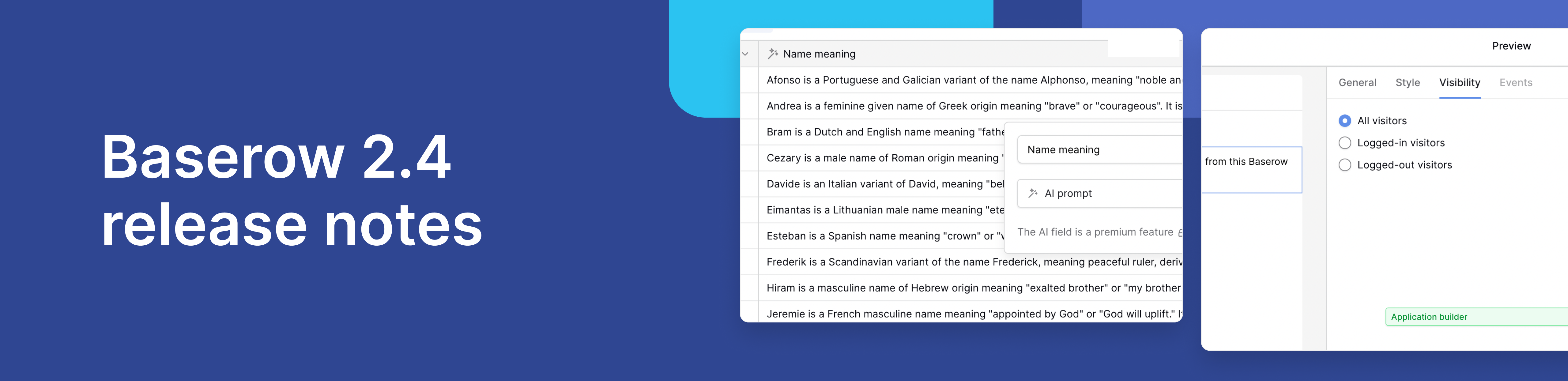
Baserow 2.4 adds Button fields, Graph elements, workflow automation, AI provider management, improved Group By views, and 30+ more updates.

Discover how Airtable and Baserow compare in features, flexibility, speed, and scalability. Compare pricing plans and hidden costs to make an informed decision!

Explore the best open-source software alternatives to proprietary products. Discover OSS tools, licenses, and use cases with our updated directory.