
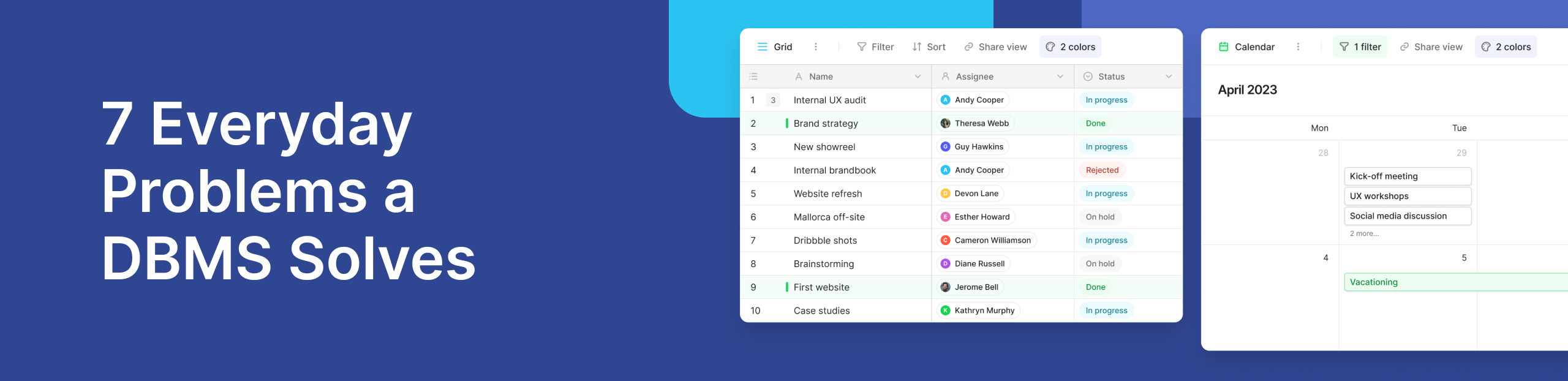
7 Everyday Problems a DBMS Solves
Businesses generate more information than ever before. Customer records, project updates, inventory lists, employee details, and sales data all need to be organized and kept up to date. Many teams start with spreadsheets, but as the business grows, those spreadsheets become harder to manage.
This is where a database management system (DBMS) makes a real difference. A database management system helps teams organize, retrieve, and manage data from a single location. Instead of searching through multiple files, everyone works from the same source of truth.
Whether you’re running a small business or a growing company, here are seven everyday problems a database management system can solve.
1. Customer Information Is Scattered Across Different Files
One of the biggest challenges for sales and customer success teams is keeping customer information organized. Contact details may be stored in spreadsheets, meeting notes, email conversations, or separate CRM exports.
This makes it difficult to find accurate information quickly.
A database management system solves this by creating one central location where your database stores data consistently. Every customer record can include contact information, previous conversations, purchase history, and assigned team members.
With Baserow, you can build a simple customer database that everyone on your team can access and update without worrying about duplicate records.
2. Teams Spend Too Much Time Searching for Information
How often does someone ask:
- “Which spreadsheet has the latest version?”
- “Who updated this file?”
- “Where can I find this customer?”
When information is spread across multiple tools, productivity suffers.
A database management system DBMS organizes information using a clear database structure, making it easier to search, filter, and sort records. Different data types, such as text, dates, numbers, checkboxes, and file attachments, help keep information consistent and easy to understand.
Instead of hunting through folders and emails, your team can find the right information in seconds.
3. Inventory Tracking Becomes Unreliable
Whether you manage office equipment, products, or warehouse inventory, keeping accurate stock levels is critical.
Spreadsheets often lead to:
- Duplicate entries
- Missing stock updates
- Ordering items twice
- Running out of important supplies
A database allows businesses to store and manage inventory using related tables and organized data structures. Products, suppliers, purchase orders, and stock movements can all be connected, giving teams a complete view of inventory in real time.
Larger organizations may use enterprise solutions like Microsoft SQL Server, while growing businesses often prefer flexible no-code platforms that are easier to customize and maintain.
4. Project Updates Get Lost
Projects involve many moving parts. Tasks are assigned, deadlines change, files are shared, and priorities shift.
When updates happen across emails, chat apps, and spreadsheets, it’s easy for important information to disappear.
A database management system keeps everything together. Teams can track tasks, assign owners, monitor deadlines, and view project progress from one place.
Instead of asking for status updates, everyone can see the latest information whenever they need it. This creates better collaboration and reduces unnecessary meetings.
For a closer look at how modern technology is transforming databases, read How AI Is Changing Database Management Systems.
5. Manual Approval Processes Slow Down Work
Many businesses still rely on emails or chat messages to approve purchase requests, marketing content, leave applications, or expense claims. As requests pile up, it’s easy for approvals to get delayed or lost.
A database management system creates a structured workflow where every request is tracked from submission to approval. Team members can update statuses, leave comments, and see exactly where each request stands.
With Baserow, these workflows can be built without writing code, helping teams move work forward faster while keeping every decision recorded in one place.
6. Reporting Takes Hours Instead of Minutes
Creating weekly or monthly reports often means collecting information from multiple spreadsheets and checking for errors before sharing the results.
This manual process is slow and increases the chance of mistakes.
Because a database management system keeps information organized in one place, reports become much easier to generate. Teams can filter records, create different views, and monitor key metrics in real time instead of manually combining data from several files.
Having a single source of truth also means everyone works with the same, up-to-date information.
7. Growing Teams Need Systems That Can Grow Too
A spreadsheet may work well for a small team, but as more people join the business, information becomes harder to maintain. More users, more projects, and more data require a better way to stay organized.
Modern businesses have several options. Traditional database management systems RDBMS are ideal for highly structured information with clear relationships between records. A NoSQL database or NoSQL DBMS may be a better choice for applications that need greater flexibility or handle large volumes of unstructured data.
The best solution depends on your business needs, but the goal remains the same: make information easy to organize, access, and update as your business grows.
Why Businesses Choose No-Code Database Management Systems
Years ago, building a database often required developers or database administrators. Today, that has changed.
A DBMS is a software platform that helps businesses organize information, automate processes, and collaborate more effectively. Modern no-code solutions like Baserow make these capabilities available to operations, HR, marketing, finance, and sales teams—not just technical users.
Instead of spending time maintaining spreadsheets, teams can build custom applications for customer management, inventory tracking, project planning, content calendars, and many other business processes using a visual interface.
If you’re new to databases and want to understand the basics before choosing a solution, read Database vs Database Management System Explained.
Conclusion
Almost every business faces the same challenges: scattered information, manual processes, duplicate data, and time-consuming reporting. A database management system helps solve these everyday problems by keeping information organized, accessible, and easy to update.
Whether you’re tracking customers, managing projects, monitoring inventory, or building internal workflows, the right database can save time and improve collaboration across your team.
With a no-code platform like Baserow, you don’t need to be a developer to build powerful business applications. You simply create the database your team needs, adapt it as your business grows, and spend less time managing data—and more time using it to make better decisions.

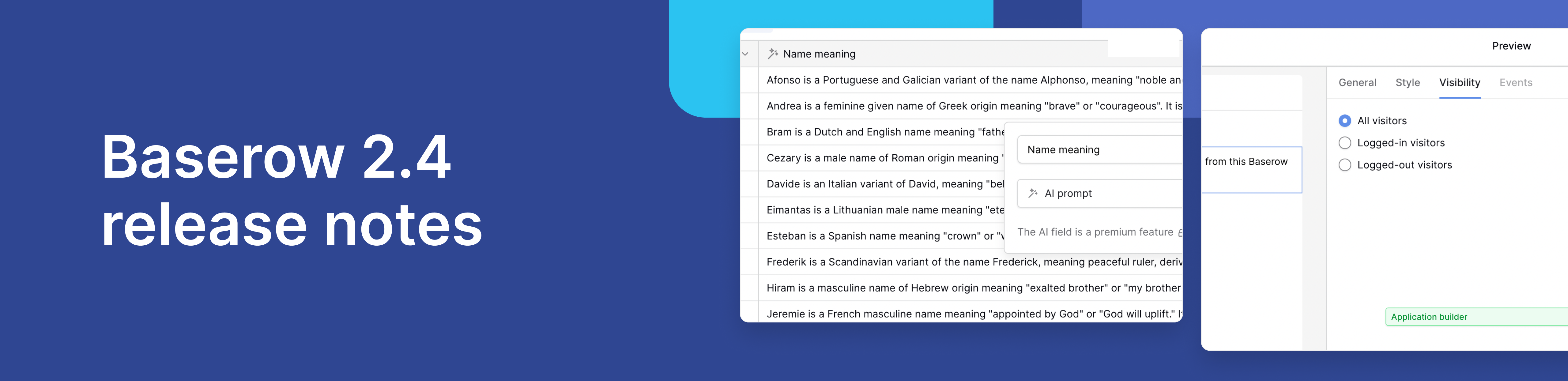
Baserow 2.4 adds Button fields, Graph elements, workflow automation, AI provider management, improved Group By views, and 30+ more updates.

Discover how Airtable and Baserow compare in features, flexibility, speed, and scalability. Compare pricing plans and hidden costs to make an informed decision!

Explore the best open-source software alternatives to proprietary products. Discover OSS tools, licenses, and use cases with our updated directory.