
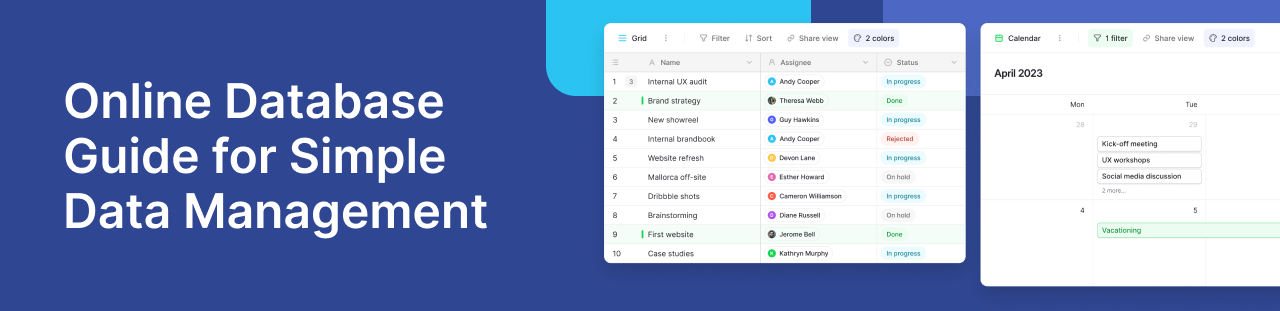
Data is everywhere—customer lists, project tasks, inventory, and more. But when this information is stored in scattered spreadsheets or documents, it quickly becomes hard to manage. Many teams struggle with duplicate entries, outdated files, and confusion about which version is correct.
This is where an online database becomes useful. It helps organize information in a structured way so it is easy to access, update, and share. Modern tools have made databases much simpler, even for beginners. Platforms like Baserow are designed to make data management accessible without needing technical skills.
What Is an Online Database?
An online database is a system that stores information on the internet instead of a local computer. You can access it from anywhere, as long as you have an internet connection.
Think of it like a smart spreadsheet. Instead of just rows and columns, it allows you to organize data in a more structured and connected way. For example, you can link customer records to orders or track projects with multiple related tasks.
If you want a deeper technical explanation, Oracle’s guide to databases explains how databases work in more detail.
Why Traditional Tools Fall Short
Spreadsheets are useful, but they have limits. As your data grows, they become harder to manage. Files get duplicated, formulas break, and collaboration becomes confusing.
For example, a team might use different versions of the same spreadsheet. One person updates a file, while another continues using an older version. This leads to errors and wasted time.
Another issue is structure. Spreadsheets are flat, meaning they cannot easily connect different types of data. This makes it difficult to manage complex workflows or large datasets.
How an Online Database Solves These Problems
- Organized Data in Tables: Online databases store data in structured tables. Each table can represent a specific type of information, such as customers, tasks, or products. You can learn how this works in simple terms through this guide to tables.
- Easy Collaboration: Because the database is online, multiple users can work on it at the same time. Everyone sees the latest updates, which reduces confusion and improves teamwork.
- Flexible Workflows: You can customize fields, create filters, and build different views of your data. This flexibility helps teams adapt the database to their needs instead of changing their workflow to fit the tool.
- Scalable for Growth: As your data increases, a well-designed database continues to perform smoothly. You don’t need to start over when your project grows.
Why Baserow Is a Practical Choice
Baserow is a no-code platform that makes it easy to create and manage databases. You don’t need programming skills to get started, which makes it suitable for students, small teams, and growing businesses.
%20(2).png)
One key advantage is flexibility. You can structure your data the way you want and adjust it as your needs change. You can explore its database capabilities here: Baserow database features.
It is also open source, which means developers can customize it further if needed. You can view its code and contributions on GitHub.
Another important aspect is its community. Users often share real examples of how they use the platform, such as managing contributors or tracking internal tools. These discussions are available in the Baserow community.
There are different types of databases, if you want a simple breakdown, this guide to database types explains each category clearly.
Frequently Asked Questionss
- What is the online database?: It is a system that stores and organizes data on the internet, allowing users to access and manage it from anywhere.
- What are the best online databases?: The best tools depend on your needs, but flexible platforms like Baserow are popular because they are easy to use and adaptable.
- Is there any free online database?: Yes, many tools offer free plans. Baserow provides a free option that is suitable for individuals and small teams.
- What are the top 5 databases?: Common examples include MySQL, PostgreSQL, MongoDB, SQLite, and modern no-code platforms like Baserow.
- What are the 7 types of databases?: They include relational, NoSQL, hierarchical, network, object-oriented, cloud, and distributed databases.
- Is SQL or Excel harder?: SQL can be harder for beginners because it requires learning a query language, while Excel is more visual and easier to start with.
Conclusion
Managing data does not have to be complicated. With the right tools, you can organize information, improve collaboration, and scale your work without stress.
An online database provides the structure that spreadsheets often lack. Platforms like Baserow make this process simple by combining flexibility with ease of use.
If you want to organize your data more effectively, you can get started here:

Baserow 2.4 adds Button fields, Graph elements, workflow automation, AI provider management, improved Group By views, and 30+ more updates.

Discover how Airtable and Baserow compare in features, flexibility, speed, and scalability. Compare pricing plans and hidden costs to make an informed decision!

Explore the best open-source software alternatives to proprietary products. Discover OSS tools, licenses, and use cases with our updated directory.