
Open source software is a big part of the digital tools we use every day. Things like web browsers, code editors, and even business apps are often built using open systems. This means many people can work together to improve them and share them with others for free. Because of this, the way apps are created and used has changed a lot over time.
When people look for open source handy developed apps, they usually want simple and useful tools that solve real problems. These apps are not just small experiments. They are trusted, widely used, and supported by people from all over the world instead of just one company.
This article will help you understand why open source apps are important, how to choose the right ones, and which types of tools are most useful in the long run. It also shows how platforms like Baserow can help teams organize their data, manage work, and build apps more easily.
Open source apps are built using code that anyone can see and use. People can study the code, improve it, and even change it to fit their needs. This is very different from closed source software, where only one company controls everything and keeps the code private.
Most handy open source apps share a few simple features:
- They solve a clear and useful problem
- They are improved by a community of users and developers
- They are flexible and can be used in different ways
Many popular tools today started as small open source projects. Over time, they grew stronger as more people used them and contributed ideas. This helped them become reliable and useful in real-life situations.
This way of building software works well for teams because it gives them more control and freedom. They can adapt tools to their needs and connect them with other systems without being locked into strict rules or licenses.
Best Practices for Choosing Open Source Apps
- Evaluate the Community Behind the Tool
An active community is often more important than the feature list. Frequent updates, open discussions, and clear documentation indicate a healthy project. Platforms with engaged contributors tend to adapt faster and remain secure over time.
Communities like the Baserow community regularly share implementation ideas, templates, and real-world solutions, helping new users avoid common mistakes and build confidently.
- Understand Licensing and Long-Term Use
Not all open source alternatives offer the same freedoms. Some licenses allow commercial use and modification, while others impose restrictions. Reviewing licensing early helps avoid surprises when scaling or monetizing an app.
- Focus on Integration and Data Structure
The most useful tools and apps are those that fit into existing workflows. Whether it is connecting to a hosting service, syncing with internal systems, or managing structured records, flexibility matters more than isolated features.
This is where open platforms that support structured data models become valuable. Instead of forcing teams into predefined workflows, tools like Baserow allow data to remain adaptable as needs evolve.
Recommended Open Source Tools Across Key Categories
- Productivity and Office Tools
Many teams now use an open source office suite instead of paid tools like Microsoft Office. These tools let you create documents, spreadsheets, and presentations, just like traditional software.
They also work well with common file formats, so you can easily share your work. Another big advantage is that they give users more control over their data and help save money.
- Development and Coding Tools
Open source tools are very popular in coding and app development. Many programming languages grow quickly because people around the world keep improving them.
A good code editor is an important part of this process. Visual Studio Code is widely used because it is fast, flexible, and easy to customize. Developers can adjust it to fit their needs without being tied to one company.
To stay organized, teams often connect their coding tools with structured databases. This helps them track tasks, manage updates, and plan releases more easily.
- Media and Browsing Applications
Tools like a web browser or media player may seem simple, but they are used every day. Open source versions focus on privacy, transparency, and better control for users.
For example, an open source android app for media playback can support many file types without limits. Open browsers also follow global standards and avoid hidden tracking.
These tools are trusted because they are tested and improved by real users, not just promoted through ads.
- Creative and Game Development
Open source tools are also helpful for creative work. A game engine built as open source allows developers to fully control how their game looks and performs.
This is useful for both big studios and independent creators. They can build, test, and launch their projects without worrying about expensive licenses or restrictions.
How Open Source Apps Enable No-Code and Low-Code Workflows
The rise of visual builders has changed who can create software. Non-developers can now build internal tools, dashboards, and even client-facing applications without writing code.
Platforms like Baserow support this shift by combining open source foundations with intuitive interfaces. Its application builder allows teams to create multi-page apps connected directly to structured tables, reducing the gap between data and usable interfaces.
Because the platform remains open, teams avoid the trade-offs that often come with proprietary no-code tools.
Why Baserow Fits Into Open Source Apps and Real Use Cases
Baserow is a tool that works quietly in the background to help teams stay organized. It can be used to manage contributors, track features, plan releases, and even build simple internal tools for open source projects.
With the updates in the Baserow 2.0 release, the platform has become more scalable, faster, and easier to control. It now offers better permissions and improved performance, which makes it useful for both small teams and growing organizations.
Instead of replacing other tools, Baserow works alongside them. It acts as a structured layer where all important data is stored in one place. This keeps information easy to access, update, and reuse. It also supports the growing trend of no-code tools, where even non-developers can build useful applications without writing code.
In real-world use, many teams combine open source apps with tools like Baserow to solve everyday problems. In the Baserow community, users often share how they manage contributor lists, track project updates, and organize documentation more clearly.
Rather than using many separate files, they keep everything in one structured system and build simple apps on top of it. This makes work faster, reduces confusion, and keeps everything transparent.
Because these solutions are based on free and open source tools, teams can stay in control as they grow. They can adapt their systems easily and use them across a wide range of use cases without being locked into one platform.
Building Business Apps on Open Foundations
Modern businesses increasingly rely on internal tools rather than off-the-shelf software. Open platforms make this practical without requiring engineering-heavy investments.
Common examples include:
- Internal request portals connected to shared databases
- Client-facing dashboards built on structured records
- Multi-page apps powered by a single source of truth
Baserow supports this pattern by allowing non-developers to build applications directly on top of their data. Product overview explains how tables, views, and permissions work together to support scalable internal tools without sacrificing flexibility.
For teams that want to go further, the application builder enables structured data to become usable interfaces without relying on proprietary constraints.
Why Baserow Gives Teams More Control
Baserow is designed for teams that want to build useful apps without losing control as their needs grow. Its open-source model gives businesses more freedom to scale, customize, and choose where their data is hosted.
- Scale without switching platforms
Teams can start with Baserow SaaS and move to self-hosting when they need more control or capacity. Self-hosted deployments do not have Baserow-imposed row or storage limits, so businesses can scale without moving their data to a different platform.
Moving is also straightforward. Teams can export a workspace from Baserow SaaS and import it into their self-hosted instance. This makes it easier to change how Baserow is deployed as business needs evolve.
- Build on an open-source foundation
Baserow is more than an app builder with visible open source code. Its ecosystem allows developers to use the platform as a starting point for their own projects. Baserow has been forked more than 700 times, showing how developers can adapt its foundation for different needs.
For example, Blaze was built on top of Baserow. Teams can also contribute code when they need specific functionality. Contributions are reviewed before becoming part of Baserow, but this gives developers another way to help shape the platform.
Most importantly, teams are not completely tied to one hosting model. They can self-host Baserow and maintain greater control over their software and data.
- Extend Baserow with your own plugins
Teams can also create plugins when they need features that are not yet available in the core platform. These plugins can even be released as open source for other users.
One example is the Baserow Color Field plugin. It adds features for storing and selecting colors, copy and paste, sorting, filtering, and API access.
This extensibility is useful for businesses with specific requirements. Instead of waiting for every feature to become part of the main product, developers can create functionality that fits their workflow while continuing to use Baserow as the foundation.
Frequently Asked Questions
- Can ChatGPT 4 build an app?
ChatGPT can assist with logic, structure, and content, but real applications still require platforms that manage data, permissions, and interfaces. Tools like Baserow bridge that gap.
- Can I monetize a no code app?
Yes. Many teams monetize applications built on open platforms by controlling hosting, access, and features while keeping their data portable.
- What is open source app development?
It refers to building applications using publicly available code that can be modified, shared, and audited by anyone.
- What are Foss apps?
FOSS stands for Free and Open Source Software. These apps allow users to run, study, modify, and distribute the software freely.
- Is ChatGPT open source?
No. While it can assist with development tasks, ChatGPT itself is not open source.
Choosing Platforms That Scale Without Lock-In
When evaluating tools to build custom business apps without coding, teams should prioritize platforms that allow:
- Multi-page applications connected to tables
- Internal and client-facing interfaces from the same dataset
- Long-term control over data and permissions
Baserow stands out because it supports these needs without forcing teams into proprietary workflows. It works alongside existing tools rather than replacing them.
Conclusion
Open source handy developed apps continue to shape how software is built, shared, and scaled. Their strength lies not just in transparency, but in adaptability. When combined with structured data platforms, they allow teams to move faster while staying in control.
To explore how open foundations can support your workflows, start by experimenting with Baserow and building applications directly from your data.

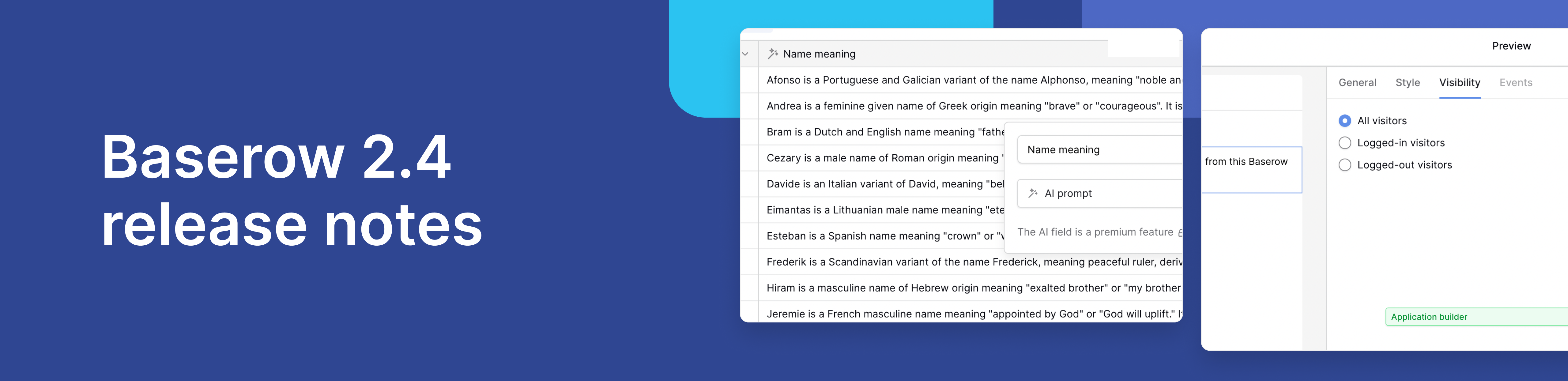
Baserow 2.4 adds Button fields, Graph elements, workflow automation, AI provider management, improved Group By views, and 30+ more updates.

Discover how Airtable and Baserow compare in features, flexibility, speed, and scalability. Compare pricing plans and hidden costs to make an informed decision!

Explore the best open-source software alternatives to proprietary products. Discover OSS tools, licenses, and use cases with our updated directory.