
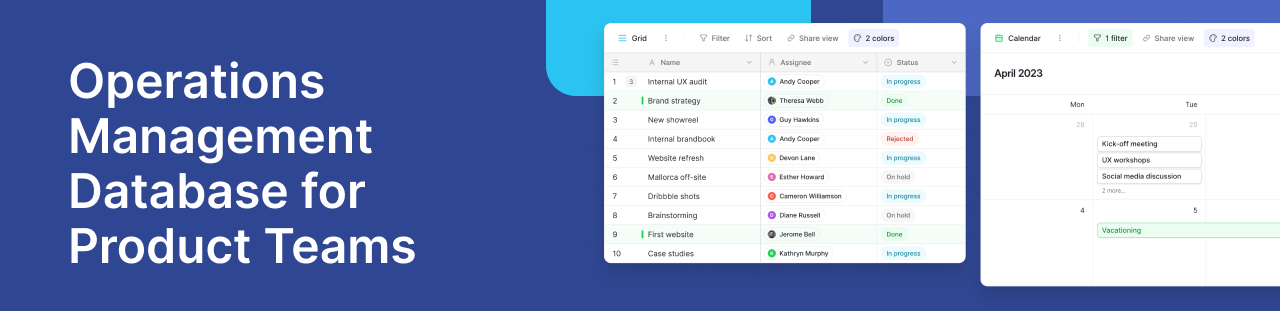
Product teams manage many tasks every day. They track sprint updates, feature requests, customer feedback, bug reports, approvals, and release timelines. When this information is spread across spreadsheets and disconnected tools, teams lose visibility.
An operations management database helps product teams organize workflows in one place. It improves collaboration, reduces manual work, and helps teams access data in real time.
Modern companies now prefer operational databases because they support faster workflows and better coordination across departments. Platforms like Baserow help teams build flexible operational systems without complicated setup or heavy coding.
Many businesses are also moving toward AI-driven operations where teams need connected systems that support fast decision-making. This shift is discussed in this guide on enterprise application platforms for AI-driven operations.
What Is an Operations Management Database?
An operations management database is a system used to organize operational data that supports daily business operations.
Product teams use these systems to manage:
- sprint tasks
- roadmap updates
- customer feedback
- release planning
- bug tracking
- approval workflows
Instead of storing information across different spreadsheets and tools, teams keep everything inside one connected database.
This improves visibility and reduces confusion.
According to IBM, operational databases are designed for fast updates and real time transactional workflows. These systems help businesses process information quickly while maintaining data integrity.
As operations grow, spreadsheets become harder to manage. Teams often struggle with duplicate records, outdated updates, and disconnected workflows. This guide comparing spreadsheets and operational databases explains why many companies now move toward database-driven operations.
Why Product Teams Need Operational Databases
Product operations involve many teams working together at the same time.
For example:
- product managers plan features
- developers manage sprint tasks
- support teams report bugs
- operations teams coordinate launches
- leadership teams review progress
Without centralized systems, communication becomes difficult.
Teams may experience:
- delayed approvals
- duplicate work
- missing updates
- inconsistent reporting
- disconnected operational data
An operational database helps solve these problems by centralizing workflows inside one shared workspace.
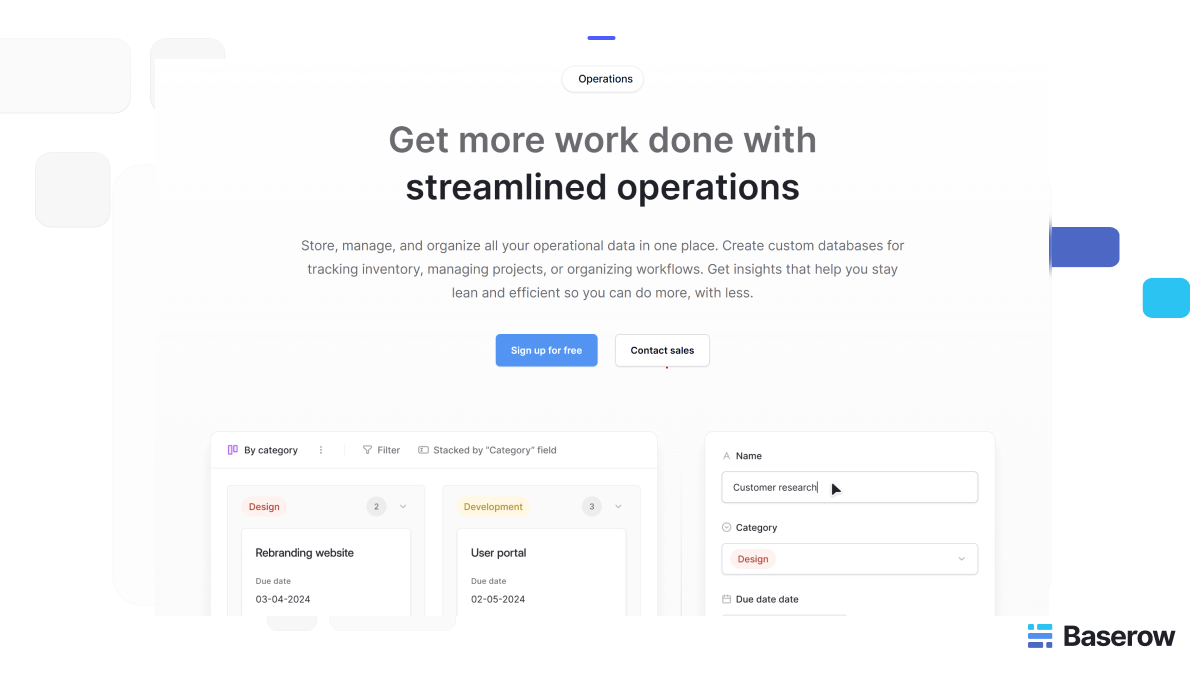
Real Time Data Processing Improves Collaboration
Modern product teams move quickly. Information changes every day.
For example:
- sprint priorities change
- release timelines shift
- customer feedback increases
- support issues get escalated
Teams need access to data in real time so they can respond faster.
Real time data processing improves communication because everyone sees the latest updates immediately.
Baserow supports collaborative workflows where multiple users can update operational databases together. This helps teams reduce delays and improve operational visibility.
Companies looking to improve workflow coordination can also explore Baserow’s operations workflows, which support cross-functional operational management.
Better Organization Improves Data Integrity
Many businesses still manage operational data across spreadsheets, emails, and project management tools.
This creates problems because teams may accidentally:
- duplicate information
- lose updates
- track outdated records
- create reporting mistakes
Operational databases improve data integrity because information stays connected inside one structured system.
For example, product teams can connect inside one database.
- roadmap items
- sprint tasks
- QA approvals
- release schedules
- support tickets
This creates a cleaner workflow structure and improves visibility across departments.
How Baserow Supports Product Operations
Baserow also helps teams simplify operational workflows by reducing dependence on multiple disconnected tools. Instead of switching between spreadsheets, project trackers, and reporting platforms, teams can manage operational data inside one centralized workspace.
This improves visibility across business operations and helps teams respond faster to updates. Product managers can monitor roadmap progress, operations teams can track approvals, and support teams can review customer issues without losing context.
As Baserow supports real time collaboration, updates appear instantly across workflows, helping teams stay aligned during fast-moving product releases. Baserow helps teams build operational databases that support fast-moving product workflows.
Teams can create systems for:
- sprint planning
- release tracking
- customer feedback management
- roadmap coordination
- onboarding workflows
- operational reporting
Because Baserow supports flexible data models, teams can customize workflows based on their operations.
For example, a product roadmap table can connect directly with:
- engineering tasks
- customer requests
- launch approvals
- testing workflows
- support escalations
This improves coordination between teams.
Unlike rigid enterprise software, Baserow gives teams flexibility without making workflows complicated.
Operational teams can also create different views for different departments. Product managers, engineers, operations teams, and support staff can all work from the same operational database while viewing information differently. This improves collaboration while reducing confusion.
Flexible Workflows Help Teams Scale
As businesses grow, operations become more complex.
Teams often manage:
- larger operational databases
- more customer feedback
- additional product launches
- more complex queries
- growing reporting requirements
Without structured systems, workflows slow down. Modern operational databases support performance tuning so teams can continue working efficiently as operations expand.
Baserow also supports integrations and APIs that help businesses connect workflows across multiple systems. This guide to data management tools explains how centralized platforms improve workflow organization for growing teams.
Data Security Matters for Product Teams
Product teams often manage sensitive information every day. This may include:
- employee data
- customer records
- product documentation
- launch plans
- operational reports
Strong data security helps businesses protect this information while still allowing teams to collaborate easily. Modern operational databases usually include:
- role-based access
- workspace permissions
- secure sharing controls
- backup systems
- audit visibility
These features help teams manage operational data more safely. Security also becomes important when businesses must follow regulatory requirements. Companies need systems that help teams control who can view or edit information.
The NIST Cybersecurity Framework explains why businesses should use secure systems to manage operational workflows and business data.
Baserow supports secure collaboration through flexible permissions and controlled access settings. This allows product teams to share information while maintaining better control over sensitive records.
Real-Time Operational Visibility Improves Decisions
Product operations change quickly. Teams need updated information to make better decisions.
For example:
- engineering teams monitor sprint progress
- operations teams track launch readiness
- support teams review customer issues
- leadership teams monitor delivery timelines
Without centralized visibility, teams may miss important updates. Operational databases improve visibility because everyone works from the same data source.
Real time transactional systems also reduce communication delays. Teams no longer need to wait for spreadsheet updates or manual reporting. Baserow helps teams manage operational databases where updates appear instantly across workflows.
This improves:
- operational visibility
- team coordination
- reporting accuracy
- launch planning
- workflow management
Businesses moving toward connected operational systems often use modern workflow strategies like those discussed in Baserow’s operational software best practices guide.
Operational Databases vs Data Warehouses
Many teams confuse operational databases with data warehouses, but they serve different purposes. Operational databases support daily workflows and active business operations. Teams use them for:
- sprint management
- release coordination
- support tracking
- operational reporting
- workflow approvals
These systems focus on real time data processing and fast updates. Data warehouses are different. They mainly store historical information used for analytics and long-term reporting.
For example: An operational database may track live sprint progress. A data warehouse may analyze delivery trends from the past year. Read more about the comparison in the guide.
.png)
Most product teams rely more heavily on operational databases because they support day-to-day work. According to AWS, operational databases are designed for fast performance and continuous transactional updates.
Product Use Cases in Baserow
Many teams use Baserow to simplify operational workflows. Because the platform supports flexible workflows and connected databases, teams can build systems that match their operations.
- Sprint Planning and Release Tracking: Product teams can manage sprint timelines, task approvals, and release schedules inside one operational database.
This improves coordination between product managers, developers, and operations teams.
- Customer Feedback Management: Teams can collect feature requests and customer feedback in one centralized workspace. This makes it easier to prioritize product updates and monitor recurring issues.
- Cross-Team Collaboration: Operational databases help different departments work together more efficiently inside one shared system. For example:
- engineering teams update sprint progress
- support teams track bugs
- product managers review roadmaps
- operations teams monitor releases
This improves communication and reduces duplicate work.
- Workflow Automation
Many operational tasks are repetitive. Teams often spend time:
- updating records
- sending approvals
- organizing spreadsheets
- tracking project changes
Baserow helps teams automate workflows so operations become easier to manage.
The Baserow community also shares real examples of operational databases and workflow systems used across different industries.
Why Teams Move Away From Spreadsheets
Spreadsheets are useful for small projects, but they become difficult to manage as workflows grow.
Teams often struggle with:
- disconnected updates
- duplicate records
- reporting issues
- limited collaboration
- manual tracking
Operational databases solve many of these problems because they support connected workflows and live updates.
Modern operational databases also improve:
- data integrity
- workflow visibility
- operational reporting
- collaboration
- reduced latency
This is why many businesses now replace spreadsheets with structured operational systems.
Conclusion
Modern product teams need better systems to manage growing operational workflows.
An operations management database helps teams organize information, improve collaboration, and manage data in real time.
Baserow gives businesses a flexible way to build operational databases without complicated technical setup. Teams can create workflows that support sprint planning, release coordination, customer feedback management, and operational reporting inside one platform.
Teams looking to modernize product operations and improve operational visibility can explore Baserow to build flexible operational systems that scale with growing business operations.
To explore how Baserow can support your operations management database. Product managers, engineers, operations teams, and support staff can all use the same operational database. They can view the information in different ways, you can get started here.

Baserow 2.4 adds Button fields, Graph elements, workflow automation, AI provider management, improved Group By views, and 30+ more updates.

Discover how Airtable and Baserow compare in features, flexibility, speed, and scalability. Compare pricing plans and hidden costs to make an informed decision!

Explore the best open-source software alternatives to proprietary products. Discover OSS tools, licenses, and use cases with our updated directory.