
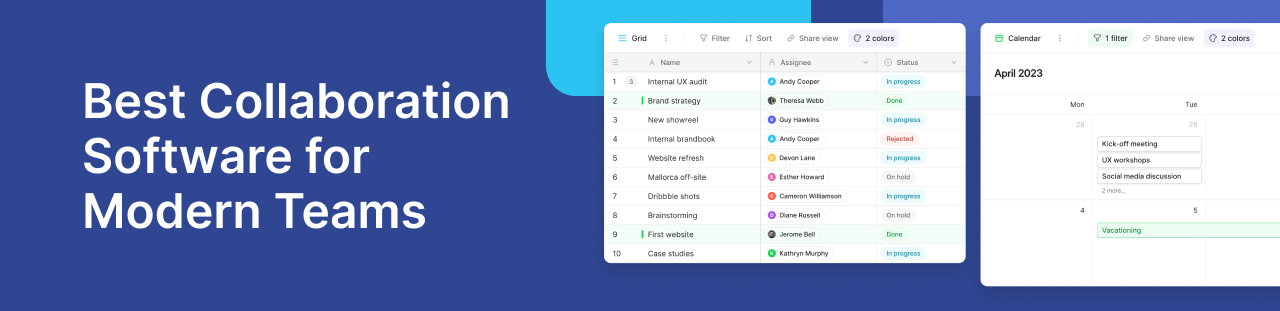
The way modern teams work has evolved dramatically. Whether you’re running a fast-paced startup or managing a global enterprise, seamless collaboration has become essential for success. This is where collaboration software comes in—powerful digital platforms that allow teams to communicate, organize tasks, share files, and manage projects in one unified space.
These tools not only help project managers track progress but also create an environment where team members can work together efficiently, regardless of location. With features like real time collaboration, video calling, and flexible project timelines, they have become a cornerstone of modern work.
Among the wide range of project management tools available, platforms like Baserow stand out because they give teams the freedom to create custom workflows without needing a developer. Instead of forcing your processes into rigid software, you can build a system that works the way your team does.
Collaboration software refers to digital platforms designed to help teams work together more effectively. These tools combine communication, organization, and project tracking features so that teams collaboratively achieve shared goals. Instead of juggling multiple apps, collaboration software provides a central hub where people can assign tasks, set due dates, track deliverables, and communicate with one another.
At its core, collaboration software enables:
- Task management – assigning work, monitoring progress, and ensuring accountability.
- Team communication – from chats and file sharing to integrated video calling.
- Real time collaboration – multiple users working together on shared documents, databases, or timelines.
- Project tracking – offering visibility into project timelines and status updates.
Unlike simple productivity apps that focus on individual efficiency, collaboration platforms bring team members together into a shared environment. This distinction makes them invaluable for project managers who need to oversee multiple initiatives at once.
For example, managing workspace collaborators is effortless with Baserow, where you can assign roles, control permissions, and ensure everyone works on the right data securely. This flexibility gives teams the ability to adapt their collaboration style to different projects.
Key Features to Look For in a Collaboration Software
Not all collaboration platforms are the same. Some focus heavily on communication, while others specialize in project management features or file sharing. When choosing the right software for your organization, consider these core elements:
- Task Management and Organizing Workflows
A strong collaboration platform helps you organize tasks with clarity. From assigning responsibilities to setting due dates, project managers can ensure nothing slips through the cracks. Many tools include drag and drop functionality for scheduling work or prioritizing tasks, making it easier to visualize what needs attention.
- Team Communication and Chats File Sharing
Effective teamwork relies on clear communication. Look for software that offers instant messaging, group chats, and the ability to share files quickly. Integration of video calling ensures that remote teams can connect face-to-face, strengthening collaboration and reducing misunderstandings.
- Real Time Collaboration and Project Timelines
One of the most valuable aspects of collaboration tools is real time collaboration. Multiple team members can work on documents, databases, or boards at the same time. Combined with project timelines, this ensures everyone knows the current status of deliverables and what’s coming next.
- Customization and User Interface
A user friendly design is critical. Teams shouldn’t have to struggle with a steep learning curve. The ability to create custom views or workflows ensures that the software adapts to your team, not the other way around. A clean user interface also boosts adoption across all team members.
- Integration and Management Features
Finally, the right software should integrate with your existing project management tools. From file storage platforms to communication apps, seamless integration reduces the need to switch between systems. Strong management features—such as reporting, access controls, and workload views—give project managers the insights they need.
Why Baserow Is Built for Data-Driven Team Collaboration
Team collaboration is not limited to chat, meetings, and file sharing. Many teams also need to work together on structured data, project records, operational processes, and business workflows.
Baserow is an open-source, no-code database and workspace that supports real-time collaboration on structured data. Teams can create custom project trackers, relational databases, internal applications, and workflows without writing code.
This makes Baserow especially useful when collaboration depends on data that changes often, connects across teams, or needs more structure than a shared document or spreadsheet can provide.
- Collaborate on Structured and Relational Data
Many collaboration tools focus on conversations. Baserow focuses on the data behind the work.
Teams can organize information in collaborative tables and connect related records across a relational database. For example, a project team could connect projects with tasks, owners, deadlines, clients, and deliverables.
Everyone works with the same data instead of maintaining separate spreadsheets. Real-time updates also help team members see changes as work moves forward.
This creates a shared source of information for teams that need to manage complex or connected data.
- Build Custom Project Trackers Around Your Team
Standard project management tools often come with predefined structures. Baserow lets teams build a project tracker around the way they already work.
A team can create fields for owners, priorities, due dates, dependencies, status, budgets, or other project details. Different views can then show the same information in ways that suit each person.
This makes task management and assigning tasks easier while giving teams more control over their workflow.
Marketing teams could track campaigns and content. Product teams could manage feature requests and releases. Operations teams could track requests, assets, incidents, and approvals.
The structure changes with the process rather than forcing the process to fit the tool.
- Manage Large Amounts of Operational Data Together
Collaboration becomes more difficult as the amount of business data grows. A simple task list may work for a small project, but it becomes harder to manage when thousands of connected records are involved.
Baserow combines database flexibility with real-time teamwork. Teams can use it to manage larger volumes of structured records while keeping data accessible to the people who need it.
This makes it suitable for project and operational databases where several team members need to view, update, and manage information together.
Teams can also manage workspace collaborators, assign roles, and control access to their workspace.
- Turn Structured Data Into Custom Applications
Teams do not always want to work directly inside database tables. Sometimes they need a simpler interface built for a specific process.
Baserow lets teams use their structured data to build custom internal applications. The same underlying data can support different workflows and interfaces without creating separate copies of the information.
For example, a team could create an internal app for submitting requests while managers use another view to review and process them.
This helps turn a collaborative database into a practical workspace for daily business operations.
- Automate Data-Driven Workflows
A data-driven workflow often includes repeatable steps. Records may need to be updated, work routed to another person, or actions triggered when something changes.
Baserow supports workflow automation, helping teams reduce repetitive work and connect steps across their processes. Instead of manually checking databases and moving information between systems, teams can build workflows around their operational data.
Baserow also includes Kuma, its AI assistant. This AI powered assistant helps users create and work with tables, fields, relationships, formulas, and views using natural language.
Together, AI and automation make structured data easier for both technical and non-technical teams to manage.
- Keep Control Over Collaborative Business Data
When collaboration involves business-critical information, teams also need to think about where that data lives and who can access it.
Baserow is open source and gives organizations greater control over their data. Teams can use Baserow Cloud or self-host the platform when they need more control over their infrastructure and deployment.
This is useful for organizations that want the convenience of a modern collaboration tool while maintaining control over important operational data.
Permissions can also help ensure that people work with the information relevant to their role.
Use Baserow Alongside Communication and File-Sharing Tools
Baserow does not need to replace every tool your team already uses.
Dedicated communication tools can still handle instant messaging, video calls, and video conferencing. File storage and file sharing platforms can continue to manage documents and other assets.
Baserow can instead act as the structured data and workflow layer that connects the work.
This distinction is especially important for remote work. A meeting may help people discuss a problem, but teams still need a shared place to track what changed, who owns each task, and what happens next.
Baserow provides that structured workspace, while existing communication tools can support real time communication between colleagues.
Choosing the Right Collaboration Software for Your Team
Selecting the best collaboration tool isn’t just about picking the most popular name on the market. Every organization has unique workflows, team dynamics, and goals. The right software should adapt to your processes, not the other way around. Here are a few factors to consider when evaluating options:
- Team size and structure – Consider your team size and structure, as larger or more complex teams may need stronger permissions, workflow controls, and management features.
- Industry-specific needs – A software development team, for example, might need integrations with coding repositories, while a marketing agency may prioritize content collaboration.
- Ease of use – A user friendly interface ensures quick adoption by all team members without extensive training.
- Scalability – Choose a tool that grows with your organization, offering the ability to handle larger projects and more complex workflows over time.
- Budget considerations – From free tiers to paid enterprise plans, make sure the features you need are available without exceeding your resources.
Platforms like Baserow stand out because they provide flexibility across all of these factors. Teams can design tailored workflows, manage permissions, and adapt processes without having to switch tools as they grow.
When Is Baserow the Right Collaboration Software?
When you choose the right collaboration software, consider the type of work your team needs to manage.
Baserow is particularly suited to teams that need:
- Real-time collaboration on structured or relational data
- Custom project and operational databases
- Flexible task and project tracking
- Collaborative tables for large amounts of data
- Custom internal applications
- Workflow automation
- AI-assisted data management
- Greater control over business data
- Flexible workflows that can change as the team grows
If your main need is chat or video meetings, a dedicated communication platform is likely a better fit. But when team collaboration depends on structured data, connected workflows, project tracking, and operational processes, Baserow provides a more flexible foundation.
Beyond the platform itself, Baserow has an active community where users share templates, product ideas, automation tips, and best practices. Whether you’re just getting started or building advanced workflows, the community offers valuable resources to help you get more from the platform while learning from teams solving similar challenges.
How Collaboration Software Boosts Team Productivity
.png)
When implemented effectively, collaboration platforms deliver measurable benefits that go far beyond convenience:
- Streamlined communication – Instead of relying on long email threads, teams can use shared workspaces, chat channels, and centralized discussions to stay connected. This keeps conversations organized, reduces confusion, and ensures everyone has access to the latest information.
- Clear accountability – With built-in task management, assigned responsibilities, and due dates, every team member knows what they need to do and when it needs to be completed. This improves ownership and reduces missed deadlines.
- Transparency for project managers – Dashboards, reports, and project timeline views provide a clear overview of ongoing work. This visibility helps project managers identify bottlenecks early, allocate resources effectively, and make informed decisions.
- Faster decision-making – Real time collaboration allows teams to update information instantly, share feedback, and resolve issues as they arise. This minimizes delays and helps projects move forward without unnecessary waiting.
- Encouraging innovation – When teams can easily share ideas, files, and feedback in one place, collaboration becomes more productive. Open communication creates an environment where creativity and problem-solving can flourish.
- Improved productivity – By bringing communication, project tracking, file sharing, and task management together in one platform, teams spend less time switching between tools and more time focusing on meaningful, high-impact work.
These benefits combine to create an environment where projects not only stay on schedule but also achieve higher-quality results. For many organizations, the difference between a chaotic workflow and an efficient one comes down to choosing the right digital tools.
Frequently Asked Questions
1. What is collaboration software, and why do businesses use it?
Collaboration software helps teams communicate, manage projects, share files, and work together in one place. It reduces the need to switch between different tools and helps everyone stay informed.
2. Is a paid plan worth it for collaboration software?
It depends on what your team needs. Paid plans often include better security, more storage, workflow automation, reporting, and extra integrations. These features can become useful as your team grows.
3. How does collaboration software support remote work?
Collaboration software gives remote teams a shared place to communicate and manage work. Features such as messaging, file sharing, video conferencing, task tracking, and real time updates help people stay connected from different locations.
4. Can collaboration software improve workflow automation?
Yes. Workflow automation can handle repeat tasks such as assigning work, updating records, and sending notifications. Baserow also lets teams build custom workflows without writing code, which can reduce manual work.
5. Why are real time communication and video conferencing important?
Real time communication helps teams solve problems and make decisions faster. Video conferencing also gives remote teams a simple way to hold meetings, discuss projects, and share ideas.
6. Can collaboration software help teams share project information securely?
Yes. Collaboration tools can control who can view or change project information. Baserow supports role-based permissions, helping teams manage access while keeping important business data secure.
7. Why is Baserow a good collaboration platform for growing teams?
Baserow combines structured data, real time collaboration, workflow automation, and custom databases. Teams can build workflows around their own processes and adapt them as their needs change.
8. Can collaboration software connect with other business tools?
Yes. Collaboration software can connect with tools for communication, storage, calendars, and other business needs. Baserow also supports integrations and APIs, helping teams connect their existing systems.
9. What should I look for when choosing collaboration software?
Look for software that is easy to use and can grow with your team. Useful features include task management, real time collaboration, workflow automation, file sharing, and flexible access controls.
10. Is collaboration software suitable for small businesses and large enterprises?
Yes. Small businesses can use it to organize projects and improve teamwork. Larger organizations can use it to manage teams, automate workflows, and keep business data organized in one place.
Bringing It All Together
The best collaboration software tools bring together communication, task management, and project tracking into one cohesive experience.
However, while most tools require teams to adapt to predefined structures, some platforms—like Baserow—offer the flexibility to create custom workflows that truly reflect how your team operates. Its adaptability, combined with a user friendly interface, makes it a smart choice for organizations seeking collaboration software that grows alongside their needs.
If you’re ready to empower your team with a platform that balances structure and flexibility, explore what Baserow can do for you. Start today with Baserow and experience how collaboration can be both powerful and effortless.

Baserow 2.4 adds Button fields, Graph elements, workflow automation, AI provider management, improved Group By views, and 30+ more updates.

Discover how Airtable and Baserow compare in features, flexibility, speed, and scalability. Compare pricing plans and hidden costs to make an informed decision!

Explore the best open-source software alternatives to proprietary products. Discover OSS tools, licenses, and use cases with our updated directory.