
TL;DR
- Connected data brings information from different applications and databases together.
- Integrating data from multiple sources helps reduce data silos and improve accuracy.
- APIs, synchronization, webhooks, and automation tools help connect different platforms.
- Baserow can serve as a central database for all your business data or connect to your existing tools through Data Sync, APIs, and integrations.
Businesses use multiple applications to manage customers, projects, sales, and operations. Each platform collects valuable information, but when data stays separated, teams struggle to get a complete picture of what’s happening.
Learning how to connect data across these systems helps reduce manual work, improve collaboration, and support informed decisions. Instead of switching between applications, teams can bring information together and make it accessible where they need it.
What Is Connected Data?
A connected data ecosystem can include business platforms, data warehouses, databases, APIs, and data services. Together, these systems help organizations collect, access, and share data across different applications.
For example, a company might store customer details in a CRM, sales transactions in a database, and project information in a project management tool. Connecting these sources makes it easier to understand how customers, sales, and projects relate to one another.
A connected data ecosystem can include databases, applications, data warehouses, APIs, and automation tools. Together, these systems make it easier to collect, share, and access data across an organization.
Connected data integrates information that would otherwise remain in separate systems, giving teams a more complete view of their overall data.
Why Do Businesses Need to Connect Data?
When information is spread across different platforms, employees spend time searching for records, copying information, and checking whether they’re using the latest version.
Connecting data helps businesses:
- Reduce data silos: Integrating data from multiple sources makes it easier to share data between departments and access information across platforms.
- Improve accuracy: Synchronization reduces manual updates and duplicate records.
- Make informed decisions: Access to connected information supports data-driven decisions and better reporting.
- Support AI and automation: Machine learning and artificial intelligence tools can use connected information to support analysis and business workflows.
How to Connect Data Across Different Platforms
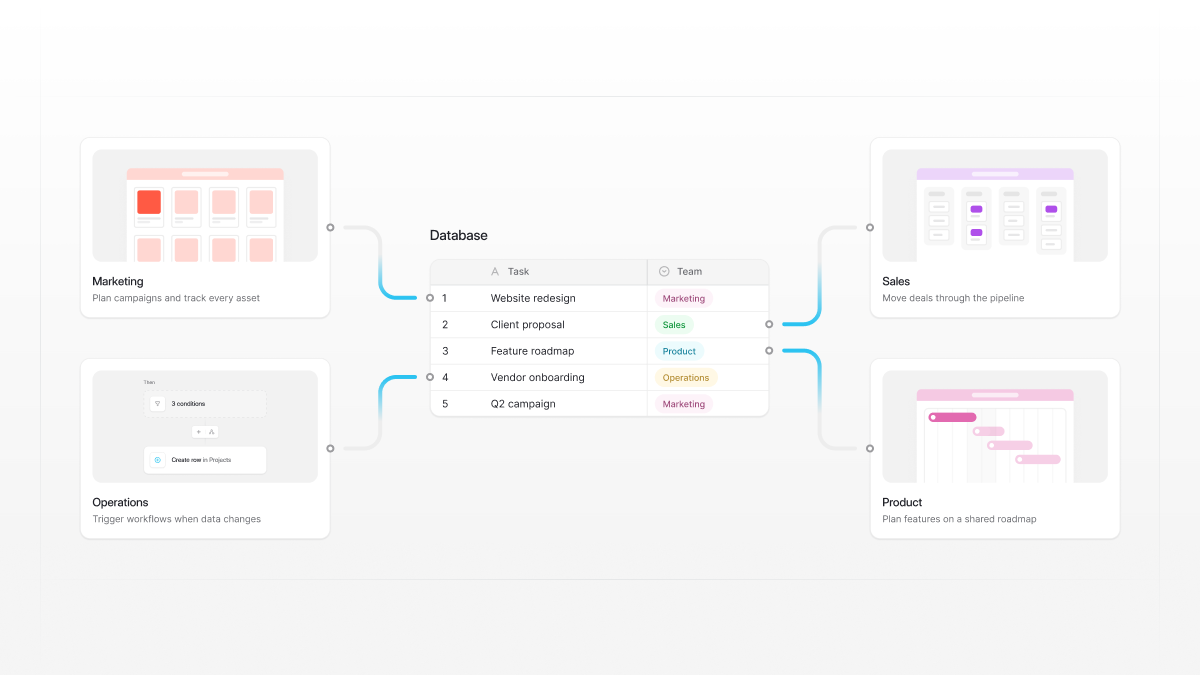
There are several ways to connect data, depending on your tools and requirements:
- APIs: Allow applications to exchange information programmatically.
- Data synchronization: Makes information from external data sources available in another system.
- Webhooks: Notify external services when specific events happen.
- Automation platforms: Connect services and automate data collection, updates, and repetitive workflows.
The right approach depends on how frequently information changes, which systems need access, and whether updates should happen in real time or on a schedule.
Manage and Connect Your Business Data with Baserow
You don’t need a separate tool for every business process. Baserow is an open-source, no-code database platform that lets you build a central place to manage customers, projects, sales, inventory, tasks, and other business information.
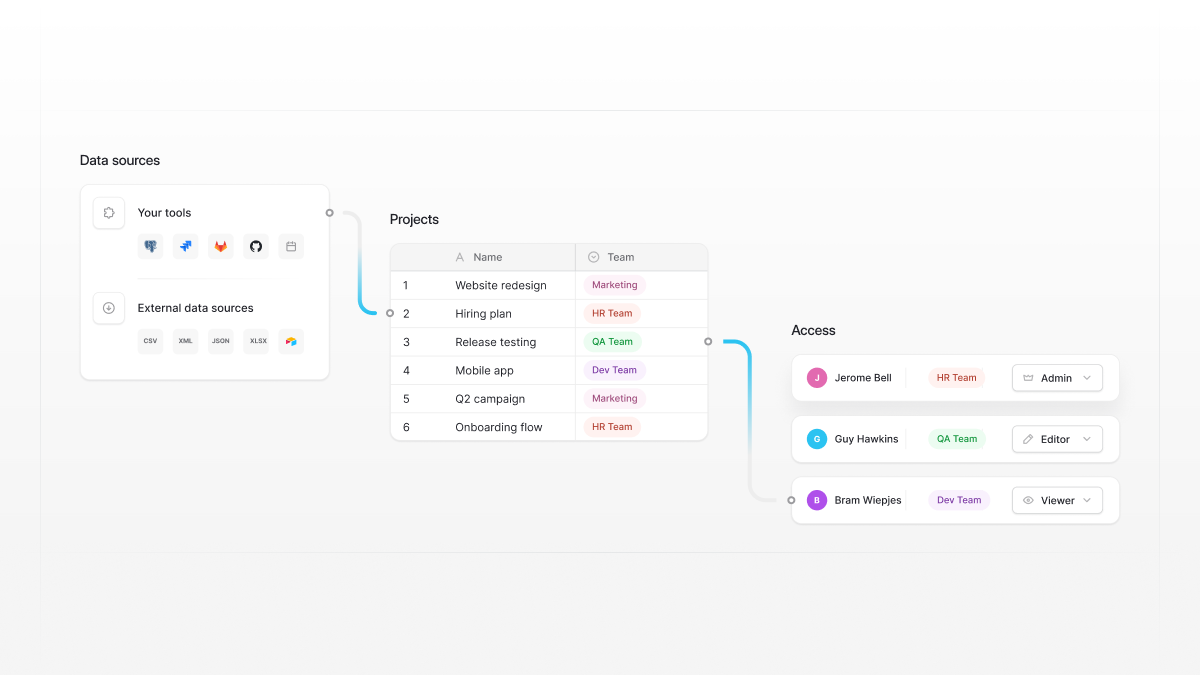
Instead of juggling spreadsheets, maintaining duplicate records, and switching between applications, you can organize everything in relational databases. Link related records, create different views for different teams, and collaborate on the same up-to-date information.
You can also build on top of your database:
- Give teams the right access: Role-based access control (RBAC), including view-level and field-level permissions, lets you control who can see and edit specific information.
- Build tools around your data: Use forms to collect information and Baserow’s Application Builder or Dashboard Builder to create custom interfaces for employees, customers, or partners.
- Automate repetitive work: Trigger workflows when records are created or updated, reducing manual data entry and follow-ups.
And if you already rely on other platforms, you don’t have to move everything. Baserow can connect to your existing tools:
- Data Sync: Bring information from external sources such as HubSpot, Jira, GitHub, GitLab, and PostgreSQL into Baserow. (Data Sync guide)
- REST API and webhooks: Connect external applications, exchange data, and trigger automated workflows. (Baserow API)
👉 Explore our guide to building connected work apps.
Build a More Connected Data Ecosystem
Connecting data isn’t just about moving information between applications. It’s about making business information easier to access, share, and use.
With Baserow, you can manage all your business data in one place or connect existing data sources to build a more integrated workflow.
Whether you’re starting with a central database, collecting information from multiple sources, or building a data-driven application, Baserow gives your team the flexibility to organize and work with business data.
Bring your data together with Baserow.

Baserow 2.4 adds Button fields, Graph elements, workflow automation, AI provider management, improved Group By views, and 30+ more updates.

Discover how Airtable and Baserow compare in features, flexibility, speed, and scalability. Compare pricing plans and hidden costs to make an informed decision!

Explore the best open-source software alternatives to proprietary products. Discover OSS tools, licenses, and use cases with our updated directory.