
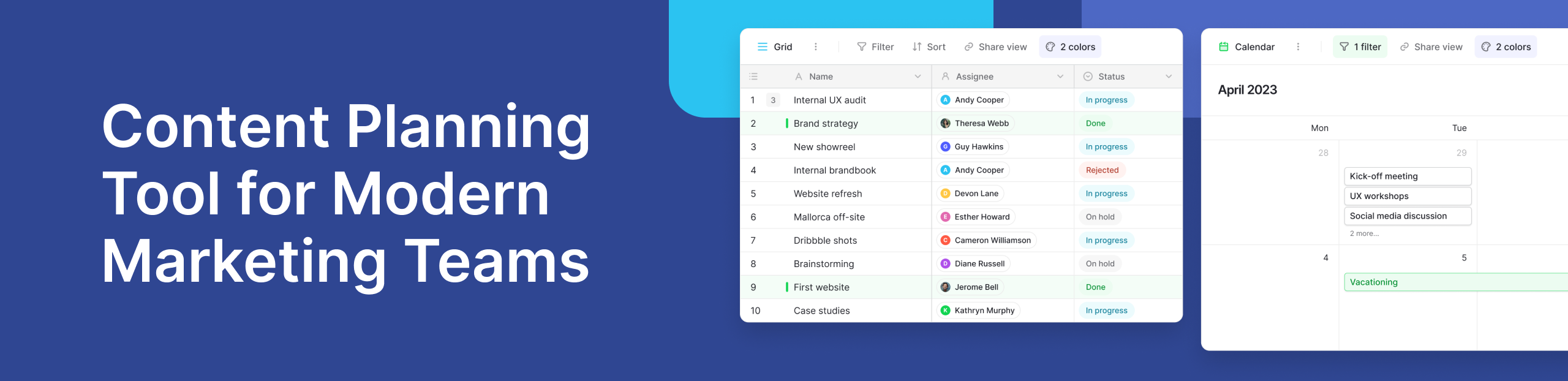
Content planning has become a core discipline for marketing teams that want consistency, visibility, and scale. As channels multiply and teams grow, relying on scattered documents or ad-hoc workflows often leads to missed deadlines, duplicated effort, and unclear priorities. A well-structured content planning tool helps teams move from reactive publishing to deliberate, repeatable workflows that support long-term growth.
Rather than focusing only on publishing, modern planning tools help teams think ahead, organise ideas, and align execution across channels. This shift is especially important for teams managing high volumes of content across blogs, newsletters, and social platforms.
What Is a Content Planning Tool?
A content planning tool is a system that helps teams organise content ideas, timelines, and responsibilities in one structured space. Instead of managing content in disconnected files, it provides a clear overview of what needs to be created, when it should go live, and who is responsible for each step.
At its core, it helps teams organise content in a way that supports both creativity and execution. Planning tools often combine visual timelines with structured data so teams can move smoothly from idea to published asset without losing context along the way.
Strong planning practices are widely recognised as a foundation of effective marketing, as outlined in established content marketing fundamentals.
Why Content Planning Matters for Growing Teams
As teams expand, informal processes begin to break down. Without a shared planning system, content calendars become outdated, ownership becomes unclear, and deadlines slip. A structured approach allows teams working together to stay aligned, even as the number of contributors increases.
This is particularly valuable for marketing teams that need to coordinate campaigns across multiple channels while responding quickly to changing priorities.
Common Content Planning Challenges Teams Face
Many teams start with spreadsheets or basic task lists. While these work initially, they often fail to scale.
One common issue is fragmentation. Ideas live in one document, drafts in another, and publishing schedules somewhere else entirely. This makes it difficult to maintain a single source of truth.
Another challenge is visibility. Without a clear overview, it becomes hard to track progress or identify bottlenecks, especially when multiple social media posts and campaigns run in parallel.
When Traditional Planning Tools Stop Scaling
Rigid systems can slow teams down rather than support them. Tools that force fixed workflows or limited views often don’t adapt well to evolving processes. Teams may find themselves duplicating work just to maintain visibility or relying on manual updates that quickly fall out of sync.
For content marketers and social media managers, this friction reduces focus on actual creation and increases time spent managing tools instead.
Key Features to Look for in a Content Planning Tool
Not all planning systems are created equal. The most effective ones balance structure with flexibility.
A clear content calendar is essential, allowing teams to visualise publishing timelines without locking them into rigid processes. The ability to plan and schedule content across channels helps teams maintain consistency while adapting to changes.
Collaboration is equally important. A good project management tool supports shared ownership, clear status updates, and smooth handoffs between roles.
Planning Tools That Support Real-World Workflows
The most practical planning tools allow teams to customise how they work. Features like drag and drop organisation, multiple views, and adaptable fields make it easier to manage diverse content types without overcomplicating setup.
This flexibility helps marketing teams save time by reducing manual coordination and repeated status checks.
How Baserow Supports Content Planning at Scale
Rather than offering a fixed template, Baserow provides a structured foundation that teams can adapt to their content workflows and organize content as they want. Built as a flexible database platform, it allows teams to design planning systems that match how they actually work.
By combining structured data with intuitive interfaces, teams can manage everything from early post ideas to published assets in one place. This approach is particularly useful when workflows evolve over time.
Using Baserow to Organise Content and Ideas
Teams can create tables to capture ideas, assign ownership, and track progress through each stage of production. Views can be tailored for different needs, such as editorial planning or social scheduling, without duplicating data.
This makes it easier to create content collaboratively while maintaining clarity across the entire pipeline.
Content Calendars Without Lock-In
Baserow supports calendar-style views alongside traditional tables, giving teams a visual overview without sacrificing structure. Updates happen in real time, ensuring that schedules remain accurate even as priorities shift.
Resources like the guide on how to build a content calendar show how teams can design planning systems that grow with them instead of becoming outdated.
Content Planning for Social Media Teams
Planning social media content introduces additional complexity. Teams often manage multiple platforms, formats, and publishing cadences at once. A central planning system and scheduling social media helps marketers align messaging and avoid last-minute scrambling.
Instead of switching between tools, social media marketers can plan content alongside broader campaigns, ensuring consistency across channels.
From Idea to Scheduled Post
By structuring workflows from draft to approval, teams gain clarity on what’s ready to publish and what still needs work. This reduces friction and supports smoother coordination between creators and reviewers.
Many teams also use lightweight automations to support repetitive tasks, a capability enhanced by recent platform updates that improve efficiency without adding complexity. Recent improvements introduced through the Baserow 2.0 platform updates support faster workflows by improving automation, performance, and usability for content-focused teams.
Learning from Real Content Teams
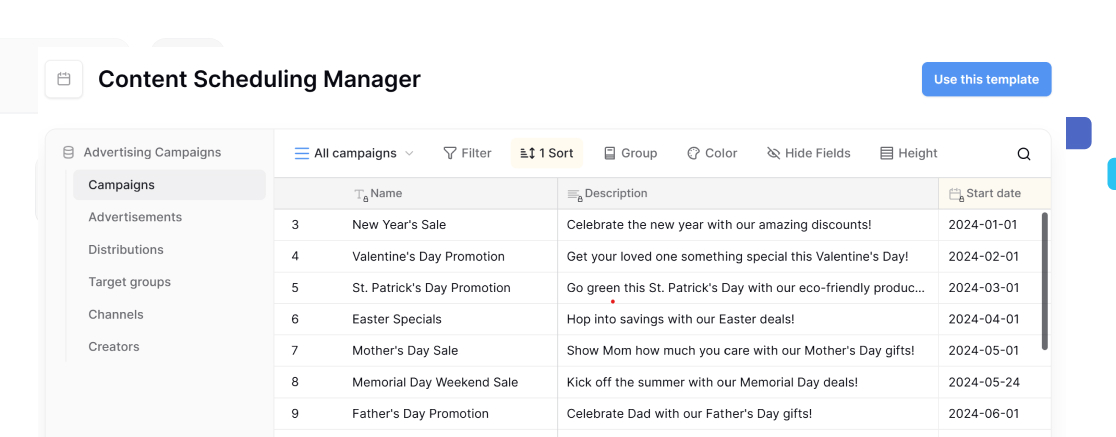
Many teams in the Baserow community share similar patterns when building content workflows. Marketing teams often start with a simple table for ideas, then gradually add views for approvals, publishing, and distribution. Discussions on the community forum show how teams adapt the same structure to manage newsletters, campaigns, and social media posts without introducing separate tools for each task.
This approach works because the system stays flexible. Teams are not forced into predefined steps and can evolve their setup as their strategy matures.
Free and Flexible Content Planning Options
A free plan is often a deciding factor when teams evaluate planning solutions. While many tools limit functionality behind paid tiers, flexible platforms allow teams to experiment before committing. This is especially useful for early-stage teams or those refining their workflows.
Because the structure is customizable, teams can plan and schedule content in a way that reflects real workloads rather than adapting their processes to match the tool.
Frequently Asked Questions
- What is a content planning tool?
It is a system that helps teams plan, organise, and track content across channels using structured workflows.
- What apps to use for content planning?
Teams often use planning tools that combine calendars, task tracking, and collaboration in one place.
- What are content tools used for?
They support idea management, production workflows, approvals, and publishing coordination.
- Is there a free content scheduler?
Some platforms offer a free plan that allows teams to build and manage schedules without upfront cost.
- Which tool is best for content creation?
The best option depends on flexibility, collaboration features, and how well it adapts to team workflows.
- What is the best social media content planner?
A planner that supports structured data and collaboration works well for social media teams managing multiple channels.
Choosing a Content Planning Tool That Grows With You
As content operations mature, structure becomes more important than feature count. Teams benefit most from systems that adapt to their processes instead of enforcing rigid workflows. This is where platforms like Baserow stand out, offering a foundation that supports both planning and execution without locking teams into a fixed model.
To explore how this approach works in practice, you can review Baserow’s product overview or see how marketing teams use the platform to manage campaigns and editorial workflows.
If you want to experiment with building your own planning system, you can start with Baserow’s free plan and adjust it as your needs evolve.

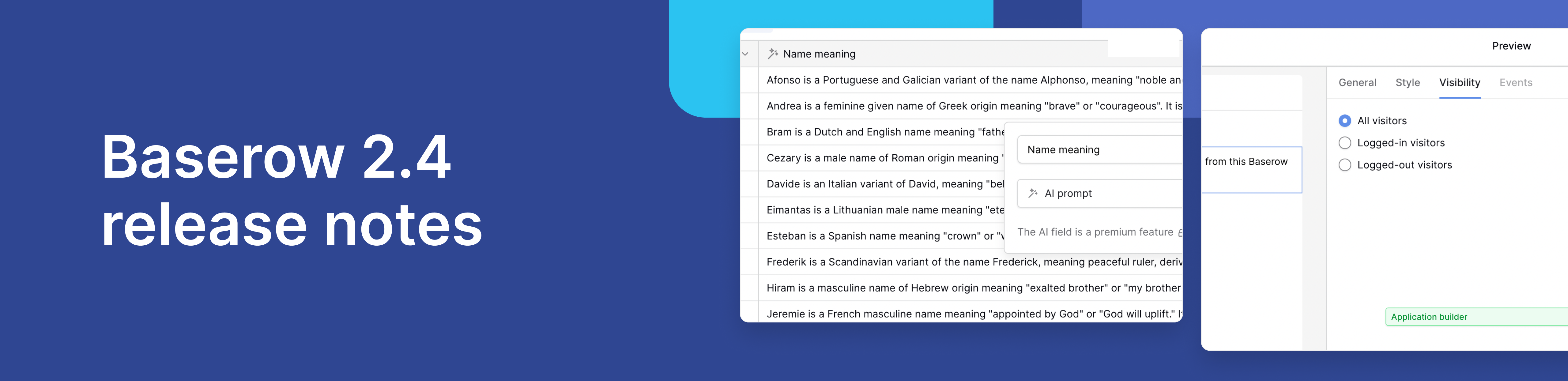
Baserow 2.4 adds Button fields, Graph elements, workflow automation, AI provider management, improved Group By views, and 30+ more updates.

Discover how Airtable and Baserow compare in features, flexibility, speed, and scalability. Compare pricing plans and hidden costs to make an informed decision!

Explore the best open-source software alternatives to proprietary products. Discover OSS tools, licenses, and use cases with our updated directory.