
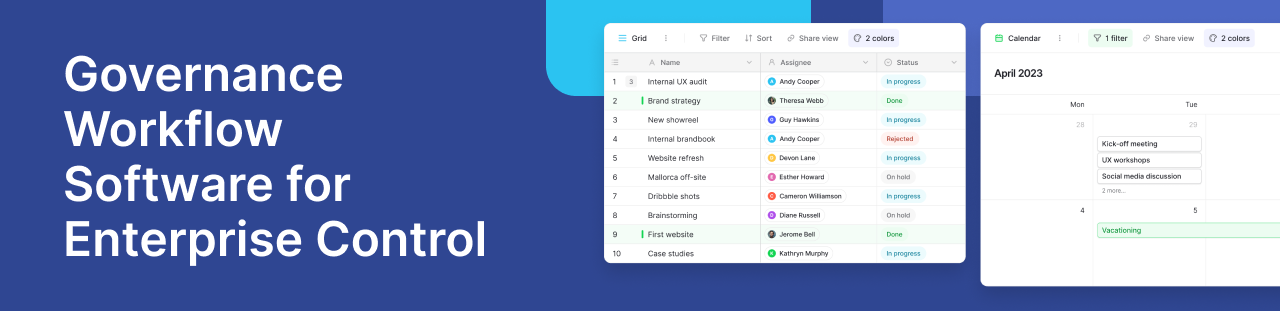
Why Governance Is Becoming Harder for Modern Teams
Enterprise teams manage more systems than ever before. One department may use spreadsheets. Another may use approval software. Security teams may use separate tracking tools. Over time, this creates confusion. Teams struggle to track:
- Who approved requests
- Who changed permissions
- Which workflows are delayed
- What data is shared
- Whether policies are followed
This becomes a bigger problem as companies grow. Many businesses still manage governance with spreadsheets, email approvals, and disconnected tools. These systems slow teams down. They also increase operational risk. For example:
- Finance teams may miss approval updates
- HR teams may lose visibility into access requests
- IT teams may struggle to track permissions
- Compliance teams may spend hours preparing reports
Manual systems also create human error. Someone may forget to update a spreadsheet. A permission may stay active longer than needed. An approval request may sit in an inbox for days.
This is why many organizations now focus on governance workflows that are easier to manage, easier to track, and easier to automate. Instead of using multiple disconnected systems, businesses increasingly want one shared operational platform. This is where Baserow’s product overview becomes highly relevant.
Baserow helps teams create flexible governance systems using shared databases, permissions, automation, and operational workflows. Teams can manage approvals, access control, reporting, and collaboration from one place instead of relying on scattered tools.
The platform is especially useful for organizations that want enterprise-level governance without the complexity of traditional enterprise software.
What Is Governance Workflow Software?
Governance workflow software helps organizations manage approvals, permissions, policies, and operational reviews in a structured way. The goal is simple:
- Improve visibility
- Reduce delays
- Standardize workflows
- Improve accountability
- Reduce manual effort
A governance workflow usually follows a series of steps. For example:
- A request is submitted
- Managers review the request
- Teams approve or reject it
- The system records activity
- Reports update automatically
Without workflow systems, teams often manage this process manually. That creates problems:
- Delayed approvals
- Missing records
- Confusing ownership
- Duplicate work
- Inconsistent permissions
Modern governance platforms solve this by centralizing governance workflows into one system. With Baserow, teams can build custom governance systems for:
- Vendor approvals
- Compliance reviews
- Security requests
- Internal audits
- Procurement workflows
- Employee onboarding
- AI governance tracking
Because Baserow is flexible, organizations can adjust workflows based on their own business processes instead of changing operations to fit rigid software. This flexibility matters for growing companies that constantly update policies, approvals, and internal structures.
.png)
Why Permissions Management Matters
Permissions are one of the most important parts of governance. Different teams need different levels of access. For example:
- HR teams should access employee records
- Finance teams should access budgets
- Security teams should manage permissions
- Vendors should only see limited information
Without structured permissions, organizations increase security risk. Many companies struggle because permissions are managed manually across multiple tools. Over time, employees may keep outdated access. Contractors may retain permissions after projects end.
This creates compliance and operational problems. Modern governance systems solve this with role based access control. This allows organizations to:
- Restrict sensitive data
- Standardize access policies
- Improve audit visibility
- Reduce unauthorized access
- Improve operational security
Baserow allows teams to create structured permissions directly inside operational workflows. Teams can control:
- Table access
- Workspace access
- Editing rights
- Data visibility
- User roles
This helps organizations build secure governance systems without needing separate permissions tools for every workflow. Teams exploring structured permissions often review resources like Baserow’s permissions management guide to improve internal governance structures.
How Workflow Automation Improves Governance
Many governance tasks are repetitive. Teams repeatedly:
- Approve requests
- Review documents
- Send reminders
- Update reports
- Track status changes
- Escalate delayed approvals
Manual coordination wastes time. It also slows teams down. This is why workflow automation has become important for enterprise governance. Automation helps organizations:
- Automate repetitive tasks
- Reduce manual coordination
- Improve operational speed
- Reduce approval delays
- Improve consistency
- Lower administrative overhead
For example:
- A procurement request can move automatically to finance
- Security reviews can trigger notifications instantly
- Compliance tasks can update in real time
- Delayed approvals can escalate automatically
This helps teams reduce manual work while improving accountability.
Baserow supports workflow automation through integrations, operational triggers, and connected workflows. Teams can build governance systems that adapt to their own approval processes instead of relying on fixed enterprise structures.
This is especially useful for fast-growing organizations where governance workflows change frequently.
AI-Powered Governance Is Growing Fast
AI is changing enterprise operations quickly. Many organizations now use ai powered systems for:
- Reporting
- Operational analysis
- Workflow monitoring
- Decision support
- Process recommendations
At the same time, companies now need governance for AI itself. Organizations must monitor:
- How AI tools access data
- Which teams can use AI systems
- What information AI can process
- Whether workflows remain compliant
This is becoming a major governance priority. Frameworks such as the NIST AI Risk Management Framework encourage organizations to improve visibility and operational oversight around AI systems.
Baserow supports this shift by helping teams build structured operational systems with centralized visibility, permissions, and workflow tracking. Organizations can also review Baserow AI security documentation to better understand how governance, AI operations, and security can work together inside modern workflows.
Real-Time Reporting Helps Teams Move Faster
Many companies struggle because governance data lives in too many places. One team may track approvals in spreadsheets. Another may store audit records in emails. Security updates may live in separate dashboards.
This creates confusion. Teams waste time searching for information instead of solving problems. Modern governance systems solve this with centralized reporting. Real time reporting helps organizations:
- Track approvals faster
- Monitor workflow status
- Identify delays quickly
- Improve audit preparation
- Reduce reporting confusion
- Improve collaboration
For example:
- Finance teams can monitor pending approvals
- HR teams can review onboarding status
- Security teams can track permission changes
- Leadership teams can monitor operational risks
When data updates automatically, teams make informed decisions faster. Baserow helps organizations create shared operational dashboards with connected governance workflows. Teams can track approvals, workflows, and operational updates from one system instead of switching between multiple tools.
This also helps reduce manual reporting work. Instead of preparing reports manually every week, teams can create live operational views that update automatically. That improves visibility across the business.
Strong Integration Capabilities Reduce Operational Chaos
Most businesses already use many tools. A governance platform must work with existing systems instead of creating more operational complexity. Many organizations use:
- HR software
- CRM platforms
- Finance tools
- Internal databases
- Messaging platforms
- Security systems
Without integrations, teams duplicate work constantly. Someone updates one system but forgets another. Reports become outdated. Approval records become inconsistent. Strong integration capabilities help governance systems connect workflows together.
For example:
- HR tools can trigger onboarding approvals
- Security systems can log permission updates
- Procurement systems can update vendor reviews
- Internal databases can sync workflow activity
This reduces human error and improves operational consistency.
Baserow supports connected workflows through APIs, integrations, and automation support. This allows organizations to build governance systems around existing business processes instead of replacing entire operational stacks. That flexibility is important for modern enterprise teams.
Why Many Governance Systems Fail
Many governance projects become difficult because the systems are too complicated. Some tools require heavy setup. Others are difficult for non-technical teams to manage. Over time, employees stop following workflows correctly. This creates:
- Delayed approvals
- Missing audit records
- Poor visibility
- Inconsistent permissions
- Operational bottlenecks
One of the biggest problems is manual governance work. Teams often rely on:
- Email approvals
- Spreadsheet tracking
- Manual reminders
- Separate reporting tools
This slows operations and increases risk. Modern governance systems work better when they simplify workflows instead of adding complexity.
Baserow helps teams build user friendly interface structures that are easier to manage across departments. Teams can customize governance workflows without relying heavily on developers. This improves adoption across the organization.
Governance Workflow Use Cases Inside Baserow
Different departments use governance systems in different ways. One advantage of Baserow is that teams can build workflows around their exact operational needs.
IT and Security Governance
Security teams often manage:
- Access requests
- Permission reviews
- Vendor security checks
- Infrastructure approvals
These workflows require strong visibility and audit tracking. With Baserow, teams can centralize approvals and permissions into shared operational databases. Security teams can track requests, approvals, and workflow activity from one place. This improves accountability and reduces approval confusion.
HR and Employee Governance
HR teams manage sensitive employee information. They often need workflows for:
- Employee onboarding
- Policy approvals
- Access provisioning
- Role changes
- Offboarding reviews
Manual HR workflows become difficult as organizations grow. Baserow helps HR teams build structured governance workflows with role based access control and centralized operational tracking. This helps reduce manual coordination while improving security.
Procurement and Vendor Approvals
Vendor governance often involves several departments. Finance, legal, procurement, and security teams may all need approval visibility. Without structured workflows, vendor approvals become slow and difficult to track. Baserow allows organizations to build approval systems with:
- Workflow tracking
- Approval ownership
- Operational dashboards
- Automated notifications
- Shared reporting
This helps teams reduce delays while improving visibility.
AI Governance and Compliance
AI governance is becoming more important for enterprise teams. Organizations increasingly need systems that monitor:
- AI access permissions
- Workflow activity
- Compliance reviews
- Data usage policies
Baserow helps organizations create flexible governance systems that support modern AI operations while maintaining operational control. Teams exploring governance and compliance workflows can also review Baserow governance and compliance solutions for additional operational examples.
Community-Driven Governance Workflows
Many teams now prefer flexible operational platforms over rigid enterprise systems. Inside the Baserow community, users regularly share how they build:
- Internal approval systems
- Governance dashboards
- Procurement workflows
- Compliance tracking systems
- Permissions databases
These examples show how governance workflows are becoming more collaborative and adaptable. Instead of forcing teams into fixed software structures, organizations can build workflows that match their own operations. This approach helps teams improve collaboration while reducing operational friction.
Why Flexible Governance Platforms Work Better
Many older governance tools are difficult to manage. They often require:
- Long setup times
- Technical teams for updates
- Complex workflows
- Expensive customization
- Separate reporting systems
This creates problems for growing organizations. Teams want governance systems that are simple, fast, and flexible. Modern platforms now focus on:
- Faster workflow setup
- Easier collaboration
- Better visibility
- Simpler permissions
- Real time operational tracking
This is why many organizations now prefer flexible operational platforms over rigid enterprise software. Baserow supports this shift by allowing teams to build governance workflows that match their own business processes.Teams can create:
- Approval systems
- Governance dashboards
- Audit tracking workflows
- Compliance databases
- Operational reporting systems
All of this can happen without heavy engineering support. That flexibility helps organizations scale governance workflows faster.
Best Practices for Better Governance Workflows
Good governance systems should improve operations instead of slowing teams down. Here are some simple best practices organizations should follow.
- Keep Approval Workflows Simple
Complex approvals slow teams down. Organizations should clearly define:
- Who approves requests
- When approvals escalate
- Which teams are involved
- What actions trigger reviews
Simple workflows reduce delays and confusion.
- Reduce Manual Processes
Too much manual work creates operational risk. Teams should automate repetitive tasks whenever possible. This includes:
- Approval routing
- Reminder notifications
- Status tracking
- Audit logging
- Workflow escalations
Automation helps reduce manual effort while improving consistency.
- Centralize Governance Data
Governance becomes difficult when data is spread across multiple tools. Organizations should keep:
- Approvals
- Permissions
- Reporting
- Audit history
- Workflow activity
inside one operational system whenever possible.
Centralized systems improve visibility and reduce confusion. Baserow helps teams create shared operational workspaces that combine governance workflows, reporting, and permissions management together.
- Improve Collaboration Across Teams
Governance should support teams, not block them. Modern governance systems improve collaboration by giving departments shared visibility into workflows and approvals. For example:
- Finance teams can review approvals faster
- Security teams can monitor permissions
- HR teams can track onboarding workflows
- Leadership teams can monitor operational activity
This helps teams move faster while maintaining accountability.
- Use Real-Time Operational Tracking
Real time updates help organizations identify problems early. Teams can quickly see:
- Delayed approvals
- Missing reviews
- Permission changes
- Workflow bottlenecks
This improves operational oversight and helps organizations make informed decisions faster.
Frequently Asked Questions
- What is a governance workflow?: A governance workflow is a structured process that manages approvals, permissions, reviews, and operational decisions inside an organization.
- What are the 4 P’s of governance?: The 4 P’s usually refer to people, policies, processes, and performance. These areas help organizations maintain accountability and operational control.
- What are the four types of workflows?: The four common workflow types are sequential workflows, parallel workflows, rules-based workflows, and state-based workflows.
- What are the 5 pillars of data governance?: The five pillars commonly include data quality, security, compliance, accessibility, and accountability.
- How does workflow automation improve compliance?: Workflow automation helps organizations standardize processes, reduce manual mistakes, improve audit tracking, and maintain operational consistency.
- What is role-based access control?: Role based access control allows organizations to manage permissions based on employee responsibilities instead of assigning access manually to every user.
- How can AI support governance workflows?: AI can help organizations monitor workflows, improve reporting, detect unusual activity, and support operational reviews faster.
Final Thoughts
Enterprise governance is becoming more important as organizations manage larger teams, more systems, and more operational complexity. Manual approvals and disconnected workflows no longer scale well. Modern governance systems help organizations:
- Improve collaboration
- Reduce manual work
- Improve visibility
- Standardize approvals
- Manage permissions securely
- Support enterprise grade operations
Baserow gives teams a flexible way to build governance workflows around their own business processes. Instead of relying on rigid enterprise software, organizations can create customizable operational systems that improve accountability while remaining easy to manage.
Teams looking to modernize governance workflows can explore Baserow signup to build secure and scalable governance systems with flexible workflows, permissions, and operational reporting.

Baserow 2.4 adds Button fields, Graph elements, workflow automation, AI provider management, improved Group By views, and 30+ more updates.

Discover how Airtable and Baserow compare in features, flexibility, speed, and scalability. Compare pricing plans and hidden costs to make an informed decision!

Explore the best open-source software alternatives to proprietary products. Discover OSS tools, licenses, and use cases with our updated directory.