
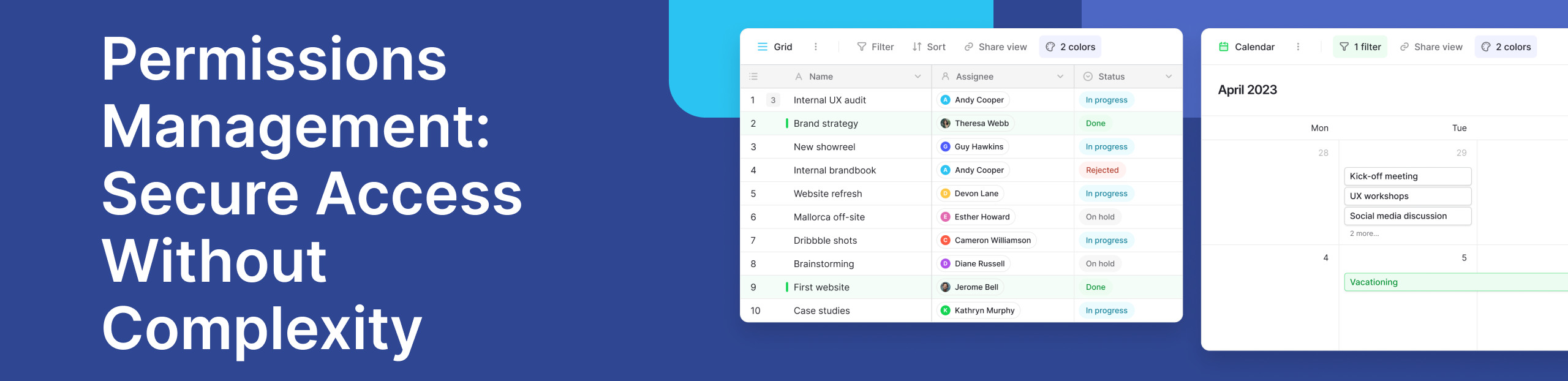
As teams grow, controlling who can see and change information becomes harder to manage informally. Spreadsheets, shared folders, and disconnected tools often lead to unclear user access rules, duplicated work, and growing security risks. This is where permissions management becomes essential—not as a security layer alone, but as a foundation for how teams collaborate safely.
At its core, permissions management helps organizations decide who can access what, at which level, and under what conditions. When done well, it reduces friction, prevents unauthorized access, and ensures that work continues smoothly without unnecessary restrictions.
What Is Permissions Management and Why It Matters
Permission management is the practice of defining, assigning, and maintaining user permissions across systems and workflows. It governs how people interact with data, tools, and processes. Without clear access control, teams often rely on manual approvals or trust-based sharing, which quickly breaks down.
Strong permission structures help ensure that users only interact with data relevant to their role. This not only improves accountability but also reduces the risk of accidental changes or data exposure. As organizations scale, managing access manually becomes unsustainable, making structured systems critical for long-term stability.
Understanding User Roles and Assigned Permissions
A common mistake is assigning permissions individually instead of working with user roles. Roles group responsibilities together, while assigned permissions define what actions each role can perform. When permissions based on roles are used, teams gain clarity and consistency across projects.
This approach aligns with the principle of least privilege, meaning users receive only the access they need to perform their tasks—nothing more. It helps protect sensitive data while keeping workflows efficient. Over time, roles can evolve without constantly redefining access for every individual.
Access Control Models and Permission Levels
The Four Levels of Access Control
Most systems rely on four core access levels:
- View-only access
- Edit access
- Full control or admin access
- Ownership or system-level permissions
These levels help teams define boundaries clearly, especially when managing shared resources.
Role-Based Access Control in Practice
RBAC works by mapping user permissions to roles rather than individuals. This makes access predictable and easier to manage as teams change. Fine grained controls allow organizations to define exactly what actions are allowed at different levels, from viewing records to modifying system-wide settings. Tools like Microsoft Entra have popularized RBAC in enterprise environments by making access rules easier to audit and maintain.
For example, a project manager may edit records while a stakeholder only reviews them. This access based structure avoids bottlenecks while maintaining control.
If you want a deeper explanation of RBAC concepts, the official Baserow documentation on role-based access control explains how structured roles can simplify collaboration at scale.
Common Permission Management Challenges
Many teams struggle with ensuring consistency as permissions evolve. Over time, temporary access becomes permanent, old roles remain active, and documentation falls behind reality. This leads to confusion, audit challenges, and increased exposure to risk.
Another issue is balancing flexibility with control. Too many restrictions slow teams down, while too few create blind spots. Effective permissions management supports productivity by making access intentional rather than reactive.
How Baserow Simplifies Permissions Management
Baserow is designed to make managing permissions intuitive without sacrificing control. It allows teams to manage user access at the workspace, database, and table level, making it easier to align permissions with real workflows.
- The Baserow permissions overview explains how access is structured clearly across teams.
- Teams can also manage workspace-level permissions to reflect organizational structure.
- Community discussions show how teams use custom roles to handle complex setups without engineering effort, such as defining access for specific tables or functions.
- With recent updates introduced in Baserow 2.0, permission handling has become more flexible and scalable, supporting growing teams without added complexity.
A common use case is operations teams managing internal tools. Instead of relying on developers, they can define roles, assign permissions, and update access as responsibilities change—all while keeping data secure.
With Baserow, teams can configure roles and manage permissions in Baserow without relying on manual access controls.
Frequently Asked Questions
- What is permission management?
Permission management defines how access to systems, tools, and data is controlled. It determines who can view, edit, or manage information across an organization.
- What are role-based permissions?
Role-based permissions assign access based on responsibilities instead of individuals. Users inherit permissions from their role, which makes access easier to manage and more consistent.
- What is a role permission manager?
A role permission manager is a system or feature that allows teams to create roles, assign permissions, and update access as responsibilities change.
- What are the four levels of access control?
The most common levels are read, write, edit, and admin. These levels define how deeply a user can interact with data or system settings.
- What are the seven main categories of access control?
They include discretionary, mandatory, role-based, attribute-based, rule-based, risk-based, and identity-based access control models.
- Which are the basic types of user permissions?
Basic user permissions usually cover viewing data, modifying records, managing configurations, and controlling user access.
- What are the four types of RBAC permissions?
RBAC permissions are commonly structured as flat, hierarchical, constrained, and delegated models, each offering different levels of flexibility and control.
Build Secure Access Without Slowing Your Team
Clear access control is no longer optional for growing teams. Structured permissions protect data, support collaboration, and reduce operational risk. Platforms like Baserow show that access control can be both powerful and easy to manage.
If you want to design permissions that scale with your team, explore how Baserow supports structured access management.
You can get started and experience it yourself here.

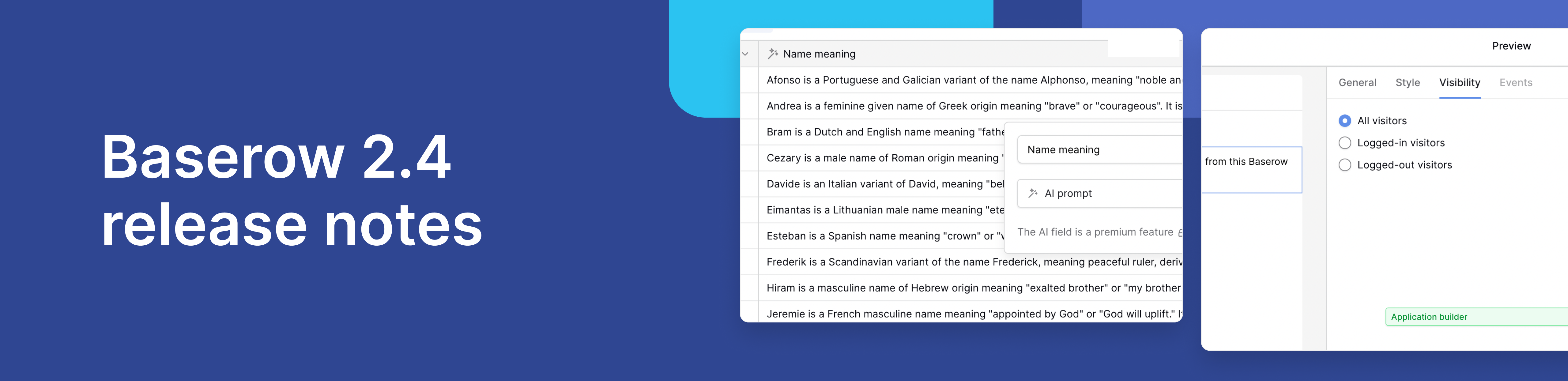
Baserow 2.4 adds Button fields, Graph elements, workflow automation, AI provider management, improved Group By views, and 30+ more updates.

Discover how Airtable and Baserow compare in features, flexibility, speed, and scalability. Compare pricing plans and hidden costs to make an informed decision!

Explore the best open-source software alternatives to proprietary products. Discover OSS tools, licenses, and use cases with our updated directory.