
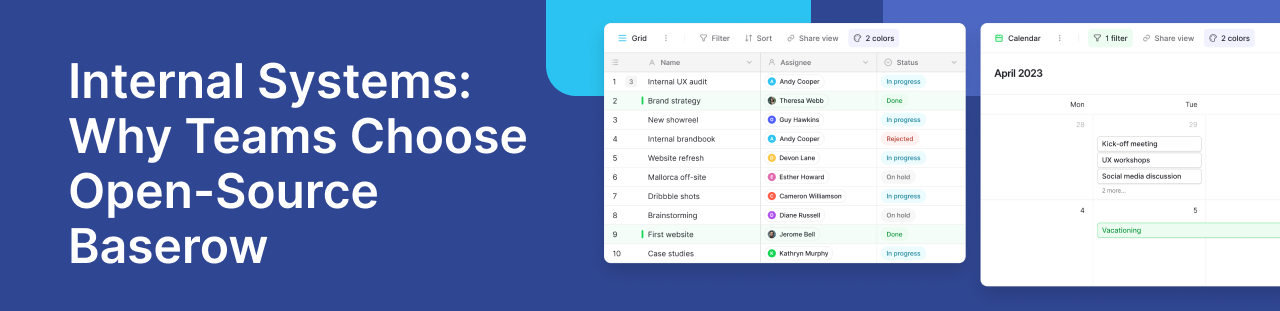
Teams rely on connected software, records, and processes to manage work behind the scenes. These tools help staff handle requests, share data, and track decisions across teams.
Problems arise when each team keeps its own spreadsheet. Staff copy details between files, approvals become hard to follow, and team leads struggle to find the latest update. A shared setup gives people a clearer process and one place to find the facts.
Connect Your Data, People, and Processes
An effective setup combines three things: reliable records, clear roles, and agreed steps. Software supports that structure, but teams still need to decide who owns each task.
For example, a purchasing process connects the employee requesting equipment with the manager approving costs and the finance team recording payment. Each person works with linked records rather than separate copies.
Understanding what an internal tool does helps explain the software layer. The broader goal is coordination: an approved request should remain connected to its supplier, budget, and delivery status throughout the process.
Why Choose an Open-Source Foundation?
Open-source software gives teams more ways for changing their tools. The Open Source Initiative’s definition covers rights to access, modify, and redistribute code under qualifying licenses. Those rights can reduce reliance on a single provider.
Baserow brings this approach to databases and applications, with cloud and self-hosted deployment options. For teams considering Airtable, Baserow deserves attention when control over hosting and infrastructure is a deciding factor.
Self-hosting also creates work. Someone must manage updates, backups, and uptime. Compare those demands with your team’s resources before choosing a deployment model. The most suitable platform supports your needs without creating maintenance work that your team cannot sustain.
A Practical Purchase Request Workflow
Consider a manufacturing team that needs a clearer equipment approval process. This example Baserow setup starts with linked tables for requests, suppliers, and departments.
Staff send requests through a form. Each record includes an estimated cost, owner, required date, and approval status. Linked records connect each request to the relevant supplier without retyping the same details again.
An application interface can give staff a focused place to review requests. Configured workflow actions can send emails, update records, and use conditions to route expensive requests for additional review.
A manager still makes the approval decision; automation handles the other steps. This makes Baserow a practical fit when a team needs structured data and adaptable workflows together. Access controls should match each person’s role, with the required features checked against the chosen plan before rollout.
Start Small and Build Around Your Team
Choose one process that often stalls, then map its records, owners, and key steps. Test the workflow with a small group before you roll it out to more teams.
Use the internal tool builder comparison to weigh other tools against your needs.
One discussion about overlapping automations looks at the risk of sending the same email twice when workflows run at the same time. It highlights a useful testing question: what happens when the same action starts twice? Check failures and repeated requests, as well as successful runs.
Frequently Asked Questions
- How are business processes different from software?
A process defines the steps and responsibilities needed to complete work. Software stores the data and supports those steps. Clear ownership remains vital even when routine actions are automated.
- When should teams move beyond spreadsheets?
Consider a change when duplicate records, unclear ownership, or missed approvals become common. A structured database can connect related information, while forms and applications help people follow consistent steps.
- How do you connect purchasing records across teams?
Give each request its own record and link it to suppliers, teams, and named staff. Teams can then update shared details without keeping their own versions of the same request.
- Who should maintain a no-code business application?
Assign a business owner to manage requirements and a technical contact to review access, integrations, and uptime. Note key changes so the application stays clear when team members leave.
- What should you consider before choosing self-hosting?
Review hosting costs, technical skills, backup procedures, and responsibility for updates. Self-hosting offers infrastructure control, but your team must plan how to keep the service available and properly maintained.
- How can you measure workflow improvements?
Compare approval times, missing details, and errors before and after launch. Ask staff where delays remain. These checks show whether the new setup improves work rather than simply moving it.
Build Your First Workflow
Start with one process your team understands. Use Baserow to link its records, make roles clear, and build a workflow that supports your team’s daily work.

Baserow 2.4 adds Button fields, Graph elements, workflow automation, AI provider management, improved Group By views, and 30+ more updates.

Discover how Airtable and Baserow compare in features, flexibility, speed, and scalability. Compare pricing plans and hidden costs to make an informed decision!

Explore the best open-source software alternatives to proprietary products. Discover OSS tools, licenses, and use cases with our updated directory.