
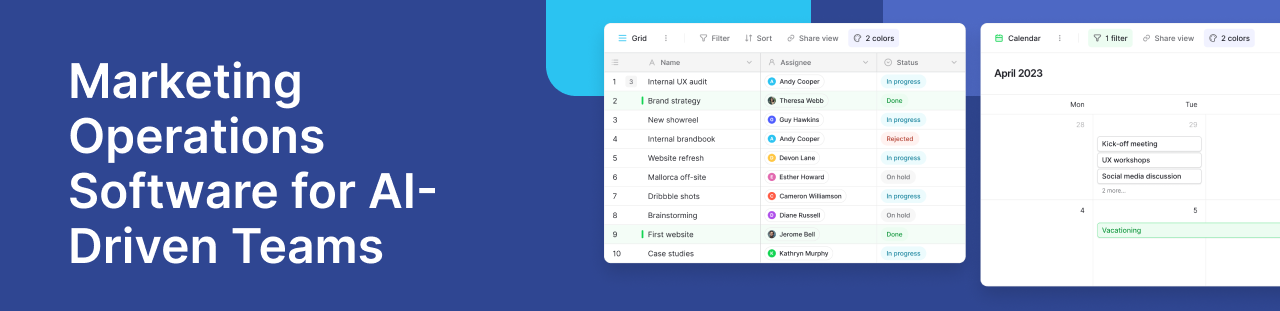
Marketing teams manage many tasks every day. They run ads, publish content, track leads, review designs, and monitor campaign results. As companies grow, this work becomes harder to manage.
Many businesses still use spreadsheets and disconnected tools. One tool handles email campaigns. Another tracks analytics. Another manages projects. Teams often switch between systems all day.
This slows work down. That is why more companies now use marketing operations software. These systems help teams organize campaigns, manage workflows, and track performance in one place.
AI has made marketing even faster. Teams now create more content, automate reporting, and launch campaigns quickly. But AI also creates more data and more operational work.
Without a strong system, marketing teams can lose visibility into projects, approvals, and campaign performance. This is where marketing operations databases are becoming important.
A marketing operations database helps companies store campaign data, approvals, assets, reporting, and workflows together. Instead of using many disconnected systems, teams work from one shared platform.
Platforms like Baserow’s product overview help businesses build flexible workflows without needing large engineering teams. Marketing departments can organize operations, manage campaigns, and improve collaboration using one workspace.
According to Gartner marketing research, companies continue investing in better operational systems because strong workflows improve campaign execution and reporting.
What Is Marketing Operations Software?
Top marketing operations software helps businesses manage marketing work more efficiently. It gives marketing teams a structured system for handling campaigns, approvals, reporting, and workflows. The responsibilities included in marketing operations usually involve:
- Campaign planning
- Lead scoring
- Reporting
- Workflow approvals
- Content management
- Budget tracking
- Team coordination
- Performance analysis
The goal is simple. Teams need to move faster while staying organized. Many businesses think a CRM or email tool can solve operational problems. But these tools only handle one part of the process.
For example:
- A CRM stores customer information
- Marketing automation platforms manage emails
- Analytics tools track performance
- Operations software connects the entire workflow
This operational layer is important because marketing teams often struggle with visibility.
One team may not know if content is approved. Another team may not know campaign status. Leadership may wait days for updated reports. A centralized database solves this problem. For example, a marketing team can manage:
- Campaign timelines
- Ad approvals
- Content calendars
- Budget tracking
- Team tasks
- Lead routing
- Reporting dashboards
inside one operational system.
This helps team members work together more easily. Companies looking to improve workflows often explore resources like Operational software best practices to understand how structured systems improve collaboration.
Why Traditional Marketing Systems Create Problems
Many marketing departments still use disconnected systems. A company may use:
- Email tools
- Analytics platforms
- Shared spreadsheets
- Messaging apps
- Separate project management tools
At first, this seems manageable. But as campaigns grow, these systems create confusion.
- Data Silos Slow Down Teams
Marketing data often sits in different tools. Analytics may live in one platform. Campaign approvals may live in spreadsheets. Content updates may happen inside chat tools.
This creates delays. Team members waste time searching for information. Reports take longer to build. Campaign visibility becomes difficult. Companies with connected operational systems often scale AI workflows more successfully because their data stays organized.
- Campaign Planning Becomes Harder
Modern campaigns involve many people. Marketing teams often work with:
- Designers
- Writers
- Agencies
- Product teams
- Sales teams
Without a clear system, campaign planning becomes slow. Approvals get delayed. Tasks are missed. Teams duplicate work.
Flexible systems help solve this problem. For example, Baserow for marketing teams allows businesses to build custom workflows for campaign tracking, approvals, and reporting.
- Reporting Takes Too Long
Many businesses still build reports manually. Teams export data from several platforms and combine it into spreadsheets. This wastes time.
Modern integrated platforms improve this process by connecting workflows with reporting systems. Teams can monitor:
- Campaign progress
- Lead generation
- Budget usage
- Content production
- Team workloads
in real time. This helps businesses make faster decisions.
The Rise of Marketing Operations Databases
Marketing operations databases are becoming a key part of modern marketing systems. These databases help companies organize operational information in one place. Instead of relying on spreadsheets, businesses now build structured databases for campaigns and workflows.
A marketing operations database can manage:
- Campaign assets
- Reporting dashboards
- Audience lists
- Lead scoring systems
- Workflow approvals
- Team assignments
- Vendor coordination
- Marketing calendars
inside one platform.
This improves collaboration across marketing teams. Flexible database systems are especially useful because every business works differently. Teams can customize workflows based on their own needs.
Modern platforms also support AI-powered workflows. For example, Baserow AI tools help businesses automate repetitive tasks, organize campaign data, and improve operational visibility.
Companies also share workflow ideas inside the Baserow community, where teams discuss campaign systems, database setups, and marketing workflows.
Key Features Modern Marketing Teams Need
Modern marketing operations are no longer only about managing campaigns. Teams now need systems that support collaboration, automation, reporting, and AI workflows together. The best marketing operations software helps teams stay organized while reducing manual work.
- Integrated Platforms Improve Visibility
Many companies struggle because their tools do not work well together. A campaign may start in one platform, move to another for approvals, and end in a different reporting system. This creates delays and confusion.
Integrated platforms solve this problem by connecting workflows across the marketing tech stack. For example, a marketing team can connect:
- Campaign planning
- Lead tracking
- Content approvals
- Reporting dashboards
- Asset management
- Workflow automation
inside one shared system.
This gives team members better visibility into ongoing work. Businesses looking to improve collaboration often use systems like Baserow data collaboration tools for marketing to centralize operational workflows.
- Analytics Tools Support Better Decisions
Marketing teams depend heavily on data. Without clear reporting, it becomes difficult to understand campaign performance or improve future results. Modern analytics tools help businesses track:
- Lead generation
- Conversion rates
- Campaign engagement
- Budget performance
- Channel effectiveness
in real time.
This helps teams make faster decisions. Strong reporting systems also support continuous improvement. Teams can quickly identify which campaigns perform well and which workflows need adjustment.
According to Salesforce State of Marketing research, high-performing marketing organizations are more likely to use connected reporting systems across departments.
- Content Management Is Becoming More Important
AI has increased the amount of content companies produce. Marketing teams now manage:
- Blog posts
- Social media assets
- Videos
- Ad creatives
- Landing pages
- Email campaigns
at a much larger scale.
Without structured content management workflows, assets become difficult to organize. Teams may accidentally publish outdated versions or lose track of approvals. Operational databases help solve this problem by keeping content workflows centralized. For example, teams can track:
- Draft status
- Approval stages
- Publish deadlines
- Campaign ownership
- Asset versions
inside one database.
This improves coordination between writers, designers, and marketing managers.
- Project Management Tools Help Campaign Execution
Campaign execution involves many moving parts. Marketing teams often handle multiple launches at the same time. Without structure, deadlines can easily slip. Project management tools help businesses organize:
- Tasks
- Timelines
- Dependencies
- Assignments
- Reviews
- Launch schedules
in one place.
Flexible systems are especially useful because different marketing teams work differently. Some teams follow agile workflows. Others prefer calendar-based campaign planning. Operational databases allow companies to customize workflows around their own processes.
For example, teams using Free marketing automation workflows can automate repetitive operational tasks while keeping campaign tracking organized.
- Real Time Collaboration Reduces Delays
Marketing campaigns move quickly. When information updates slowly, teams lose momentum. Real time collaboration helps businesses reduce delays by keeping operational data current for everyone involved. This means:
- Teams see updated campaign status immediately
- Approvals move faster
- Reporting stays accurate
- Workloads become easier to manage
Real time systems are especially important for distributed marketing teams working across regions and time zones.
How AI Is Changing Marketing Operations
AI is changing how marketing operations work. Many repetitive tasks that once required manual effort can now be automated. This allows marketing teams to focus more on strategy and campaign execution.
- AI Improves Campaign Planning
Campaign planning often takes significant time. Teams must coordinate timelines, assign tasks, review assets, and monitor deadlines. AI-powered systems can help organize this process by:
- Recommending workflows
- Predicting campaign risks
- Identifying delays early
- Organizing operational data
- Supporting resource planning
This improves efficiency across marketing campaigns.
- Automated Reporting Saves Time
Many marketing teams spend hours building reports manually. AI now helps automate reporting workflows by organizing campaign data automatically.
This allows businesses to generate faster insights while reducing manual work. Marketing leaders can quickly monitor:
- Campaign performance
- Lead quality
- Budget usage
- Team productivity
- Conversion trends
without combining spreadsheets manually.
- AI Helps Manage Lead Scoring
Lead scoring is another area changing quickly. Traditional lead scoring systems often rely on fixed rules. AI-driven systems can analyze customer behavior more dynamically.
This helps businesses prioritize leads more effectively. Marketing and sales teams can then focus on higher-quality opportunities.
- AI Supports Operational Workflows
AI is also improving operational organization itself. Modern systems can help:
- Categorize campaign assets
- Organize records
- Suggest workflow updates
- Automate repetitive tasks
- Improve reporting accuracy
Platforms like Baserow AI capabilities support AI-assisted workflows while keeping operational data centralized.
This is becoming increasingly important as companies scale campaign production.
Real Marketing Operations Use Cases
Marketing operations databases support many real business workflows.
- Product Launch Coordination
Launching a product requires coordination across several departments. Marketing teams must manage:
- Campaign assets
- Landing pages
- Social content
- Paid advertising
- Approval workflows
- Reporting dashboards
inside one system.
Operational databases help keep these workflows organized.
- Managing Internal and Agency Teams
Many businesses work with external agencies alongside internal marketing teams. Without centralized systems, communication becomes difficult.
Operational platforms allow companies to manage tasks, approvals, and campaign timelines together. This improves visibility across all contributors.
- Multi-Region Campaign Management
Global marketing teams often run campaigns across different markets. Each region may require:
- Different content
- Local approvals
- Separate reporting
- Regional assets
A centralized operational database helps teams manage this complexity more efficiently.
Inside the Baserow community, many teams share examples of collaborative operational workflows that support distributed marketing teams and campaign coordination across departments.
Choosing the Right Marketing Operations Platform
Choosing the right system is important for long-term growth. Many businesses start with simple tools. But as campaigns become more complex, these systems often become difficult to manage. The best marketing operations software should help teams stay flexible, organized, and data driven.
- Look for Flexible Workflows
Every marketing team works differently. Some teams focus heavily on content marketing. Others manage paid campaigns, events, or partner programs. A rigid platform may force teams into workflows that do not match their process. Flexible operational systems allow businesses to customize:
- Campaign pipelines
- Approval processes
- Reporting dashboards
- Asset tracking
- Team permissions
- Workflow stages
This makes it easier to adapt operations as the company grows.
- Real Time Collaboration Matters
Marketing work moves quickly. Teams need systems where updates happen instantly. Real time collaboration in a management platform helps team members:
- Track campaign progress
- Review approvals
- Share updates
- Monitor deadlines
- Reduce communication gaps
This is especially important for remote teams and companies managing multiple campaigns at once.
- Automation Should Support Teams
Automation is now a major part of marketing operations. The right platform should support automation without becoming difficult to manage. Businesses should look for systems that connect easily with:
- Email platforms
- CRM systems
- Analytics tools
- Advertising platforms
- Internal workflows
This helps reduce repetitive work across departments. Companies exploring AI-supported workflows often review resources like Top digital marketing tools guide to understand how operational systems and automation platforms work together.
- Data Ownership Is Becoming Important
Many companies now want more control over operational data. Traditional enterprise systems can become expensive and difficult to customize. Some platforms also limit workflow flexibility.
Operational database systems give businesses more ownership over how they organize campaigns and reporting. This is one reason flexible database platforms are becoming more popular with marketing teams.
Platforms like Baserow webinar on marketing operations show how companies are building operational workflows that combine collaboration, automation, and campaign management inside one system.
Frequently Asked Questions
- What is marketing operations software used for?
Marketing operations software helps businesses organize campaigns, workflows, approvals, reporting, and collaboration. It improves visibility across marketing activities while helping teams manage work more efficiently.
- How does AI help marketing operations?
AI helps automate repetitive tasks such as reporting, workflow organization, lead scoring, and campaign analysis. It also helps marketing teams process large amounts of operational data more quickly.
- What is a marketing operations database?
A marketing operations database is a centralized system that stores campaign data, approvals, assets, workflows, and reporting together. It helps businesses reduce silos between different marketing tools.
- What are the key features of marketing operations systems?
Important key features include workflow automation, campaign planning, reporting dashboards, lead scoring, content management, collaboration tools, and integration support across the marketing tech stack.
- Why do marketing teams need integrated platforms?
Integrated platforms help businesses reduce operational confusion. Teams can manage campaigns, reporting, approvals, and workflows together instead of switching between disconnected systems.
- Can small businesses use marketing operations platforms?
Yes. Small businesses often benefit significantly because centralized systems improve organization and reduce manual work. Flexible no-code platforms also make setup easier for smaller teams.
- How do analytics tools improve marketing operations?
Analytics tools help businesses measure campaign performance, monitor conversions, track engagement, and identify areas for continuous improvement. Better visibility supports faster decision-making.
- What role does lead scoring play in marketing operations?
Lead scoring helps marketing and sales teams prioritize high-quality leads. AI-supported systems can improve lead scoring accuracy by analyzing customer behavior and engagement patterns.
Conclusion
Marketing operations is changing quickly. AI-driven workflows, larger campaign volumes, and growing data complexity are pushing businesses to rethink how marketing systems operate.
Many companies are moving away from disconnected spreadsheets and isolated tools. Instead, they are building centralized operational databases that improve visibility, collaboration, and campaign execution. Modern marketing teams need systems that support for:
- Campaign planning
- Reporting
- Collaboration
- Automation
- Content management
- Real time operational visibility
Flexible platforms are becoming increasingly valuable because they allow businesses to customize workflows without depending heavily on engineering resources.
Solutions like Baserow help marketing teams organize operations, automate workflows, and manage campaigns inside one collaborative system.
If your team wants to simplify marketing operations and build scalable workflows, you can explore Baserow signup to get started.

Baserow 2.4 adds Button fields, Graph elements, workflow automation, AI provider management, improved Group By views, and 30+ more updates.

Discover how Airtable and Baserow compare in features, flexibility, speed, and scalability. Compare pricing plans and hidden costs to make an informed decision!

Explore the best open-source software alternatives to proprietary products. Discover OSS tools, licenses, and use cases with our updated directory.