
Modern businesses rely on smooth operations every day. Products move between suppliers, warehouses, shipping teams, and customers constantly. When companies manage these tasks with spreadsheets or disconnected tools, problems appear quickly.
Teams miss updates. Information gets lost. Delays become harder to manage. Employees also spend too much time fixing mistakes instead of improving workflows.
Because of this, many businesses now use workflow-focused supply chain systems. These platforms help teams manage procurement, inventory, logistics, and approvals from one place. They also improve visibility across departments and reduce manual work.
Today’s operations teams need systems that are simple, flexible, and fast. Traditional enterprise tools are often difficult to manage and slow to update. Growing companies need platforms that support collaboration, automation, and faster decisions without adding complexity.
Modern platforms such as Baserow help businesses create collaborative operational workflows without depending heavily on engineering teams. Teams can manage inventory, supplier approvals, procurement tracking, and warehouse operations inside one centralized workspace.
What Is Supply Chain Software?
Supply chain software helps businesses manage the movement of products, data, suppliers, and operations from sourcing to delivery. These systems improve coordination between teams and create structured operational workflows.
Traditional supply chain management software often focused only on large enterprises. Many systems were expensive, difficult to customize, and slow to adapt. Modern operational tools are becoming more flexible. Teams now prefer platforms that support workflow automation, real-time collaboration, and easier customization.
A complete software solution can support:
- Procurement operations
- Inventory management
- Warehouse management
- Supplier management
- Shipping coordination
- Production scheduling
- Reporting and analytics
Companies also use these systems to improve customer satisfaction and reduce delays caused by disconnected operations.
Businesses that rely on manual spreadsheets often struggle with version control and operational visibility. This becomes harder as operations grow across multiple teams and locations. Guides such as this inventory management guide explain why centralized operational tracking is becoming essential for modern teams.
According to IBM’s supply chain overview, organizations that improve supply chain coordination can respond faster to disruptions and improve operational efficiency across departments.
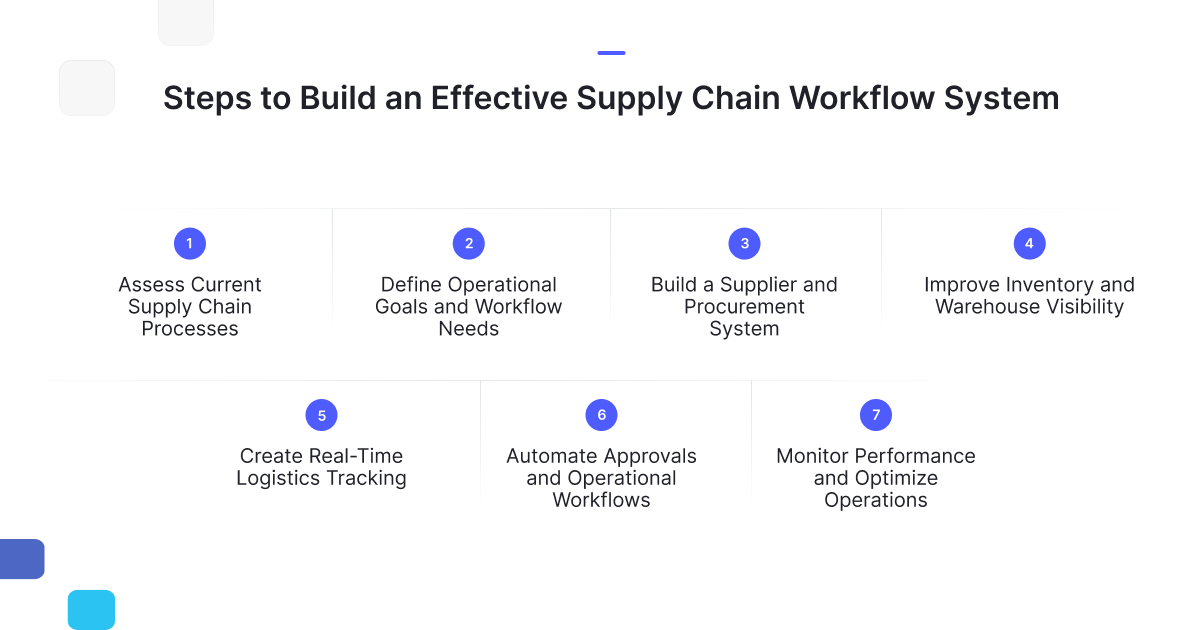
Building an efficient operational workflow requires more than inventory tracking alone. Businesses need connected systems that support procurement, logistics, approvals, supplier coordination, and reporting together. Modern workflow platforms help teams organize operations step by step while improving visibility and reducing delays across departments.
Why Supply Chain Workflow Systems Matter Today
Managing Complex Global Operations
Modern businesses work with suppliers, warehouses, shipping providers, and partners across different regions. This helps companies grow faster, but it also makes operations more difficult to manage.
Even a small delay can create bigger problems across the workflow. A missing inventory update or late shipment may affect production, deliveries, and customer orders. Teams need clear operational visibility so they can react quickly and reduce disruption.
Many businesses still rely on emails and spreadsheets to manage approvals and tracking. This often creates gaps between procurement, logistics, and warehouse teams. Important updates can get missed or delayed.
Modern management systems solve this problem by bringing operational data into one shared platform. Teams can track updates, approvals, and inventory from a single workspace instead of searching through different tools.
Real-Time Visibility Improves Decisions
One major benefit of modern workflow systems is real time visibility. Teams can see inventory levels, supplier updates, delivery timelines, and operational issues as they happen.
This improves supply chain visibility and helps businesses make faster decisions. Instead of waiting for weekly reports, teams can respond to problems immediately before they affect customers.
Real-time tracking also improves risk management. Businesses can spot supplier delays, inventory shortages, or transportation problems earlier.
Modern platforms combine databases, dashboards, and automation tools in one place. This reduces manual reporting and improves operational accuracy across teams.
Better Collaboration Across Teams
Operations teams often work across procurement, warehouse operations, finance, logistics, and customer service. When systems are disconnected, communication becomes difficult.
Modern workflow platforms improve coordination by giving everyone access to the same operational data. This reduces confusion and prevents duplicate work.
Better collaboration also improves customer experience. Teams can respond faster to shipment delays, inventory requests, and supplier updates because information is easier to access.
Businesses also benefit from data driven reporting. Teams no longer need to update spreadsheets manually. Instead, they can generate live dashboards and operational reports automatically.
The growth of collaborative operational tools is one reason platforms like Baserow Community continue to expand. Many users share examples of procurement systems, inventory trackers, and supplier management workflows built without heavy development work.
Key Features Teams Should Look For
Not all operational platforms are designed for modern supply chain workflows. Businesses should focus on flexibility, collaboration, and automation when selecting a system.
Workflow Automation
Operational teams spend significant time handling approvals, purchase requests, and shipment coordination manually. Workflow automation reduces repetitive work and speeds up approvals.
Automation can support:
- Procurement approvals
- Supplier onboarding
- Delivery tracking
- Operational notifications
- Production scheduling workflows
This improves operational efficiency and reduces human error.
Inventory and Warehouse Tracking
Inventory operations require accurate and centralized information. Delayed updates often lead to overstocking or shortages.
Modern warehouse management systems help teams:
- Track inventory levels
- Monitor warehouse movement
- Manage supplier deliveries
- Create low stock alerts
- Coordinate fulfillment workflows
Teams using centralized operational databases can update inventory information in real time across departments.
Demand Forecasting and Analytics
Businesses increasingly use demand forecasting tools to predict inventory needs and reduce waste. Many modern systems now use machine learning to improve operational planning.
Forecasting tools help teams:
- Predict future inventory demand
- Identify operational trends
- Improve supplier planning
- Reduce unnecessary stock movement
Combined with analytics dashboards, these tools help operations teams make smarter decisions faster.
Operational reporting platforms discussed in operational software best practices show how centralized workflows improve business coordination and reporting efficiency.
Cloud-Based Collaboration Helps Growing Teams
Modern operations move fast. Teams work from warehouses, offices, supplier locations, and remote environments at the same time. A cloud based platform helps everyone access the same operational data without waiting for manual updates.
This is important for mid sized businesses that are growing quickly. Teams need systems that scale without adding more operational confusion.
A centralized workflow platform can help teams:
- Share updates instantly
- Track operational changes live
- Reduce duplicate work
- Improve supplier communication
- Coordinate across locations
Cloud systems also improve supply chain processes because data stays updated for everyone. Procurement teams can see shipment updates. Warehouse teams can monitor stock levels. Finance teams can review approvals without asking for spreadsheets.
This level of visibility improves customer satisfaction because delays are easier to detect and resolve early.
Modern platforms also support mobile access and integrations. Teams no longer need to depend on disconnected tools or outdated files.
According to Oracle’s supply chain management guide, connected operational systems help businesses improve efficiency and respond faster to disruptions.
How Baserow Supports Supply Chain Workflows
Many companies want flexible systems instead of rigid enterprise software. This is where Baserow becomes useful for operations teams.
Baserow allows businesses to build custom operational workflows using collaborative databases, automation, and real-time dashboards. Teams can organize procurement, inventory, logistics, and supplier workflows inside one shared platform.
Unlike traditional systems, teams can customize workflows without heavy technical setup.
Flexible Procurement and Inventory Workflows
Operations teams often manage multiple vendors, purchase requests, and inventory updates every day. These workflows become difficult when information lives across spreadsheets and emails.
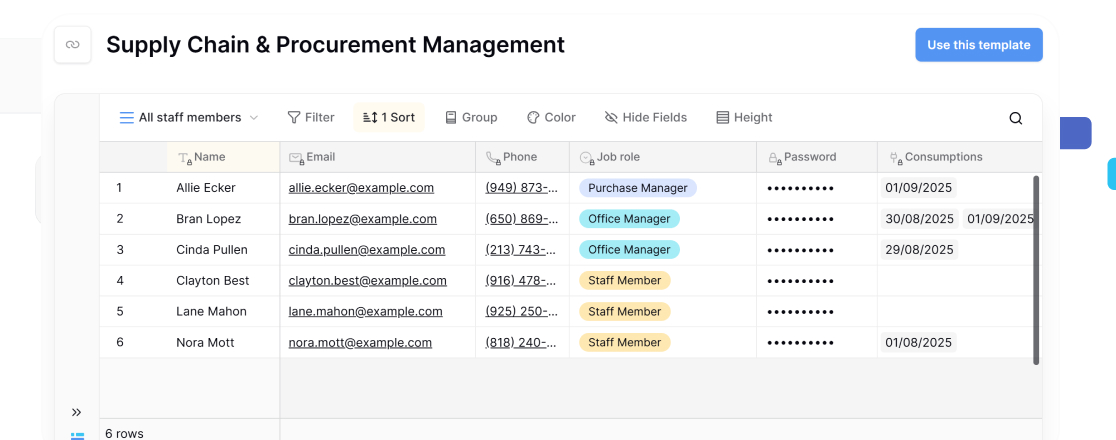
The Supply Chain Procurement template helps businesses organize purchasing operations more efficiently.
Teams can use it to:
- Track supplier requests
- Manage procurement approvals
- Monitor delivery timelines
- Organize inventory updates
- Centralize operational records
This creates better coordination across departments and improves supply chain visibility.
Real-Time Operational Dashboards
One major advantage of Baserow is operational transparency. Teams can build dashboards that display live updates across workflows.
For example, a warehouse team can monitor incoming shipments while procurement managers track supplier approvals at the same time.
This improves communication across departments and reduces delays caused by outdated information.
Real-time operational tracking also helps with risk management. Teams can quickly identify missing shipments, delayed approvals, or inventory shortages before larger issues appear.
Automation Without Operational Complexity
Many businesses avoid workflow automation because traditional systems feel too difficult to manage. Modern no-code platforms simplify this process.
Baserow supports operational automation through:
- Workflow triggers
- Notifications
- API integrations
- Shared permissions
- Connected operational databases
This allows teams to automate repetitive operational tasks while still keeping workflows flexible.
Growing businesses also benefit from faster setup times compared to large enterprise systems.
Community-Driven Operational Use Cases
Many operational teams already use Baserow to manage internal workflows. Examples shared in the Baserow Community include:
- Procurement approval systems
- Inventory tracking dashboards
- Internal logistics management
- Supplier coordination databases
- Operations reporting workflows
These examples show how businesses can build operational systems without needing large development teams.
Choosing the Right Operational Platform
Businesses should focus on flexibility when evaluating operational systems. Many older tools were built only for large enterprises. Modern teams need systems that adapt quickly as workflows change.
A good platform should support:
- Workflow customization
- Inventory management
- Supplier management
- Operational reporting
- Automation tools
- Collaboration features
- Real time visibility
It should also work well for small to mid operational teams, not only large enterprises.
Scalability matters too. Businesses often start with inventory workflows and later expand into procurement, logistics, analytics, and warehouse operations.
Flexible systems make this transition easier.
According to Gartner supply chain insights, operational agility and visibility are now critical priorities for supply chain leaders.
Common Operational Challenges Businesses Face
Many operational problems begin with disconnected systems.
Teams often struggle with:
- Manual spreadsheets
- Delayed reporting
- Inventory mismatches
- Supplier communication gaps
- Slow approvals
- Missing operational visibility
These problems slow down workflows and increase operational costs.
Disconnected systems also make it harder to maintain accurate reporting. Teams waste time searching for updates instead of solving operational issues.
Centralized workflow systems solve this problem by keeping operational information in one place.
Businesses that improve operational visibility are often able to reduce delays, improve customer experience, and respond faster to disruptions.
Platforms discussed in top data management tools show why connected operational databases are becoming important for modern teams.
Frequently Asked Questions
- What are some supply chain software?
Businesses use many types of operational platforms to manage procurement, inventory, logistics, and supplier workflows. Common examples include SAP, Oracle SCM, NetSuite, and flexible workflow platforms like Baserow. Many companies now prefer customizable systems that support collaboration, automation, and operational visibility without complex setup.
- What is the software supply chain?
The software supply chain refers to the systems, tools, integrations, and workflows used to build and manage operational processes. In business operations, this includes procurement systems, inventory platforms, warehouse tools, supplier databases, analytics platforms, and workflow automation tools that work together to support operations.
- Is SAP a supply chain?
SAP is not a supply chain itself. It is an enterprise software company that provides supply chain and operational management tools. Many large businesses use SAP modules for procurement, logistics, inventory tracking, and operational planning.
- What are the 4 types of supply chains?
The four common supply chain models are:
- Agile supply chains
- Lean supply chains
- Flexible supply chains
- Integrated supply chains
Each model supports different operational goals. Flexible and integrated workflows are becoming more popular because businesses need faster operational visibility and adaptability.
- What are the 7 C’s of supply chain management?
The 7 C’s usually focus on coordination, communication, collaboration, consistency, control, connectivity, and customer focus. Together, these principles help businesses improve operational efficiency and reduce delays across teams.
- What are the 5 pillars of SCM?
The five major areas of supply chain management include:
- Planning
- Sourcing
- Production
- Logistics
- Returns management
Modern workflow systems help businesses manage all five areas using centralized operational data and automation.
Conclusion
Modern operations depend on speed, visibility, and coordination. Businesses can no longer rely on disconnected spreadsheets and manual reporting to manage growing operational workflows.
Modern supply chain workflow systems help teams improve visibility, automate repetitive tasks, reduce delays, and coordinate operations more efficiently. They also support better inventory tracking, supplier collaboration, and operational reporting.
Flexible platforms are becoming especially important for growing teams. Businesses want systems that adapt quickly without adding unnecessary complexity.
Platforms like Baserow help operational teams build collaborative workflows for procurement, inventory tracking, logistics coordination, and reporting inside one centralized workspace.
Businesses looking to improve operational visibility and simplify workflows can explore Baserow here and start building operational systems that scale with their teams.

Baserow 2.4 adds Button fields, Graph elements, workflow automation, AI provider management, improved Group By views, and 30+ more updates.

Discover how Airtable and Baserow compare in features, flexibility, speed, and scalability. Compare pricing plans and hidden costs to make an informed decision!

Explore the best open-source software alternatives to proprietary products. Discover OSS tools, licenses, and use cases with our updated directory.