
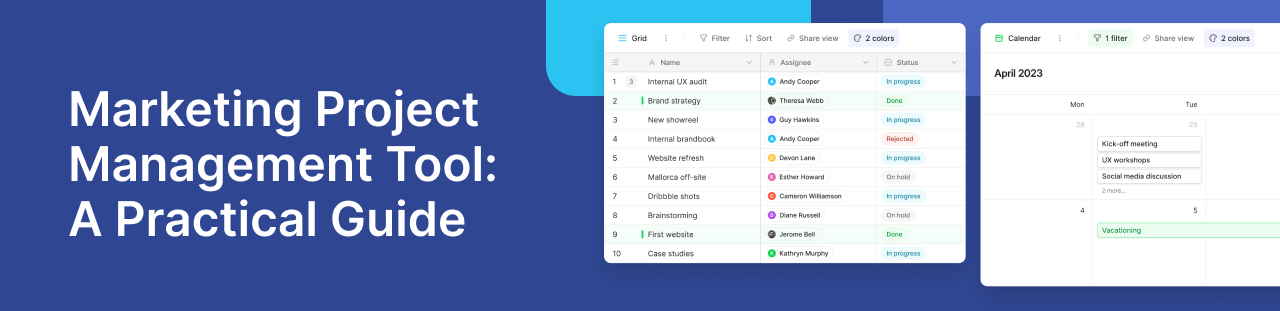
A campaign can look ready until the designer receives an outdated brief, the writer misses an approval, and the launch date changes without warning. Each person may understand their own assignment, while nobody has a reliable picture of the whole project.
These problems grow when a marketing team handles several campaigns alongside everyday publishing and customer requests. Conversations become harder to follow, deadlines overlap, and managers spend time collecting updates that should already be visible.
A shared workspace gives the team a clear structure for coordinating that work. It connects responsibilities, schedules, creative materials, and decisions so people can understand what needs attention. The value comes from helping everyone act on the same information throughout the campaign.
What does a marketing work platform do?
Marketing project management software helps teams plan, coordinate, and monitor campaigns from the initial brief through delivery and review. It brings tasks, owners, deadlines, approval steps, and supporting information into a shared system.
For example, a product announcement might involve a landing page, an email sequence, a webinar, and several advertisements. Each deliverable needs an owner, a schedule, and a review process. Some activities also depend on earlier work, such as approved messaging or finished designs.
Project management tools make these relationships easier to follow. A team member can see the current brief, check the next deadline, and identify the person responsible for approval without searching through separate conversations.
The structure also helps distinguish delivery from results. Publishing every planned asset shows that the team completed the work. Measuring registrations, qualified enquiries, or sales shows whether that work achieved its purpose.
A simple task list can support a small campaign. More complex project plans benefit from connected information about budgets, audiences, channels, and resources. The Project Management Institute’s guide to project plans identifies scope, accountability, resources, milestones, and approvals as important planning elements.
A flexible platform such as Baserow lets teams organize related information in linked tables. Campaign records can connect with activities, assets, and performance data, giving people context beyond the task itself.
Features that matter to marketing teams
The right features should support the way work moves through your organization. Start with the decisions people need to make, then consider which capabilities make those decisions easier.
Clear task owners and approval steps
Task management works best when each assignment explains the expected output, its deadline, and the person accountable for completion. A label such as “prepare launch” leaves too much open to interpretation.
Instead, assign tasks around specific deliverables, such as preparing a landing page draft or approving the webinar invitation. Include the brief and any information required to begin.
Reviewers need visibility too. Identify who checks accuracy, who approves brand messaging, and who authorizes publication. These responsibilities may belong to different team members, especially when legal or compliance review is required.
Clear status options help the team collaborate without asking for constant updates. “Draft,” “In review,” “Changes requested,” and “Approved” describe the work more precisely than a single completion checkbox.
Timelines, dependencies, and resource planning
A schedule should reflect both the sequence of work and the capacity available to complete it. Several deadlines on the same day may look organized while placing unrealistic demands on one designer.
Resource planning makes those conflicts easier to identify. Review expected effort, availability, specialist skills, and external support before committing to delivery dates.
Dependencies deserve equal attention. An advertisement may require approved copy before design begins, while publication may depend on a working destination page. Recording these connections helps managers understand which delays could affect the campaign.
When comparing project management platforms, check whether workload and dependency features are built in, require configuration, or depend on another service.
Creative assets and reliable handoffs
Creative assets should be easy to locate and clearly linked to the work they support. Store the approved file or its reference alongside the relevant task, with enough context to identify its version and intended channel.
Teams using Adobe Creative Cloud can use shared libraries to share design resources. The project workspace can record the relevant links, owners, and approval status.
This creates a single source of truth for campaign coordination while allowing designers to continue working in their preferred applications.
Progress reporting and useful time tracking
A progress view should reveal overdue assignments, blocked work, upcoming approvals, and delivery risks. Updates in real time become useful when people consistently maintain the underlying records.
Time tracking can also help teams compare planned effort with actual effort. Use that information to improve estimates and workload decisions, especially when repeated revisions consume more capacity than expected.
Before adopting a timer, decide what the team needs to learn. Recording time against meaningful activities provides better planning information than collecting hours without a clear purpose or a consistent shared reporting process.
AI support for routine campaign activities
AI powered features can help a team categorize incoming requests, prepare initial summaries, and convert written instructions into structured tasks. They are most useful when they save time on activities that follow a consistent pattern and still allow someone to check the result.
For example, an assistant could suggest activities from a product launch brief, while the campaign owner checks the deadlines, scope, and assigned contributors. The same approach can help categorize content requests by channel or topic before the team reviews their priority.
Baserow’s Kuma AI assistant helps users build and edit databases through natural language instructions. A campaign owner can describe the tables and fields they need, then check the structure and make changes before the team begins using it.
Keep a person responsible for final decisions, especially when AI output includes product claims, customer information, or proposed delivery commitments. A useful AI feature should help someone complete routine activities with less effort while keeping the review process clear.
How to run a campaign from brief to review
Once the workspace is ready, use it to coordinate the campaign through a consistent process. The aim is to give each person enough context to complete their assignments and understand how it supports the wider goal.
1. Define the objective and scope
Start with a specific business objective, such as bringing qualified leads to a new service or increasing sign-ups for a webinar. Record the audience, core message, distribution channels, and measurement period so everyone has the same view of what the campaign should achieve.
Next, list the deliverables included in the agreed scope, along with the budget and any requirements that could affect publication. This gives the team a basis for evaluating additional requests when someone wants to add more content or change the launch plan.
For a webinar, the scope might cover a landing page, three emails, and a follow-up guide. Adding a video series would require a fresh assessment of the budget and available capacity before the team agrees to take it on.
2. Break deliverables into manageable activities
Break each planned deliverable into tasks that people can complete, review, and pass to the next person. A landing page may need copy, design, technical setup, testing, and approval, with each stage depending on earlier activities.
Identify an owner for each assignment and explain what “done” means so contributors know when they can proceed. For a form test, this could mean checking that data reaches the right table and that the person who signs up receives a confirmation.
Connect the brief to these tasks so people can check the goal without searching through separate conversations. Baserow’s project planning guide explains how scope, owners, tasks, and milestones work together to support a clear plan.
3. Assess capacity before confirming the schedule
Estimate the effort required for each assignment, including the time required for reviews and revisions. A launch with only a few outputs can still place substantial demands on one designer or writer who supports several other projects.
Check those existing commitments before you agree on the schedule, then adjust the scope or arrange additional support where needed. This makes deadlines easier to trust because they reflect the resources and capacity available to the team.
Establish milestones around meaningful checkpoints, such as brief approval or the point when the registration page is ready for testing. Leave some room for delays when the work depends on external suppliers or stakeholders who cannot respond straight away.
4. Agree on the review process
Identify who reviews each deliverable and set the order in which those checks should happen. A product expert might check the facts first, while a brand reviewer checks the message before the final approval.
Record feedback alongside the relevant assignment and identify the file version being reviewed so the owner knows which comments still apply. When changes are complete, ask the reviewer to confirm the revised version rather than relying on an approval given to an earlier version.
5. Monitor project progress and adjust the plan
During delivery, focus status reviews on blocked tasks, late approvals, and changes that could affect the launch date. Ask people to update their records before the meeting so the team can spend its time resolving problems instead of collecting individual updates.
Some platforms offer alerts and workflows that respond when a task changes status. Baserow’s 2.3 release added triggers for updates to selected fields, which can start a configured workflow when a status field changes.
Record any change to the plan along with its effect on scope, deadlines, or workload. This helps the team judge the next step using the same information.
When a deadline changes, notify the affected contributors and confirm whether dependent tasks need new dates before treating the revised schedule as the agreed plan.
6. Review results and improve the next campaign
After delivery, compare the campaign’s results with the goal agreed during planning. Include finished work, actual spending, and the outcomes that matter to the business, such as new leads or booked meetings.
Keep delivery measures separate from business results so a completed task list does not become the only sign of success. A campaign can launch on schedule while reaching people who do not match the target customer group.
Use consistent campaign names and tracking links across each channel. Google’s guidance for marketers explains how UTM parameters help identify campaigns that bring traffic to a website.
Then review how the work happened, including repeated revisions, approval delays, and tasks that required more effort than expected. Turn those findings into improvements, such as changing the brief, allowing more review time, or making the handoff between team members clearer.
How to choose the right platform
Choosing software becomes easier when you compare it against a real campaign rather than a long feature list. Start with the decisions your team needs to make and test how each option supports those decisions throughout delivery.
Compare the structure with your workflow
Some PM tools provide ready-made task boards and standard project layouts that teams can use with little setup. This approach can suit a team whose campaigns follow the same basic steps and whose main challenge is keeping tasks on track.
A customizable platform becomes useful when projects connect with other information, such as customers, suppliers, content libraries, or campaign results. The team can then structure its workspace around those relationships instead of keeping separate records for each process.
For example, Baserow supports custom fields, table relationships, and different views, allowing teams to connect related information. This flexibility requires someone to define the structure and keep clear rules as the workspace grows.
Consider how much setup your team can support before choosing between these approaches. A flexible system delivers more value when its structure reflects clear roles and familiar ways of working.
Test the experience for different contributors
Run a small pilot involving the people who will use the system, including a campaign owner, a contributor, and a reviewer. Ask each person to complete a routine task without lengthy guidance from the person who configured the workspace.
Check whether contributors can find their assignments, understand priorities, and locate the latest brief. Reviewers should also be able to find pending decisions without checking every task in the project.
Observe where people become confused or create their own separate records. Those behaviours can reveal missing context, a confusing layout, or a workflow that demands more upkeep than the team can manage.
Assess reporting, integrations, and access
Check how campaign data enters the platform and how results will reach the people who need them. A dashboard has limited value when its data depends on irregular updates or imports that nobody owns.
For each link with another tool, check whether it uses a native integration, an external service, or custom setup. Identify who maintains that connection and how the team notices when an update fails.
Review permissions using real cases, such as inviting a freelance designer or sharing campaign progress with a client. Confirm which information each person can access and whether those controls are available within the plan you intend to use.
Calculate the full cost of adoption
Compare the subscription with the extra work required for setup, training, integrations, and upkeep. Features such as advanced permissions, automation, or detailed reporting may affect which plan the team needs.
Even top project managers need support when a new system changes routines. Assign someone to update templates, answer questions, and remove fields or steps that no longer serve a useful purpose.
The pilot should show whether the platform saves enough time to justify its total cost. Assess that value through everyday use, including how easily the team handles a delayed approval or a change in campaign scope.
Example: coordinating a product launch across channels
Imagine a software company preparing a launch that includes a landing page, promotional emails, paid advertisements, and a customer webinar. This example shows how a shared workspace can guide the work without requiring every contributor to use the same design tool.
The campaign owner starts with a launch record containing the goal, target audience, budget, and publication date. Each piece of work links to that record, giving contributors a shared guide to the decisions that affect their work.
The writer prepares messaging, the designer develops the visual assets, and the product expert checks the facts. Keeping those roles alongside deadlines makes the next handoff visible before a team member finishes their task.
If the product details change, the campaign owner updates the brief and flags the affected tasks so each person knows which work needs a fresh review.
Keep launch readiness visible
Here, the campaign owner needs to know whether each channel is ready before the work goes live. A shared view can show the page, emails, advertisements, and webinar materials with their status, owner, and next deadline.
Suppose the product review finds a claim that needs changes across several assets. The owner identifies the affected work, updates the brief, and records which reviewers must check the new version.
The team can then decide whether to change the wording, delay one channel, or move the launch date. That decision stays connected to the campaign so people understand its effect on their tasks.
After launch, the owner adds results by channel and compares them with the goal. Keeping these results alongside the task records helps the team examine both the results and the steps that led to them.
A flexible Baserow setup for campaign work
Baserow is a useful option when campaign delivery depends on information spread across several linked workflows. A team may connect its launch schedule with content work, staff tasks, design files, and results.
- Start with connected campaign records
The Campaign Management template provides linked tables for campaigns, activities, objectives, staff, assets, channels, tracking links, and metrics. Campaign records include budget and target fields, while activities connect tasks with their channels and the assets they need.
The template also includes formulas for measures such as click-through rate and cost per click. These figures depend on the information supplied; linking the relevant ad or analytics service needs a separate import or integration process.
Adapt this starting structure to the decisions your team makes often. You might add review deadlines, publication links, or a field identifying the person who approves a piece of work.
Keep additions purposeful, because each extra field adds another piece of information someone must update. A small, consistently updated workspace is more useful than a complex setup with missing data.
- Give contributors views that match their responsibilities
People need different views of the same campaign. A writer may focus on their own content, while a campaign owner needs to review deadlines, budgets, and blocked work across several channels.
Baserow’s updated grouped views support grouping records by fields such as status and assignee, with summaries for individual groups. Live editing indicators also show which collaborators are working in a table and which cells they are editing.
These features can make teamwork easier when several people update the same records. Agree on the meaning of each status first so the views show data that everyone understands in the same way.
- Learn from a community workflow
A relevant Baserow community conversation about content calendars shares an approach for bringing content strategy, publishing schedules, and assets together. The post links a template and a guide for building an editorial calendar.
For a launch campaign, that approach provides a starting point for organizing the publishing work. Connect content with the campaign it supports, then adapt the stages to include drafting, review, approval, and publication.
The example illustrates a structure rather than promising a certain business result. Your team still needs to set clear roles, update records, and review whether the setup supports its workload.
Common mistakes that slow campaign delivery
- Adding fields without a clear purpose
A workspace can become hard to manage when every request creates another field, category, or status option. Before adding something, name the decision it supports and the person who will keep it current.
Review unused fields after the first campaign and remove those that add effort without helping with plans or reports. This keeps the structure understandable as new people join the team.
- Tracking tasks without checking linked deadlines
A list of tasks can look complete while hiding the links that affect delivery. If the email requires an approved registration page, record that dependency so both owners understand the sequence.
Discuss the impact when the earlier task changes, including whether the next person can begin partial work. This gives the team more useful choices than finding the problem just before launch.
- Treating updates as someone else’s responsibility
Reliable reporting depends on people updating the records for their own work. Agree when updates should happen, such as after an approval decision or when a deadline becomes uncertain.
A campaign owner can review exceptions and ask for missing information, but should not need to piece together every task from separate messages. Clear habits make the workspace reliable and reduce the effort needed to prepare each status review.
Test these habits during a small campaign before applying them across the whole department. Ask the team which records helped them work and which ones they rarely used, then adjust the setup based on those answers. Review the revised process after the next launch so the workspace continues to reflect how people actually plan and deliver their work.
Frequently asked questions
- Can a small marketing team start with a free platform?
Yes, a small team can begin with a free plan if its limits and available features support the planned workflow. Check user allowances, storage, records, and access controls before relying on the platform for a campaign. Start with one project and a simple structure that includes owners, deadlines, statuses, and supporting links. Review whether the plan still fits when more contributors join or the reporting requirements become more complex.
- How does a project workspace differ from a content calendar?
A content calendar focuses on what will be published, where it will appear, and when it should go live. A project workspace covers the wider delivery process, including budgets, dependencies, reviews, and responsibilities across different types of work. The two can connect so a scheduled post links to its campaign, brief, and approval record. This gives the publishing team useful context while allowing the campaign owner to follow the work beyond the publication date.
- Can external agencies and freelancers use the same workspace?
They can, provided the chosen platform supports a safe way to share the information they need. Decide what each outside contributor should see or edit before inviting them, then test those settings using their expected role. Keep client budgets, internal notes, and unrelated campaigns within the agreed access boundaries. Assign a clear contact for questions and approvals so external contributors understand how to complete their work without depending on informal messages.
- Should delivery progress and campaign performance appear together?
They can appear in the same workspace, but they should remain distinct measures with clear definitions. Delivery progress describes completed work, missed deadlines, and outstanding approvals, while campaign performance describes the results produced by that work. A campaign might have every task completed and still fall short of its lead target. Reviewing both helps the team identify whether the main issue concerns delivery, the message, the audience, or the way results were measured.
- Can AI replace the person managing a campaign?
AI can assist with summaries, initial task suggestions, and structured information, but it does not remove the need for clear decisions. A campaign manager still needs to judge priorities, resolve conflicts, approve changes, and coordinate people whose needs may differ. Define which activities AI supports and which outputs require review before adding it to the workflow. This makes the assistance useful without creating doubt about who owns the final decision or its effects.
- How can a team move from spreadsheets without disrupting work?
Choose one active or upcoming campaign and use it to test the new structure before moving every project. Clean up duplicate entries, agree on consistent status labels, and identify the fields the team actually needs. Preserve important links between campaigns, tasks, owners, and files when importing or rebuilding the records. After the pilot, review missing information and confusing steps with contributors, then expand gradually using the improved structure and a clear owner for ongoing maintenance.
- How do you know whether the new system is helping?
Compare a few practical measures before and after adoption, such as the time needed to prepare updates, the number of missed approvals, and the effort spent locating current files. Ask contributors whether they can find their next task and understand what completion requires. Review those findings alongside campaign delivery rather than assuming that frequent logins demonstrate value. The system is helping when it makes coordination clearer and reduces avoidable effort without adding needless upkeep.
Start with one campaign and build from experience
A useful workspace should make everyday decisions easier, from identifying the next reviewer to understanding whether a deadline needs to change. Start with the smallest structure that supports those decisions, then add more detail when a clear requirement emerges.
Choose a campaign with enough variety to test the workflow, but keep its scope manageable. Agree on the brief, owners, statuses, and review steps before asking the wider team to participate.
During the pilot, observe where people need extra explanation or continue keeping separate notes. Those moments provide useful evidence about which parts of the setup need improvement.
After delivery, review the process with the people who used it and decide what should become part of your shared template. Keep the structure flexible enough to reflect future campaigns while preserving the rules that make the information reliable.
Keep a clear, short record of changes made during the pilot, including why each change was needed and who agreed to it. This gives future campaign owners context when they reuse the structure and helps prevent old problems from returning. Include the time spent on setup and support when judging the value of the new process. If a simpler approach handles the same work with much less effort, use that evidence to refine the workspace before adding further features or moving more campaigns into it.
If your team needs connected campaign records and a workflow it can adapt, try Baserow. Begin with a template, organize one campaign, and use the experience to build a practical system for your daily marketing work.

Baserow 2.4 adds Button fields, Graph elements, workflow automation, AI provider management, improved Group By views, and 30+ more updates.

Discover how Airtable and Baserow compare in features, flexibility, speed, and scalability. Compare pricing plans and hidden costs to make an informed decision!

Explore the best open-source software alternatives to proprietary products. Discover OSS tools, licenses, and use cases with our updated directory.